



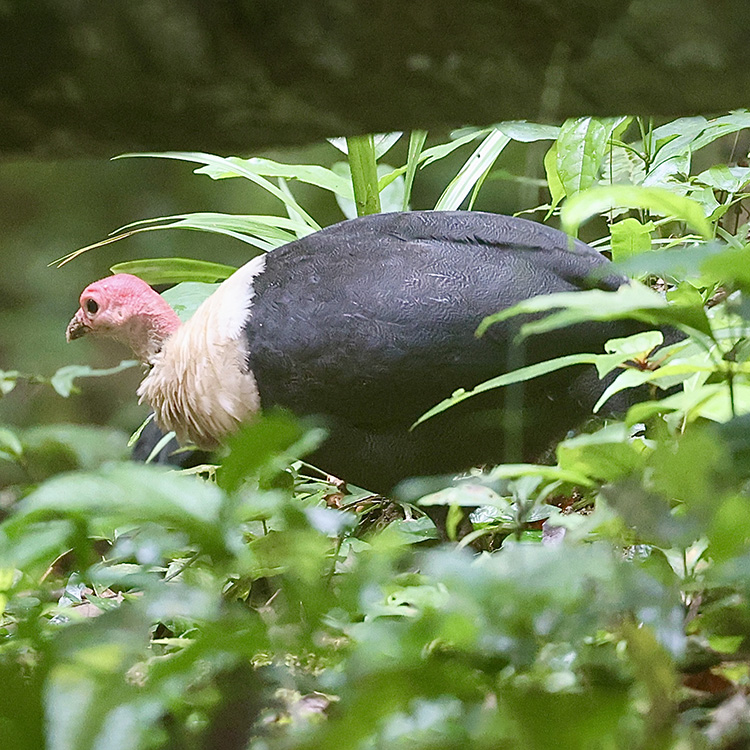
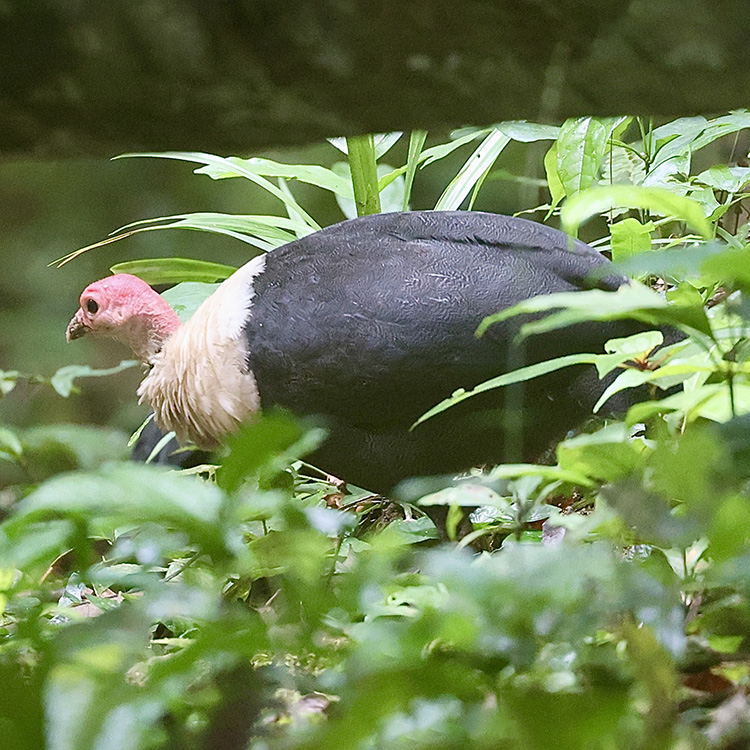
📍 Habitat
This elusive bird inhabits dense tropical forests along the Tano River, particularly within the Boin Tano Forest Reserve — a recognized Important Bird Area (IBA) in Ghana. It requires undisturbed, humid, closed-canopy forest, making it especially vulnerable to habitat degradation.
⚠️ Conservation Status
- IUCN Red List: Vulnerable
- Main Threats:
- Logging and forest fragmentation
- Agricultural expansion
- Bushmeat hunting
- Mining-related deforestation (galamsey)
🧬 Description
- Smaller than the common domestic guinea fowl
- Black plumage with a distinctive white breast and unfeathered bluish head
- Lacks the spotted feathers typical of other guinea fowl species
- Usually seen alone or in pairs, rarely in groups
- Shy and secretive — more often heard than seen
🧠 Behavior
- Forages on the forest floor for insects, seeds, and small fruits
- Builds simple ground nests
- Emits a loud, distinctive “korr-korr-korr” call
- Avoids open areas — highly dependent on intact forest cover
🪶 Cultural Role
Though not as symbolically celebrated as other birds, the pintade remains an important forest species in local ecological knowledge. In some communities, guinea fowl have been associated with alertness and vigilance — their calls seen as warnings from the forest.
🌱 Why It Matters
The white-breasted guinea fowl is an indicator species: its presence suggests a healthy, biodiverse forest. Its decline is a clear alarm signal of ecological imbalance.
Protecting this species means protecting forest integrity, carbon storage, and the livelihoods of future generations.


