

The Tano River
  • Home
  • 🌊The River
    • The Tano River
    • Cultural Significance
    • Spiritual and Historical Importance
    • Taakora — The Deity of the Tano River
    • Comprehensive Analysis of the Tano River and Its Basin
  • 🌿Environment
    • Flora and Fauna
    • Environmental Challenges
    • Conservation Efforts
    • The Tano River Basin
    • The Galamsey Crisis
    • Animals of the Tano
    • Trees and Plants of the Tano
    • Parks and Forest
    • Lagoons
    • Tributaries of the Tano River
  • History
    • Stories and Oral Traditions
    • Historical Events
    • Ancient Trade and Conflicts
    • The Legend of Tano and Bia
    • Deities and Spirits
    • God Tano, Afua Krankra, and Asase Ya/Afua in Akan Mythology
  • 🎉Culture
    • Ethnic Groups Along the Tano River
    • Fishing, Agriculture, and Rituals
    • Festivals and River Ceremonies
    • The Natural Border Between Ghana and Ivory Coast
  • 🛶 Tourism
    • Natural Sites to Visit
    • Cultural Experiences
    • Local Guides & Eco-Tourism
    • Creating a Touristic Ecosystem
  • 🌍News
  • Global Initiative
  • 🌍About
    • 📖The Project / Get Involved
    • 🧾 About me
    • ✉️ Contact us
    • 🤝 Partnerships / Collaborate
    • 💛 Donate
    • 🌿 A Tribute to My Father and Grandfather
    • 🧾All Our articles
    • 🧾Search Our Articles
    • 📖Glossary of the Tano River Ecosystem
Donate
Font ResizerAa
The Tano RiverThe Tano River
Search

Popular Posts

The Rivers, Lakes & Lagoons Collective

The rivers in Ghana

About the River

🪷 Cultural Significance of the Tano River

About the River

✨ Spiritual and Historical Importance of the Tano River

Welcome to Tanoriver.com

Join the Tano River Collective Project and be part of a growing movement dedicated to preserving the life, culture, and ecosystems of the Tano River. Together, we can make a lasting impact.
Join Us
Follow US
TanoRiver.com
The Tano River > All our Articles > Culture & People > 🐟🌾🪷 Fishing, Agriculture, and Rituals Along the Tano River
Culture & People

🐟🌾🪷 Fishing, Agriculture, and Rituals Along the Tano River

By
Alexandre Tano Kan Koffi
Last updated: April 7, 2026
4 Min Read
Share

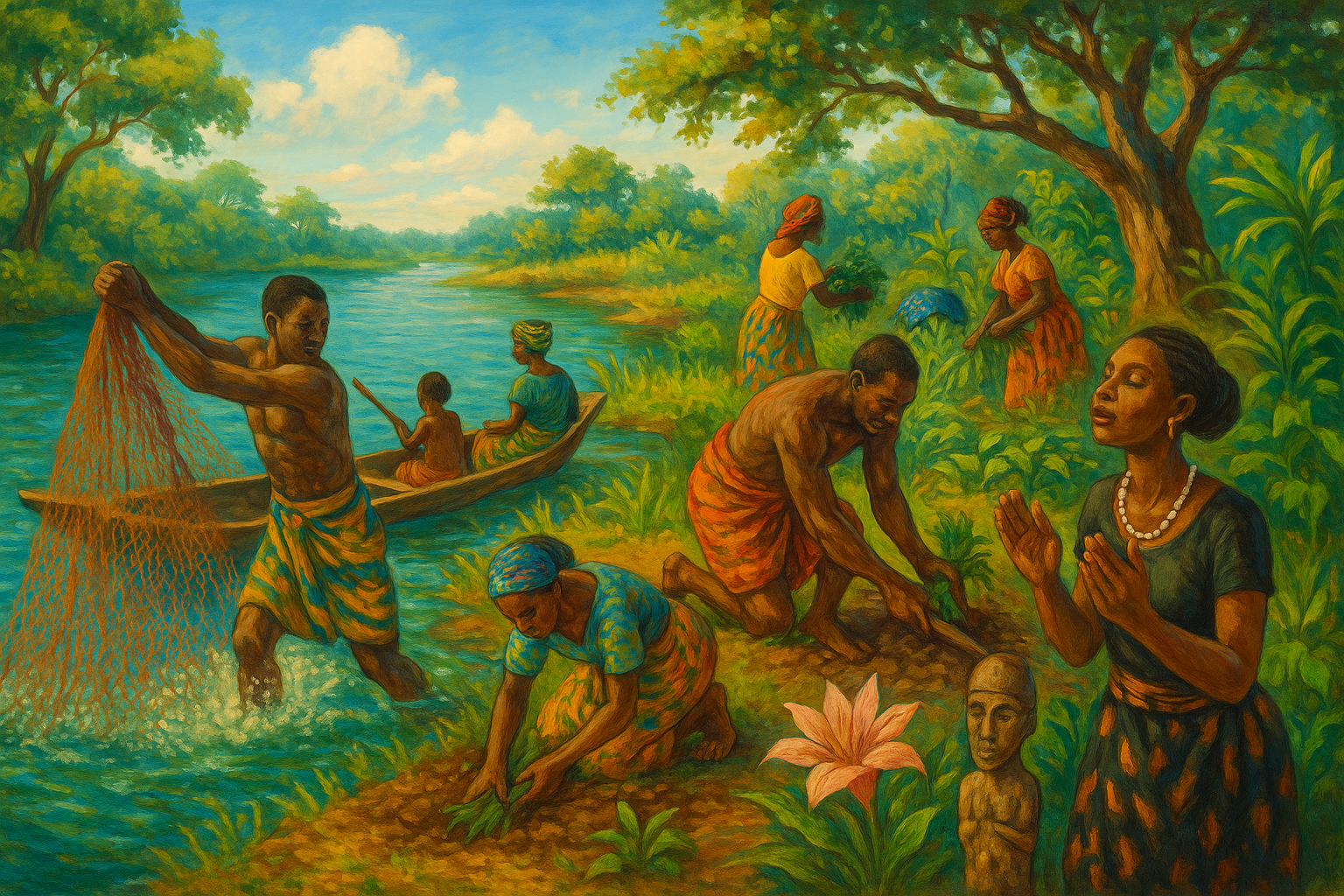
The Tano River is more than a natural resource—it is the beating heart of daily life for the many communities along its banks. From fishing and farming to ancestral ceremonies and seasonal rituals, the river shapes both the economy and spirituality of the people. It provides food, fertility, and spiritual strength, linking human activity with the rhythms of nature.

Contents
🐟 Fishing Traditions and River Livelihoods🌾 Agriculture: Fertile Lands and River-fed Farms🪷 Rituals and Spiritual Practices🔹 River Deity: Taakora (Tano)🔹 Purification and Healing Rites🔹 Seasonal Ceremonies🔹 Oath-Swearing and Justice🌍 Integration of Daily Life and Spiritual Order

🐟 Fishing Traditions and River Livelihoods

Fishing is a primary livelihood for many communities in both Ghana and Côte d’Ivoire, particularly in the lower basin, where the Tano empties into the Aby Lagoon.

  • Artisanal fishing methods are used, including:
    • Throw nets, basket traps, and dugout canoes
    • Night fishing using lanterns and small woven nets
    • Traditional weirs built from reeds and bamboo
  • Common catches include:
    • Tilapia
    • Catfish
    • Bagrid fish
    • Mudfish and eels
  • In some areas, certain species of fish are considered sacred and are not eaten—believed to be messengers of the river deity Taakora.
  • Fishing is not just economic—it is cultural:
    • Knowledge is passed from parent to child
    • Songs, proverbs, and taboos guide fishing practices
    • Some communities observe fish bans during spawning periods, linked to river rituals

🌾 Agriculture: Fertile Lands and River-fed Farms

The Tano River sustains rich agricultural activity, especially in its middle and upper stretches across Ghana’s Bono, Ahafo, and Western regions.

  • Key crops grown along the river:
    • Cocoa (major cash crop in Ghana)
    • Cassava, plantain, maize, and yam
    • Oil palm, bananas, rice, and vegetables (especially tomatoes, peppers, okra)
  • Farming systems include:
    • Riverbank cultivation using seasonal flood patterns
    • Shifting cultivation in forested areas
    • Agroforestry in zones combining cocoa trees and food crops
  • The river also provides water for irrigation, especially during the dry season, using traditional water diversion methods.
  • Fertility rituals and blessings of the land are often performed at the start of the planting season, invoking the favor of the river spirit.

🪷 Rituals and Spiritual Practices

The Tano River is one of the most spiritually revered rivers in West Africa, with numerous ceremonies and rituals tied to its waters.

🔹 River Deity: Taakora (Tano)

  • Believed to be a powerful divine spirit
  • Priests and priestesses (akomfo) serve at shrines near the river
  • Libations, animal sacrifices, and consultations are common before major decisions (e.g., war, migration, dispute resolution)

🔹 Purification and Healing Rites

  • Individuals bathe in the river to cleanse spiritual impurities
  • The sick are brought to the river for healing rituals
  • Newborns, brides, and initiates are ritually washed in river water during rites of passage

🔹 Seasonal Ceremonies

  • At planting time, blessings are offered to the river for rain and abundance
  • At harvest, people give thanks through offerings, dances, and songs
  • Some villages hold annual festivals specifically in honor of the Tano River and its spirits

🔹 Oath-Swearing and Justice

  • The river is used for swearing oaths—a serious act with spiritual consequences
  • It is believed that lying under oath before the river can result in sickness or death

🌍 Integration of Daily Life and Spiritual Order

For the communities along the Tano River, fishing, farming, and faith are deeply intertwined. The river provides not only resources but also meaning—it is a source of identity, a symbol of ancestral memory, and a guardian of truth and fertility.


Sign Up For Daily Newsletter

Be keep up! Get the latest breaking news delivered straight to your inbox.
By signing up, you agree to our Terms of Use and acknowledge the data practices in our Privacy Policy. You may unsubscribe at any time.
Share This Article
Facebook Email Copy Link Print
ByAlexandre Tano Kan Koffi
Follow:

✍️ About the Author

Alexandre Tano Kan Koffi is the founder of TanoRiver.com and a passionate advocate for Africa’s environmental and cultural heritage. Named after the Tano River, he honors his legacy through storytelling and conservation.
📧 Contact: alex [@] alexandrekoffi.com

Leave a Comment Leave a Comment

Leave a Reply Cancel reply

Your email address will not be published. Required fields are marked *

Receive latest news from all areas of Wildlife Animals

Our selection of the week's biggest research news and features sent directly to your inbox. Enter your email address, confirm you're happy to receive our emails.

HOT NEWS

The Rivers, Lakes & Lagoons Collective

The rivers in Ghana

April 10, 2026

🪷 Cultural Significance of the Tano River

May 5, 2026

✨ Spiritual and Historical Importance of the Tano River

February 13, 2026

📖 Indigenous Stories and Oral Traditions of the Tano River

May 9, 2026

Follow US: 

About us

  • 🌍 The Project / Get Involved
  • ✉️ Contact us
  • 💛 Donate
  • 🤝 Partnerships / Collaborate

TanoRiver.com

  • Terms and Conditions
  • Privacy Policy
  • Cookie Policy

Cookies Notice

We use our own and third-party cookies to improve our services, personalise your advertising and remember your preferences.
Welcome Back!

Sign in to your account

Username or Email Address
Password

Lost your password?
