



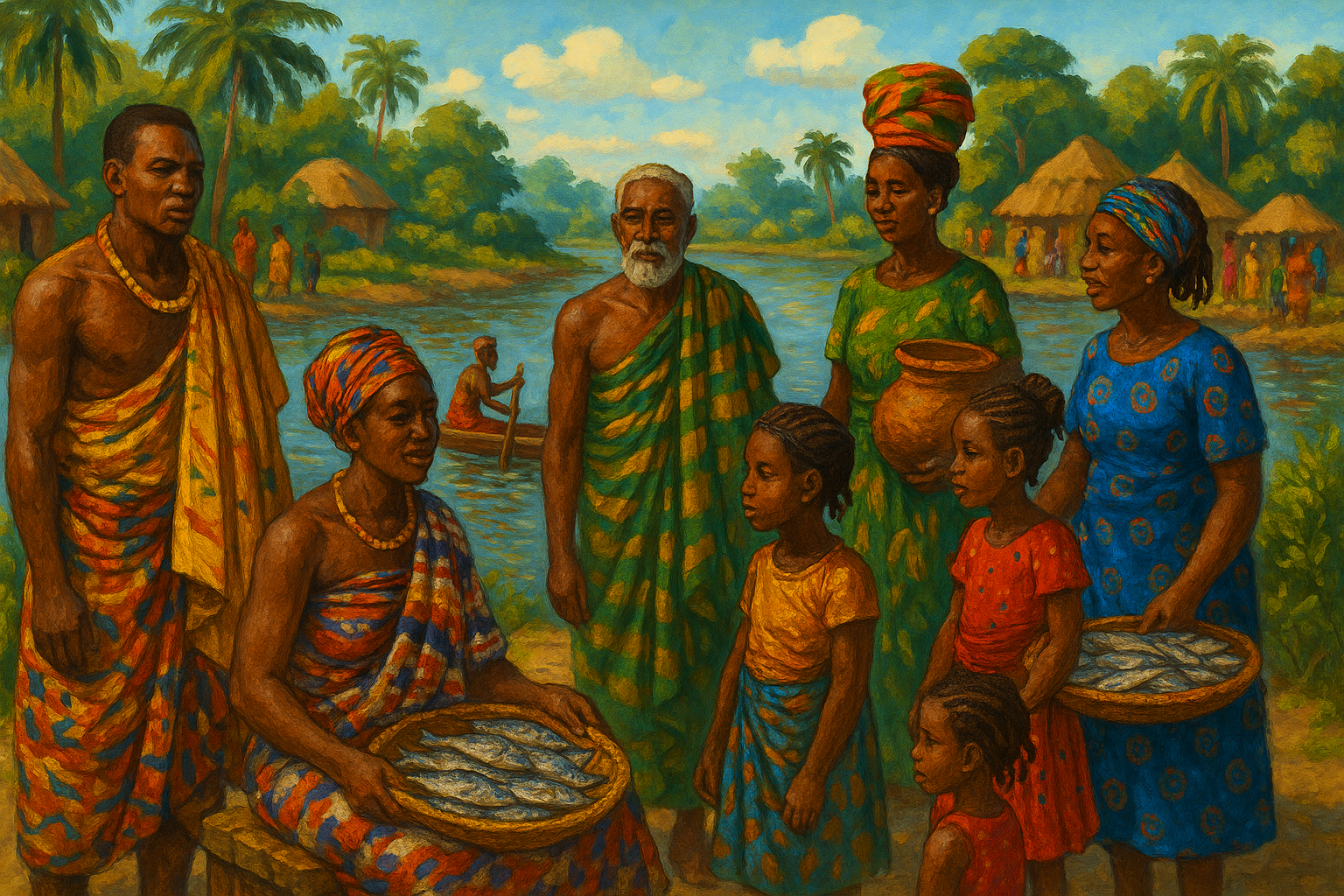
The Tano River flows through a richly diverse human landscape where language, culture, spirituality, and livelihood are deeply tied to the river’s course. From its source in Ghana’s Bono region to its mouth in Côte d’Ivoire’s Aby Lagoon, the river unites a mosaic of Akan-speaking peoples and other ethnic groups with ancestral and spiritual bonds to the waterway.
These communities have coexisted with the river for centuries, preserving traditions, stories, and sustainable practices tied to its flow.
🟨 1. Bono and Ahafo Peoples (Ghana)
Location: Upper Tano River Basin (Bono East and Ahafo Regions)
Language: Bono Twi (Akan dialect)
Role of the River:
- Considered sacred; the source of the river lies in Bono territory, near Techiman and Tanoso
- Home to the Tano Sacred Grove and shrines dedicated to Taakora, the river god
- Ritual center for Akan spirituality and clan lineage
🟧 2. Asante (Ashanti)
Location: Parts of the middle Tano Basin, through cultural overlap
Language: Asante Twi
Connection:
- Asante oral tradition includes the Tano deity as one of the most powerful in the Akan spiritual hierarchy
- While not primarily river dwellers, they share cultural and spiritual links with the river, especially in rituals and ancestral oaths
🟨 3. Nzema (Ghana & Côte d’Ivoire)
Location: Middle and Lower Tano River, near the Ghana–Ivory Coast border
Language: Nzema (Akan-related)
Highlights:
- Known for canoe building, river trade, and fishing culture
- Maintain taboos around certain fish species believed to be connected to spirits
- Strong defenders of sacred wetlands in the Tano-Ehy region
🟥 4. Ahanta (Ghana)
Location: Western Ghana, near coastal branches of the Tano
Language: Ahanta (Kwa language)
Connection:
- Though mainly coastal, the Ahanta are historically connected to the Nzema and Appoloniens
- Participated in regional trade routes along the river
- Some clans trace mythical origins to riverine deities
🟩 5. Appoloniens (Côte d’Ivoire)
Location: Coastal and lower Tano River region
Language: Akan-based dialects, related to Nzema
Traditions:
- Known for canoe-based fishing, spiritual rituals, and sacred groves
- Oral traditions often personify the Tano as a female spirit guiding the community
- Riverbanks are used for naming ceremonies, burials, and spiritual offerings
🟩 6. Ehotilé (Côte d’Ivoire – Aby Lagoon area)
Location: Near the Tanoé Lagoon and Ehy forest
Language: Ehotilé (Kwa language group)
Significance:
- Inhabit one of the most biodiverse estuarine zones in West Africa
- Their forest and lagoon systems are sacred and used for ritual fishing
- Oral traditions recount the river parting to save their ancestors during conflict
🌍 Shared Cultural Traits Across the Region
Despite national borders and linguistic differences, the ethnic groups along the Tano River share:
- Akan cosmology and belief in the Tano river spirit (Taakora)
- Deep respect for ancestral shrines, sacred water bodies, and spirit animals
- Use of the river for healing, ritual purification, and oath-taking
- Traditions of cooperative fishing, inter-clan marriage, and river festivals


