



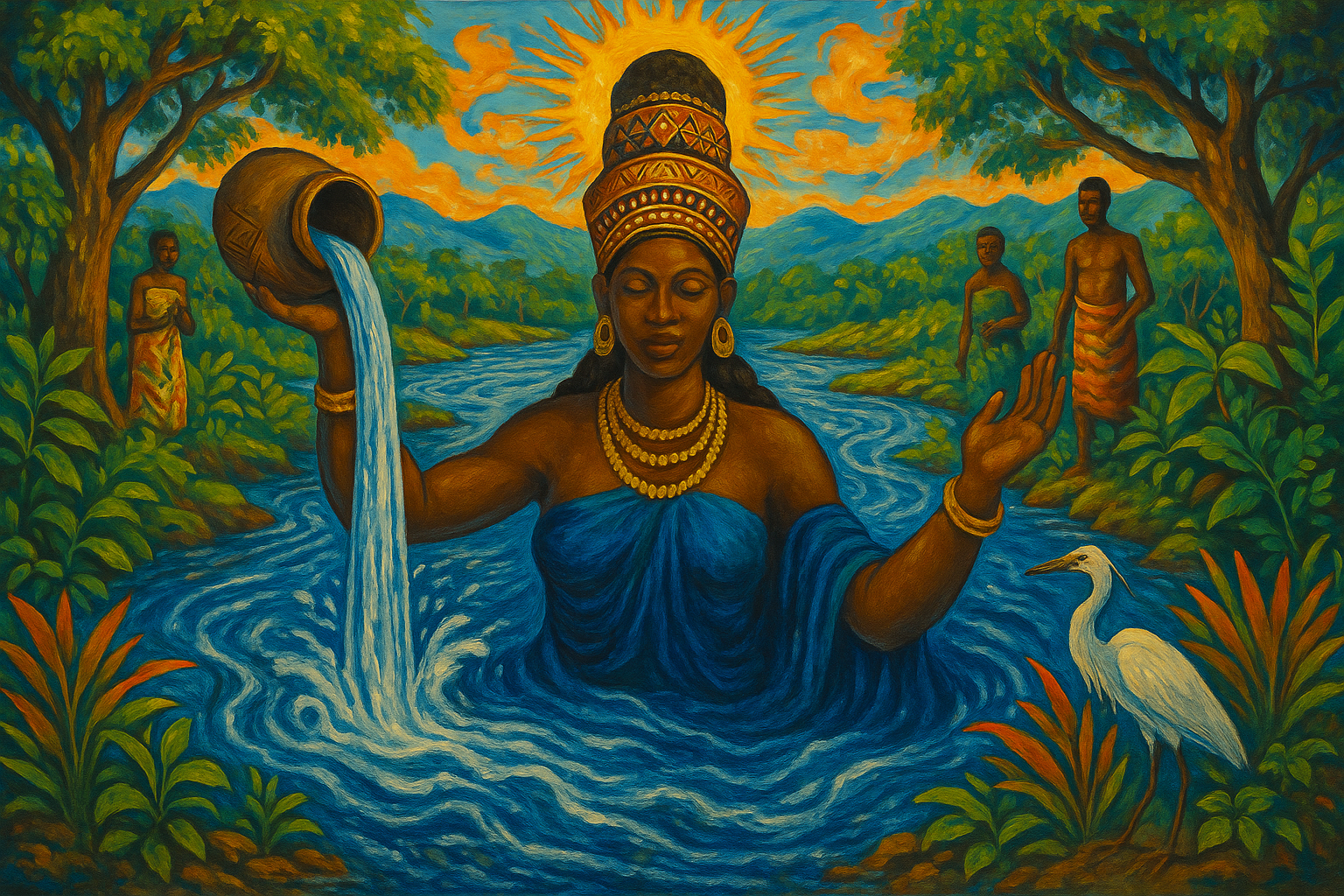
1. Introduction: The Tano River in its Cultural and Geographical Landscape
The Tano River, a vital artery flowing through West Africa, embodies a profound nexus of geographical importance, ecological richness, and deep spiritual significance for the communities along its banks, particularly the Akan people of Ghana and Côte d’Ivoire. Understanding the deities and spirits associated with this river necessitates an exploration of both its physical characteristics and the intricate cultural framework that imbues it with sacred meaning.
1.1 Geographical and Ecological Overview of the Tano Basin
The Tano River is a substantial watercourse, stretching approximately 250 miles (400 km) from its source near Techiman in Ghana, flowing southward to discharge into the Gulf of Guinea (Atlantic Ocean) via the Aby Lagoon in Côte d’Ivoire. Its lower course notably forms a segment of the international boundary between Ghana and Côte d’Ivoire. The Tano Basin itself is a transboundary river basin, with the vast majority of its area (92.6%, or 14,875 km²) situated within Ghana, and the remaining portion (7.4%, or 1,185 km²) extending into Côte d’Ivoire. This basin constitutes one of Ghana’s four principal southwestern river systems.
The topography of the Tano Basin is varied, rising from highlands near the Boyem Mountain Ranges in the Bono East Region, where elevations average around 540 meters above sea level, to flatter southern areas ranging from 0 to 15 meters. The river system is well-developed, encompassing the main Tano River and nine major tributaries, forming an interconnected drainage network. This extensive and shared geography means that the spiritual importance of the Tano River and the environmental challenges it faces are not confined to a single administrative or cultural group. For instance, pollution originating upstream in Ghana directly impacts communities downstream in both Ghana and Côte d’Ivoire. This interconnectedness underscores that conservation efforts and the preservation of associated traditional beliefs demand cross-border and inter-regional collaboration, highlighting the river as a shared resource and spiritual entity across diverse communities.
Economically and ecologically, the Tano Basin is indispensable, supporting millions of people through diverse activities such as agriculture, forestry, mining, tourism, and fisheries. Its rich terrestrial and aquatic ecosystems provide essential services, including water supply, biodiversity, and climate regulation. Significant forest reserves, such as Boin Tano, Tano Suraw, Tano Suhien, and Disue Forest Reserves, have been established specifically to protect the river’s headwaters, demonstrating a recognition of its ecological fragility and importance.
Despite its critical role and the efforts to protect it, the Tano River faces severe environmental threats. It is notably one of the major water bodies heavily polluted by illegal mining activities, commonly referred to as “galamsey”. This pervasive pollution significantly degrades the river’s health, impacting aquatic life and rendering the water unsafe for human consumption in many areas.
1.2 The Akan People: Context of Traditional Beliefs
The Akan people, a prominent cultural-linguistic group inhabiting large parts of Ghana and eastern Côte d’Ivoire, practice a traditional religion known as Akom. This belief system revolves around a Supreme Being, known by various names such as Onyankopon, Nyame, or Ɔdomankoma, who is revered as the creator of the universe. Assisting the Supreme Being are lesser deities, called Abosom, who are frequently associated with natural features like rivers, mountains, and forests. Ancestors, known as Nananom Nsamanfo, also hold a significant place in Akan spirituality, believed to reside in the spirit world and influence the living.
In Akan culture, water is perceived as possessing both physical and profound spiritual essence, holding greater spiritual utility than mere physical properties. It is integral to various religious practices, including important prayer forms, libations, and ritual acts of purification, sacralization, and revitalization. A widespread conviction among the Akan is that water serves as a direct conduit connecting all living things to the Supreme Being, thereby emphasizing the divine importance of water for human survival and well-being.
The Tano River, in particular, holds deep cultural and spiritual significance for the communities residing along its banks, especially in the Bono East Region. It is held in high reverence, and its sanctity is reflected in a multitude of customs and prohibitions. A prime example of this reverence is the Sacred Grove of Tano, located in the Brong-Ahafo Region. This site is specifically dedicated to the Tano River deity and is regarded as a sacred space where the divine and earthly realms converge, embodying the deep-rooted spiritual traditions of the region. For centuries, this grove has functioned as a central hub for religious and cultural activities, including worship and rituals that date back to the early Akan settlements. The Bono people, an Akan subgroup indigenous to the Brong-Ahafo region, maintain cultural traditions and spiritual beliefs closely intertwined with the Tano River, recognizing both spiritual beings (abosom) and ancestral spirits (nananom nsamanfo).
The Akan worldview fundamentally integrates the physical and spiritual realms, where natural elements like the Tano River are not merely resources but living entities imbued with spiritual power. This animistic perspective forms the bedrock of their traditional ecological knowledge and conservation ethics. Within this framework, disrespecting the river—whether through pollution or by violating established taboos—is not merely an environmental transgression but a grave spiritual offense believed to incur direct and serious consequences for the community. This deep spiritual connection serves as a powerful, though increasingly challenged, mechanism for environmental protection. If the Akan truly believe that rivers possess spirits and are connected to the Supreme Being, then their interactions with these water bodies are inherently spiritual. This belief system elevates environmental management from a purely practical endeavor into a moral and religious imperative. Violations of environmental norms, such as pollution, are thus perceived not just as ecological problems but as spiritual affronts that can invite divine wrath, potentially leading to tangible negative outcomes for the community, such as disease or misfortune. This establishes a direct, cause-and-effect relationship between spiritual adherence and environmental well-being, providing a strong cultural incentive for conservation.
2. Kwadwo Tano / Ta Kora: The Revered River Deity
At the heart of the Tano River’s spiritual landscape is a principal deity known by several names, each reflecting aspects of his pervasive influence and revered status among the Akan people.
2.1 Identity and Pantheon Position: Tano as a Principal Abosom
The primary deity associated with the Tano River is widely known as Kwadwo Tano. He is also frequently referred to as Tano or Ta Kora, an abbreviation of Tano Kora/Akora, and is known as Tando to the Fante people, another Akan subgroup.
Within the intricate Akan pantheon, Ta Kora holds an exceptionally prominent position. He is revered as the highest and “king of all Obosom” (Abosom), the lesser deities who serve the Supreme Being, Nyame (also known as Onyankopon or Ɔdomankoma). Mythologically, he is considered the second son of Nyame, a lineage that places him in a highly significant position within the Akan cosmological hierarchy. Furthermore, the Tano abosom, a group of deities, are considered his direct sons. This hierarchical standing within the Akan pantheon underscores the paramount importance of the Tano River itself, not just as a water source, but as a central pillar of Akan spiritual and societal order. This influence extends to political structures and inter-community relations, as evidenced by myths such as his contention with his elder brother, Bia, over inheritance. In a polytheistic system like the Akan religion, the ranking of deities is crucial; Tano being the “king of all Obosom” and a direct offspring of the Supreme Being implies immense power and authority. This is not merely about a local river god; it signifies a foundational deity whose status reflects the profound cultural and existential reliance on the river for life, prosperity, and even political legitimacy among the Akan. The narrative of his inheritance dispute with Bia further illustrates how divine stories can serve as etiological explanations for the geographical distribution of resources and historical relationships or conflicts between different Akan subgroups, making Tano a figure of both spiritual and socio-political importance.
Tano is also recognized as a “state Ɔbosom,” signifying his integral role in the governance and identity of the Bono and Asante peoples, making him one of the oldest and most revered Ɔbosom with significant historical importance. Within the broader category of Abosom, Tano specifically leads the “atano,” a group comprising gods from water bodies such as rivers. This classification further emphasizes his domain and authority over aquatic environments.
2.2 Divine Attributes, Roles, and Manifestations
Kwadwo Tano is perceived as a truly powerful and highly revered deity, fulfilling crucial roles such as providing blessings, divine protection, and fulfilling desires. He is particularly noted for his protective role, especially during the night, where he is believed to thwart those with evil intentions.
A defining attribute of Kwadwo Tano is his remarkable ability to transform into various forms. Oral traditions recount his manifestation as a human being dressed like a Muslim, a guise he adopts to counteract evil. He is also said to transform into a large crocodile to accept fowl sacrifices offered by the people. Furthermore, he is believed to reside within the river disguised as a huge catfish with a golden emblem on its head, a belief reinforced by the observation of large catfish in the Tano River. He can also appear as a bearded fish adorned with cowrie shells. The depiction of Kwadwo Tano transforming into a Muslim is a striking example of religious syncretism within Akan traditional beliefs. This suggests an adaptive and inclusive aspect of the religion, where attributes or forms of external faiths, such as Islam which has a historical presence in Ghana, are integrated into existing indigenous deities rather than being seen as entirely separate or conflicting. This flexibility contributes to the resilience of traditional beliefs in the face of external religious pressures. The specific detail of a traditional Akan river god manifesting as a Muslim is highly unusual and profoundly significant. It indicates that the traditional belief system is not rigid or isolated but possesses a capacity for assimilation and reinterpretation of external cultural and religious elements. This is not merely about coexistence; it is about the active incorporation of new forms into an existing spiritual framework, allowing the deity to remain relevant and powerful in a changing religious landscape where Islam has a notable presence. This adaptation demonstrates a dynamic cultural process that potentially enhances the survival and continuity of indigenous beliefs by making them relatable and inclusive to adherents of other faiths.
Ta Kora’s symbolic animal associations are diverse, including baboons, fish, crocodiles, elephants, and goats. Fish, in particular, are regarded as the children of Ta Kora. His shrine is said to be protected by a personal army of baboons that also spiritually defend humans and the Tano family. Crocodiles serve as his messengers, their presence on land outside the river indicating impending bad news for the community. Beyond his aquatic and protective roles, Ta Kora is also recognized as the Abosom of war and strife, and in Asante mythology, as the Abosom of Thunder and Lightning. He possesses heroic attributes and can be invoked as a war god during times of conflict. A notable myth describes Ta Kora’s rivalry with Owuo, the Akan Abosom of death. Their conflict culminated in a compromise: whenever Ta Kora visits the human realm, Owuo (Death) accompanies him, symbolizing the inseparable link between war and mortality. Natural phenomena of the river, such as its overflowing even during the harmattan season, are often interpreted as direct manifestations of Tano’s immense power.
To provide a concise summary of the various names, powers, roles, and forms of this principal river deity, Table 1 is presented below. This structured overview enhances clarity and serves as a quick reference for the multifaceted nature of Kwadwo Tano/Ta Kora.
Table 1: Key Attributes and Manifestations of Kwadwo Tano/Ta Kora
| Category | Description | Associated Snippets |
| Names | Kwadwo Tano, Tano, Ta Kora (Tanoɛ, Tando to Fante) | |
| Primary Domain | Tano River, Water bodies, Nature | |
| Pantheon Position | Highest Obosom (King of Abosom), Second son of Nyame (Supreme Being), Leader of Atano (Water Deities) | |
| Key Roles | Provider of blessings, Divine protection, Fulfiller of desires, Guardian against evil, God of War and Strife, God of Thunder and Lightning, Justice, Corrector of wrongs | |
| Manifestations | Human (dressed as Muslim), Large Crocodile, Huge Catfish with golden emblem, Bearded fish with cowrie shells | |
| Animal Associations | Baboons (guards), Fish (children), Crocodiles (messengers), Elephants, Goats, Antelopes | |
| Sacred Day/Taboo Day | Wednesday (temple closed Wednesday and Thursday) |
3. Rituals, Practices, and Sacred Spaces of Tano Worship
The reverence for Kwadwo Tano and the Tano River is expressed through a rich tapestry of rituals, practices, and designated sacred spaces, which collectively serve to maintain spiritual harmony and foster a deep connection between the Akan people and their environment.
3.1 The Sacred Grove of Tano: A Nexus of Divine and Earthly
The Sacred Grove of Tano, nestled within a semi-deciduous forest in the Brong-Ahafo Region, stands as a site of immense historical and cultural significance. It is dedicated to the Tano River deity and revered as a sacred space where the divine and earthly realms intricately intersect, embodying the profound spiritual traditions of the Akan people. This grove is not merely a physical location but a living embodiment of Akan cosmology, where the natural environment is intrinsically linked to the divine.
Historically, the grove has functioned as a central hub for religious and cultural activities for centuries, believed to have been a place of worship and ritual since the earliest Akan settlements. It is also recognized as one of the earliest Bono settlements, with oral traditions asserting that the Bono people emerged from a cave known as Amowi within the grove. Taakora (Tano) is believed to dwell at the source of the Tano River within this very grove, solidifying its sanctity and making it a foundational site. The physical attributes of the grove, characterized by dense forest, ancient trees, and a serene atmosphere, are understood to enhance its spiritual significance.
Access to the grove is typically restricted to ritual specialists and members of the local community, emphasizing its sacred status and ensuring its preservation. The Tano Shrine, maintained in Tanoboase town, is annually carried to the grove by a fetish priest, a practice that reinforces the continuous renewal of this sacred bond and highlights the active role of community leaders in maintaining spiritual and environmental integrity. This meticulous preservation, rooted in spiritual reverence rather than purely ecological principles, demonstrates a traditional understanding of conservation. The Sacred Grove of Tano stands as a powerful symbol of the resilience of traditional practices in the face of modernization and environmental changes. Local authorities and traditional leaders actively work to preserve its cultural and spiritual heritage, ensuring its significance endures for future generations. In recent years, the grove has garnered recognition as an important cultural and historical site, drawing interest from scholars, tourists, and cultural enthusiasts seeking to understand and appreciate Akan traditional practices.
3.2 Offerings, Sacrifices, and Ceremonial Practices
The veneration of Kwadwo Tano involves a variety of offerings and ceremonial practices designed to seek blessings, divine protection, and the fulfillment of desires. Common offerings include kenkey (fermented corn dough) and bread, which are broken into the river while prayers are recited. Fowl are also offered, and it is believed that the river god transforms into a crocodile to accept these sacrifices. For broader temple rituals, a white ram, unblemished, is a preferred sacrificial animal for invocation, pacification, and thanksgiving, symbolizing purity.
Libations, involving the pouring of drinks, constitute an integral part of Akan life and are performed during significant life transitions such as child naming, puberty rites, and funerals, as well as during times of crisis and major traditional functions. These rituals serve to invoke the Almighty, various deities, and family ancestors. Food offerings like Eto, a mixture of mashed yams, palm oil, and eggs, are considered favorites among the gods and are offered by the head priestess on the doorsteps of established stool houses.
Unique ceremonies further underscore the deep spiritual connection to the Tano River. The “fishing” or bailing ceremony involves priests bailing the river to expose live fish for worship, taking extreme care never to let the fish touch the ground, as this act would offend Ta Kora. Artistic and performative expressions also play a role in worship; many Traditional Asante War songs, circular dances, and poems are dedicated to Ta Kora, reflecting his role as a war deity. The poem “Okwan Atware Asuo” (“The path has crossed the river”) is notably also known as “Tano,” named after Ta Kora. Spirit possession is another significant aspect, with many Asante priests and priestesses (Okomfo) adopting their profession after experiencing possession, often hearing “the voice of Tano” and entering trances during religious ceremonies.
The consequences of disrespecting the river deities are perceived as severe and far-reaching. In a notable instance, river gods (guardians of the Bomofia stream, connected to the Tano gods) reportedly demanded five human sacrifices for the re-commissioning of a toilet facility. This demand was attributed to residents’ persistent dumping of waste in the stream and the improper siting of a septic tank. This reported demand, while an extreme example, highlights a critical function of traditional beliefs: they act as a powerful form of social control and environmental governance. The perceived severity of violating taboos, extending beyond individual punishment to collective societal suffering, reinforces community adherence to conservation practices by instilling fear and a profound sense of collective responsibility. If community members genuinely believe that such demands are real and that non-compliance will lead to dire outcomes for the collective, it creates a powerful deterrent against harmful activities like waste dumping. This illustrates how traditional spiritual systems can function as an informal, yet highly effective, form of environmental law and governance, leveraging fear and spiritual accountability to maintain ecological balance.
3.3 Taboos and Prohibitions: Maintaining Spiritual Harmony
A comprehensive system of taboos and prohibitions governs interactions with the Tano River, emphasizing their role in maintaining spiritual purity and ecological balance. A central and absolute prohibition is the consumption of fish from the Tano River, as the fish are believed to be the souls or children of the river god, Kwadwo Tano. Violating this taboo is believed to invoke serious consequences. The sheer volume and detail of the taboos associated with the Tano River suggest a system far more complex than arbitrary rules. Prohibiting fishing directly preserves the fish population, which is crucial for the river’s ecosystem.
Anyone, whether a local resident or a stranger, who disregards the rule by fishing or polluting the river faces severe punishment, which can range from fines to the requirement of sacrificing sheep to pacify the river god. This traditional enforcement mechanism has historically been instrumental in protecting the river and its fish stock. Even when a fish dies naturally, specific rites are performed by a priest before it is buried, further underscoring the sacredness of the river’s aquatic life.
Specific restrictions apply to individuals and their conduct around the river. Women undergoing menstruation are strictly prohibited from approaching or entering the Tano River, as this is considered a taboo that offends the deity. Furthermore, individuals are forbidden from entering the water wearing footwear, a practice seen as a sign of disrespect to the sacred entity. It is also believed that palm fruits are disliked by the river god. The protection of sacred animals is another vital taboo; harming, killing, or eating animals associated with Ta Kora, such as baboons, crocodiles, mudfish, and antelopes, is considered an unforgivable offense that can lead to death or severe punishment for the individual or society. During ceremonies like the “bailing ceremony” for fish, extreme care is taken to ensure the fish do not touch the ground, as this would offend Ta Kora.
Certain days are also considered taboo. Wednesday, for instance, is regarded as a taboo day for Ta Kora, possibly due to its association with Owuo (Death) in Akan belief. Consequently, Tano’s temple is closed on Wednesdays and Thursdays, with no access allowed. Additionally, an inter-river taboo exists around River Offin (another Ghanaian river rich in gold), where the names of Rivers Pra and Tano should never be mentioned. This stems from a legend in which River Offin allegedly deceived their mother to receive a blessing intended for River Pra, leading to ongoing animosity between the rivers.
These extensive and specific prohibitions serve a dual purpose: maintaining spiritual purity and functioning as a practical, indigenous conservation strategy. These prohibitions, often enforced through spiritual punishments, have historically protected the river’s ecosystem and biodiversity, demonstrating a sophisticated traditional ecological knowledge system that integrates cultural values with environmental management. Restrictions on menstruating women or footwear, while rooted in spiritual purity, also limit human impact on sensitive areas of the river. The protection of specific animals directly contributes to biodiversity conservation. This demonstrates a clear functional relationship between these spiritual prohibitions and tangible ecological benefits, indicating that traditional beliefs embody a sophisticated form of environmental stewardship that has long predated modern conservation science.
To provide a clear, structured overview of how specific cultural prohibitions directly contribute to environmental and social well-being, Table 2 is presented below. This table makes the implicit connection between spiritual beliefs and practical conservation explicit, which is a key analytical component for understanding traditional ecological knowledge.
Table 2: Traditional Taboos and Their Conservation Significance
| Taboo | Rationale/Belief | Conservation Significance |
| Prohibition of fishing in the Tano River | Fish are considered the souls/children of Kwadwo Tano. | Preserves fish stock, maintains aquatic biodiversity, ensures ecosystem health. |
| No menstruating women near the river | Maintains spiritual purity; menstruation is a taboo for Ta Kora. | Potentially reduces human impact and pollution during sensitive periods, reinforces reverence for the sacred space. |
| No entering the river with footwear | Sign of respect for the sacred entity. | Minimizes physical disturbance to the riverbed and banks, prevents introduction of foreign materials. |
| No consumption/harming of baboons, crocodiles, or other Tano-associated wildlife | These animals are symbolic or direct manifestations/messengers of the deity. | Protects key species within the river’s ecosystem, contributing to overall biodiversity. |
| Palm fruits are disliked by the river god | Specific spiritual aversion. | Potentially reduces specific organic waste or human activity associated with palm fruit processing near the river. |
| Wednesday as a taboo day for Ta Kora (temple closed) | Associated with Owuo (Death); a day of spiritual significance/restriction. | Provides a periodic respite from human activity and disturbance around sacred sites and the river. |
Export to Sheets
4. Historical Evolution and Societal Impact of Tano Beliefs
The beliefs and practices surrounding the Tano River deity have profoundly shaped Akan history, community identity, and continue to influence daily life, demonstrating a dynamic interplay between spiritual reverence and societal development.
4.1 Tano’s Influence on Akan History and Community Identity
Tano (Taakora) is deeply embedded in the historical narratives of the Bono people, a significant Akan subgroup. He is recognized as the “stool god” for Obo and is associated with the Amoakade matriclan, with his origins traced to the Tano River headwaters. The Bono people, who oral history states emerged from the Amowi cave within the Sacred Grove of Tano, established the first centralized Akan state, initially known as the Bono-Manso kingdom and later as the Techiman-Bono kingdom. Taakora is believed to dwell at the river’s source in the grove, solidifying its sanctity since ancient times.
A foundational myth recounts the introduction of Asuo Tano (Ta Kora) to humans through Nana Takyi Fri and his youngest sister, Afia Ankomah. Afia became the first Priestess for Ta Kora, and Nana Takyi Fri, after initially attempting to avoid his spiritual obligations, eventually accepted them, leading to the founding of the Techiman nation, which translates to “nation of Takyi”. This narrative directly links the deity to the origin and identity of a major Akan state. The narratives surrounding Tano’s involvement in the founding of the Techiman nation and his role in inter-kingdom conflicts illustrate how the deity’s spiritual authority is deeply intertwined with political power and social structure. Tano is not merely a religious figure but a foundational element of Akan identity, influencing leadership, territorial claims, and historical alliances. This deep integration means that challenges to Tano beliefs can also impact community cohesion and traditional governance, as the spiritual underpinnings of authority are eroded. If a deity is credited with directly guiding the establishment of a major state and is involved in advising kings on matters of war and peace, then his influence transcends personal piety and extends into the realm of political legitimacy and historical narrative.
The Tano shrine at Tanoboase is known as the “Tano fu fuo” (white Tano), from which all other Tano subsidiary shrines are said to originate. Its prominence was further solidified when Asantehene Opoku Ware elevated it to head all other Atano shrines in Akan land, recognizing its spiritual counsel and power. This elevation by the Asantehene further solidifies Tano’s role as a pan-Akan spiritual authority, not just a local one. This demonstrates that traditional beliefs provide a comprehensive framework for understanding and navigating complex societal issues, including state formation, inter-group relations, and the exercise of power, making the deity a cornerstone of collective identity and governance. Tano’s influence also extended to political affairs. During the Opoku Ware war, the Tano shrine advised the Bono king against engaging in conflict with Asante (Kotoko), advocating for reconciliation between the “ɛkoona people.” Although the Bonohene did not heed this advice and was defeated, Asantehene Opoku Ware later honored the Tano shrine for its spiritual counsel, demonstrating the deity’s perceived wisdom and influence even among rival powers.
4.2 The Enduring Cultural Significance in Daily Life
For residents along the Tano River, the water body and its deity, Kwadwo Tano, represent far more than natural resources; they are profound symbols of cultural heritage and spiritual significance. The community holds the river in deep respect, refusing to take lightly the customs associated with it. The communities around the Tano River actively engage in its conservation with spiritual zeal. Despite the origins of some edicts being lost to time, the tradition of protection is carefully maintained. The Tanoso community, for example, has historically engaged in pottery and farming, activities that depend on a regular, clean water supply, reinforcing their commitment to protecting their “sacred heritage”.
Traditional leaders, such as Nana Osei Kwadwo, the high priest of the Tanoso Traditional Council, play a crucial role in ensuring the enforcement of rules against fishing and pollution, with penalties ranging from fines to the sacrifice of sheep. They also oversee the planting of indigenous trees along the riverbanks to protect it. The conscious measures taken by local authorities and traditional leaders to preserve Tano’s sacred sites and practices indicate a strategic and deliberate effort to maintain cultural heritage in the face of modernization. This is not passive survival but a proactive act of cultural agency, leveraging both traditional authority and modern communication tools to ensure the continuity of Tano spirituality and its associated environmental ethos. This strategic engagement suggests a future where traditional beliefs are not merely remnants but active, evolving frameworks for cultural and ecological well-being.
The traditional council demonstrates an adaptive approach to cultural preservation by utilizing modern communication channels, such as radio, to educate people and encourage the maintenance of traditional practices. This observation that traditional councils are employing modern communication tools to educate communities about ancient taboos and conservation practices is a critical indicator of cultural agency and strategic adaptation. It signifies that cultural preservation is not a passive process but an active, deliberate effort to bridge the gap between tradition and modernity.
Tano’s significance has also evolved beyond purely religious contexts to become emblematic of cultural revival and a symbol of resistance against cultural erasure. In modern intellectual discourses, Tano functions as a conduit for exploring themes of ecological stewardship and community integrity. The deity’s contemporary use in literature and popular culture reveals an ongoing negotiation of identity, linking ancestral wisdom with current socio-political dialogues about authenticity and autonomy. This reinterpretation of Tano’s significance in contemporary discussions around ecological stewardship demonstrates that traditional beliefs can evolve to address current societal concerns, thereby ensuring their continued relevance and preventing their relegation to mere historical artifacts. This dynamic adaptation is key to the enduring cultural significance of Tano. The deep respect and spiritual zeal with which communities continue to regard the Tano River, despite external pressures, indicate a strong underlying commitment to its preservation and the continuity of its associated traditions.
5. Environmental Stewardship and Modern Challenges
The relationship between the Akan people and the Tano River is characterized by a historical legacy of environmental stewardship, deeply rooted in traditional beliefs. However, this ethos is increasingly challenged by the pressures of modernization and contemporary human activities.
5.1 Traditional Ecological Knowledge and Conservation Ethos
The Akan people’s animistic worldview, which posits that natural elements like rivers, mountains, lakes, trees, and animals possess spirits, has historically fostered a strong ethos of environmental conservation. This belief system promotes respectful interaction with nature, as everything is considered to possess a spiritual essence that demands appropriate ritual acknowledgment.
Traditional ecological knowledge (TEK), expressed through customary behaviors and beliefs, including taboos and totems, has been a pivotal factor in the effective conservation and management of rivers. These practices, enforced by spiritual consequences, promote the sustainable use of the environment and protect water sources, natural vegetation, wildlife, and even endangered species. The traditional Akan approach to environmental conservation, driven by spiritual reverence and the belief in direct, often severe, consequences from deities, represents an intrinsic motivation for stewardship. This contrasts sharply with modern, often extrinsic, motivations such as government regulations, economic incentives, or fines. The historical evidence of “pristine” water bodies under traditional rule strongly suggests that a deeply internalized cultural ethos can be a more powerful and sustainable conservation tool than purely secular or externally imposed approaches. If people genuinely believe that harming a river will incur the wrath of a powerful deity, potentially leading to personal misfortune or communal disaster, their motivation to protect the river becomes deeply personal, immediate, and ingrained. This intrinsic drive, stemming from a spiritual worldview, is fundamentally different from complying with environmental laws solely to avoid fines or legal repercussions. The historical record of unpolluted water bodies under traditional governance provides empirical support for the efficacy of this intrinsic, belief-driven conservation, highlighting its potential relevance for contemporary environmental strategies seeking more profound and sustainable engagement.
Historically, pre-colonial Ghanaians, motivated by their profound reverence for the gods, actively endeavored to keep water bodies clean and unpolluted. This adherence to traditional practices resulted in pristine environments for centuries, demonstrating the effectiveness of these indigenous conservation methods. Traditional authorities, including chiefs and traditional leaders, play a crucial role in enforcing customary rules related to the environment. They sanction individual spiritual and moral offenses and perform annual rites of purification and restoration of nature’s spiritual state. This top-down enforcement mechanism reinforces community-wide adherence to conservation. Even in resource extraction activities like mining, traditional beliefs dictate the necessity of pacifying the spirits or gods of the land, who are believed to be the custodians of gold. Failure to perform these pacification rites is believed to lead to inexplicable events such as frequent equipment breakdowns, pit wall collapses, or even the death of miners, thereby providing a spiritual incentive for responsible resource extraction.
5.2 Threats to the Sacred River: Pollution and Illegal Mining
Despite the deeply ingrained traditional conservation ethos, the Tano River faces severe threats from modern activities, primarily illegal mining operations. Illegal mining, locally known as “galamsey,” is identified as the primary cause of extensive pollution in the Tano River, making it one of the most affected water bodies in Ghana. This destructive activity has led to unprecedented environmental degradation, including the river drying up for the first time in 40 years, forcing the shutdown of water treatment facilities that serve millions of people.
Beyond general pollution, specific incidents, such as a truck plunging into the river with 2500 gallons of sulfuric acid, have caused mass deaths of aquatic animals, including fish and crocodiles, rendering the water unsafe for human consumption. While mercury concentrations from gold mining are generally reported to be within World Health Organization (WHO) threshold limits for drinking water, exceptions exist along certain portions of the river, indicating localized contamination. Broader anthropogenic activities, including pollution from domestic and industrial discharges, also significantly affect the Tano River and its tributaries. Improper waste disposal contributes to this degradation, leading to recurrent bioaccumulation and a loss of water supply for communities.
The contamination of the Tano River has direct and severe public health impacts, contributing to the prevalence of water-borne diseases such as Buruli ulcer and bilharzias in communities heavily dependent on the river for various activities. Furthermore, human activities and climate change pose significant threats to the diverse ecosystems within the Tano Basin, including vital forest reserves and populations of forest elephants. Upstream deforestation is visibly evident in the brownish water observed during the rainy season, signaling broader ecological damage across the basin.
The widespread pollution of the Tano River, particularly by illegal mining, despite the severe taboos and spiritual consequences associated with harming the river deity, indicates a significant disconnect between traditional beliefs and contemporary practices. This suggests that the power of traditional spiritual deterrence is weakening under the pressure of immediate economic incentives from gold mining and various external influences, leading to tangible environmental degradation and public health crises that directly contradict the protective ethos of Tano worship. The core contradiction lies in the fact that a river so deeply revered and protected by strict taboos is simultaneously suffering severe pollution from human activities. This implies that the spiritual deterrents, once potent, are being overridden. The economic allure of gold mining likely provides a powerful, immediate incentive that outweighs the long-term spiritual and environmental consequences for some individuals or groups. This breakdown points to a weakening of communal adherence to traditional norms, possibly due to a shift in values, lack of enforcement, or the influx of non-adherents. The result is a direct, negative cause-and-effect chain from human action to environmental degradation and public health issues, despite the existence of a strong traditional conservation framework.
5.3 Erosion of Traditional Practices: External Influences
Several external influences contribute to the decline in adherence to traditional conservation practices along the Tano River. The influence of Western religion, primarily Christianity, and formal education significantly challenges traditional measures. While some adherents of Western religions may still observe traditional beliefs, a minority believe their faith allows them to disregard certain taboos, such as eating fish from sacred rivers. Formal education can also lead some individuals to view traditional practices as “uncivilized,” further contributing to their neglect.
The broader forces of modernity and “civilization” are widely cited as factors contributing to the neglect of traditional beliefs and practices, with a majority of respondents (76%) agreeing with this assessment. This suggests that evolving lifestyles and societal changes lead people to disregard long-standing customs, favoring new norms and practices. The increasing influx of immigrants and a high number of foreigners into communities along the Tano River complicates the enforcement and monitoring of traditional practices and beliefs, as these new populations may not share or understand the local customs and reverence for the river. Compounding this, a significant number of respondents (76%) believe that ignorance about these traditions and practices causes people to act contrary to them, indicating a breakdown in intergenerational knowledge transfer.
Rapid cultural change and population explosion are also identified as overarching factors contributing to indiscriminate logging, annual bushfires, illegal surface mining, poor farming practices, and the dumping of human and industrial wastes into water bodies. These broader societal shifts fundamentally undermine the traditional conservation ethics that once protected the Tano River. The erosion of traditional practices is not merely a decline in adherence but a clash of worldviews. Western religion and education, often implicitly or explicitly perceived as superior or “civilized,” challenge the animistic and interconnected cosmology of Akan beliefs. This ideological conflict, combined with demographic changes and immediate economic pressures, creates a complex environment where traditional ecological knowledge struggles to compete with alternative belief systems and short-term economic gains. The result is a weakening of the informal institutions that traditionally protected the Tano River. The impact of Western religion and education extends beyond simply introducing new ideas; it often carries a narrative of “progress” that can implicitly devalue traditional practices as “primitive” or “superstitious.” This creates an internal ideological conflict for individuals and communities, making them question the validity and efficacy of their ancestral beliefs. When this ideological challenge is combined with the economic pressures of poverty and the immediate gains from activities like illegal mining, the spiritual deterrents lose their force. Furthermore, the influx of people unfamiliar with the local traditions dilutes the collective adherence and enforcement mechanisms, creating a multi-faceted challenge rooted in conflicting worldviews and socio-economic realities that directly undermine traditional conservation.
To outline the key threats and their impact on both the river’s health and the adherence to traditional beliefs, Table 3 is presented below.
Table 3: Modern Challenges to Tano River Conservation and Traditional Practices
| Challenge | Impact on River | Impact on Traditional Practices |
| Illegal Mining (Galamsey) | Severe pollution, siltation, drying up, aquatic animal death, unsafe water for consumption. | Weakens taboos (e.g., no fishing), undermines spiritual deterrence, leads to disregard for sacredness. |
| Influence of Western Religion (Christianity) | Indirect; some adherents disregard taboos (e.g., eating sacred fish). | Erosion of adherence to taboos, perception of traditions as “demonic” or “uncivilized,” dual allegiance. |
| Formal Education | Indirect; some educated individuals view traditions as “uncivilized.” | Leads to neglect of traditional beliefs, perceived as outdated. |
| Modernity/ “Civilization” | Contributes to improper waste disposal, industrial pollution, general environmental disregard. | Shifts in lifestyle, disregard for long-standing customs, perceived as irrelevant. |
| Increasing Immigration/Foreigners | Increased population pressure, potential for more pollution. | Difficulty in enforcing traditional rules, lack of shared understanding or reverence for local customs. |
| Ignorance of Traditions | Actions contrary to conservation practices due to lack of knowledge. | Breakdown of intergenerational knowledge transfer, reduced adherence. |
Export to Sheets
6. Syncretism and the Future of Tano Spirituality
Despite the formidable challenges posed by modernization and external influences, Tano spirituality demonstrates remarkable resilience through processes of adaptation and syncretism, suggesting a dynamic future for this living heritage.
6.1 Interplay with Christianity and Islam
While a significant portion of the Akan people have identified as Christians since the early 20th century, Akan traditional religion (Akom) continues to be practiced and is frequently syncretized with Christianity. This blending allows for the persistence of indigenous beliefs within new religious frameworks. Akan cosmology, distinct from the Christian concept of the Trinity, venerates a Supreme Creator (Nyame/Nyankopon), Mother Earth (Asase Yaa), and ancestors, alongside the Abosom (lesser deities like Tano). Notably, Nyame and Asase Yaa are considered the parents of Tano, Bia, and Epo, integrating the river deity into the core creation narrative. Abosom, including Tano (who leads the “atano” water gods), derive their power from the Creator and are intrinsically connected to the natural world. Priests serve as vital mediators between Abosom and humankind, facilitating prayers and offerings.
The pervasive syncretism observed in Akan traditional religion, particularly with Christianity and subtly with Islam, demonstrates that cultural hybridity is a key strategy for the survival and adaptation of indigenous belief systems. Rather than being supplanted, traditional deities and practices are reinterpreted or integrated into new religious frameworks, allowing them to persist and maintain relevance in a pluralistic religious landscape. This suggests that the future of Tano spirituality may involve continued blending and reinterpretation rather than pure preservation or extinction, highlighting the dynamic and fluid nature of religious identity. The existence of a river god manifesting as a Muslim, or the evolution of Akan spiritual practices into Christian syncretic sects in the diaspora, clearly indicates that traditional beliefs are not static. Instead, they are highly adaptable, capable of absorbing and reinterpreting elements from incoming religions. This process of cultural hybridity allows indigenous beliefs to remain relevant and accessible to new generations who may also adhere to Christianity or Islam. This adaptive strategy is a powerful mechanism for cultural survival, ensuring that the essence of Tano spirituality, even if transformed, continues to resonate within contemporary Ghanaian society and beyond.
Several examples illustrate this syncretic interplay:
- Kwadwo Tano’s Muslim Manifestation: The myth of Kwadwo Tano transforming into a human dressed like a Muslim is a direct example of syncretism, integrating an element of Islam into the river deity’s manifestations. Islam has a historical presence in Ghana, particularly in urban centers and the north.
- Kumfu and Revival: The Akan spiritual system (Akom), known as Kumfu, evolved into Revival, a syncretic Christian sect in Jamaica. This sect adopted Saturday as God’s day of rest, a belief shared with the Akan who believe Nyame rested on Saturdays after creation.
- Haitian Vodou: Latent influences of Akan beliefs, such as the incorporation of Anansi (the trickster spider, also a deity in Akan spirituality) as one of the Lwa (spirits) in Haitian Vodou, demonstrate the transatlantic spread and syncretic adaptation of Akan traditions.
Religious syncretism in Africa often involves the blending of belief systems rather than the complete abandonment of older practices. This allows for the creation of unique forms of worship where traditional music, drumming, and dance may even be incorporated into Christian services, showcasing the enduring cultural expressions.
6.2 Resilience and Adaptation in Contemporary Ghana
Despite the pressures of modernization and environmental changes, there are active and conscious efforts to preserve the cultural and spiritual heritage of the Sacred Grove of Tano and its associated beliefs. Local authorities and traditional leaders play a crucial role in protecting these sites and ensuring their significance is maintained for future generations. The active and conscious measures taken by local authorities and traditional leaders to preserve Tano’s sacred sites and practices indicate a strategic and deliberate effort to maintain cultural heritage in the face of modernization. This is not passive survival but a proactive act of cultural agency, leveraging both traditional authority and modern communication tools to ensure the continuity of Tano spirituality and its associated environmental ethos. This strategic engagement suggests a future where traditional beliefs are not merely remnants but active, evolving frameworks for cultural and ecological well-being. The fact that traditional leaders are actively “working to ensure the site remains protected” and “using media channels such as radio to educate the people to maintain the tradition” signifies a deliberate, organized strategy for cultural preservation. This moves beyond mere passive adherence to a dynamic process of adaptation and reinforcement. It demonstrates that the resilience of Tano spirituality is not accidental but is being strategically managed by cultural custodians who understand the importance of integrating traditional knowledge with contemporary methods to ensure its continuity and relevance in a rapidly changing world. This proactive stance is crucial for the long-term viability of this living heritage.
The Tanoso Traditional Council, for example, demonstrates adaptation by consciously using modern communication channels like radio to educate the populace and reinforce adherence to traditional conservation edicts, such as the prohibition on fishing in the Tano River. The Sacred Grove of Tano itself serves as a powerful symbol of the resilience of traditional practices in the face of modernization, attracting scholars, tourists, and cultural enthusiasts interested in understanding and appreciating Akan traditions.
Tano’s significance has expanded beyond purely religious contexts to become a symbol of cultural identity and heritage. It is now utilized in modern intellectual discourses as a conduit for exploring themes of ecological stewardship and community integrity, reflecting broader efforts to reclaim and celebrate indigenous knowledge systems. The contemporary use of Tano in literature and popular culture reveals an ongoing negotiation of identity, linking ancestral wisdom with current socio-political dialogues about authenticity and autonomy. The deep respect and spiritual zeal with which communities continue to regard the Tano River, despite external pressures, indicate a strong underlying commitment to its preservation and the continuity of its associated traditions.
7. Conclusion: Preserving a Living Heritage
The Tano River stands as a profound symbol of cultural heritage and spiritual significance for the Akan people of Ghana and Côte d’Ivoire. At its heart is Kwadwo Tano (Ta Kora), a revered deity whose attributes, roles, and manifestations are deeply woven into the fabric of Akan cosmology, history, and daily life. Tano is not merely a river god but a principal Abosom, a child of the Supreme Being, and a foundational figure in the identity and governance of communities like Techiman. His elevated position within the Akan pantheon underscores the paramount importance of the river as a central pillar of spiritual and societal order, influencing political structures and inter-community relations. The multi-faceted nature of Tano, including his transformative abilities and symbolic animal associations, reflects a rich and adaptive belief system.
Historically, Akan traditional beliefs, embodied in elaborate rituals, sacred spaces like the Tano Grove, and a comprehensive system of taboos, fostered a powerful ethos of environmental stewardship. These practices, driven by spiritual reverence and the belief in direct consequences for transgression, ensured the pristine state of the river for centuries. The functional aspects of these taboos, such as the prohibition on fishing or restrictions on access, directly contributed to the river’s ecological health, demonstrating a sophisticated traditional ecological knowledge system that integrated cultural values with environmental management. The perceived severity of spiritual repercussions, such as the reported demand for human sacrifices in response to pollution, highlights how traditional beliefs served as a potent form of social control and environmental governance, reinforcing community adherence to conservation practices.
However, contemporary challenges, primarily rampant illegal mining (“galamsey”) leading to severe pollution and the drying up of the river, alongside the influences of Western religion, formal education, and increasing immigration, have significantly eroded adherence to these traditional conservation practices. This has created a critical disconnect between belief and practice, threatening both the river’s ecological health and the continuity of indigenous knowledge. This erosion is indicative of a clash of worldviews, where the intrinsic motivations for stewardship embedded in Akan animism struggle against extrinsic economic incentives and the perceived superiority of modern ideologies.
Despite these formidable challenges, Tano spirituality demonstrates remarkable resilience. The pervasive syncretism with Christianity and Islam, as exemplified by Kwadwo Tano’s Muslim manifestation, showcases the adaptive capacity of Akan beliefs to integrate external influences while maintaining their core identity. This cultural hybridity is a key strategy for the survival and adaptation of indigenous belief systems. Furthermore, the conscious and strategic efforts by traditional leaders to preserve sacred sites and leverage modern communication tools, such as radio, to reinforce traditional edicts highlight a proactive cultural agency. This active engagement ensures that Tano remains a living heritage, a source of identity, and a framework for addressing contemporary issues.
Preserving the deities and spirits of the Tano River is not merely an academic exercise but a vital imperative for cultural continuity and ecological sustainability. Recognizing and integrating traditional ecological knowledge, fostering inter-cultural dialogue, and empowering local communities in their conservation efforts are crucial steps. The Tano River, with its rich spiritual tapestry, serves as a powerful reminder that indigenous traditions offer profound insights into harmonious human-environment relationships, holding valuable lessons for a world grappling with environmental crises. Its future lies in a dynamic balance between honoring ancestral wisdom and adapting to modern realities, ensuring that the sacred waters continue to flow, both physically and spiritually.


