



Also known as: Egyptian Goose
Contents
📍 Habitat
Although not exclusively migratory, this species is a partial migrant and is often observed during certain seasons around wetlands, lakes, and riverbanks, including flooded forest clearings and oxbow lakes along the Tano River Basin.
It benefits from the mosaic of aquatic habitats in the Boin Tano area, especially during periods of seasonal flooding and food abundance.
⚠️ Conservation Status
- IUCN Red List: Least Concern
- Main Threats (locally):
- Habitat degradation from mining and agriculture
- Water pollution reducing aquatic vegetation
- Disturbance during breeding from human encroachment
🧬 Description
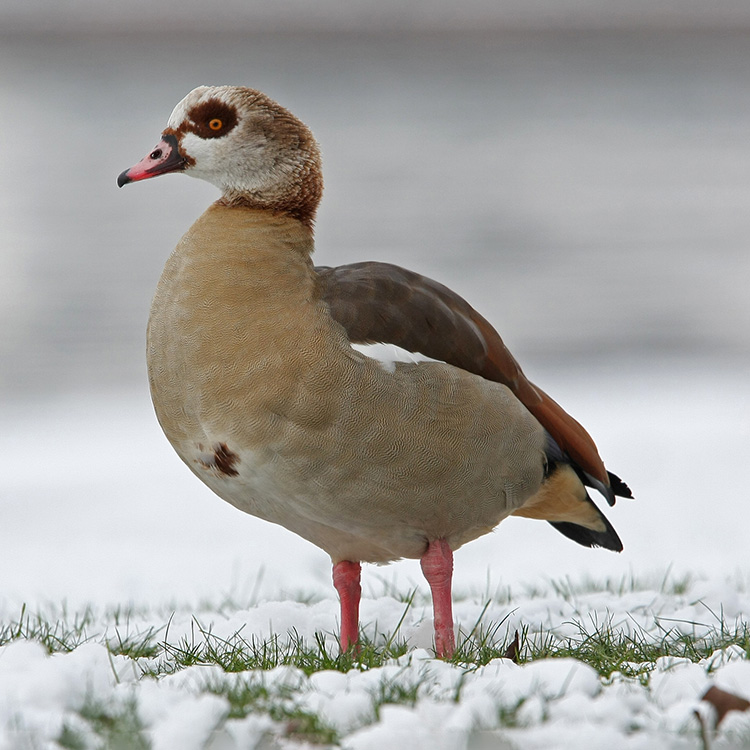
- Medium-sized goose with brownish body, white belly, and dark eye-patches
- Long pink legs and a short bill
- Both sexes similar in appearance
- Wings have a striking white and metallic green patch in flight
🧠 Behavior
- Often found grazing near water, or swimming in pairs or small groups
- Strong fliers — capable of local or regional migrations
- Nest in tree holes, riverbanks, or abandoned termite mounds
- Emit loud honking calls — especially during territorial displays
🐤 Breeding & Migration
- Nesting typically coincides with the dry season
- Partial migrants: some populations move locally depending on water levels and resource availability
- Juveniles can be seen following adults near riverbanks or flooded clearings
🌿 Ecological Role
- Seed dispersers for aquatic and riverine plants
- Help maintain wetland vegetation through grazing
- Important prey for large raptors and carnivores
🌍 Cultural Note
In ancient Nile Valley cultures (Egypt, Nubia), this goose had symbolic roles. While not as prominent in Akan mythology, it is often considered a sign of seasonal change, linked to water, fertility, and the rhythms of the river.
🔥 Conservation Considerations
- Maintain quiet nesting zones during breeding
- Prevent riverbank destruction
- Ensure protection of seasonal wetlands and small forest clearings used by migrants


