



📍 Habitat
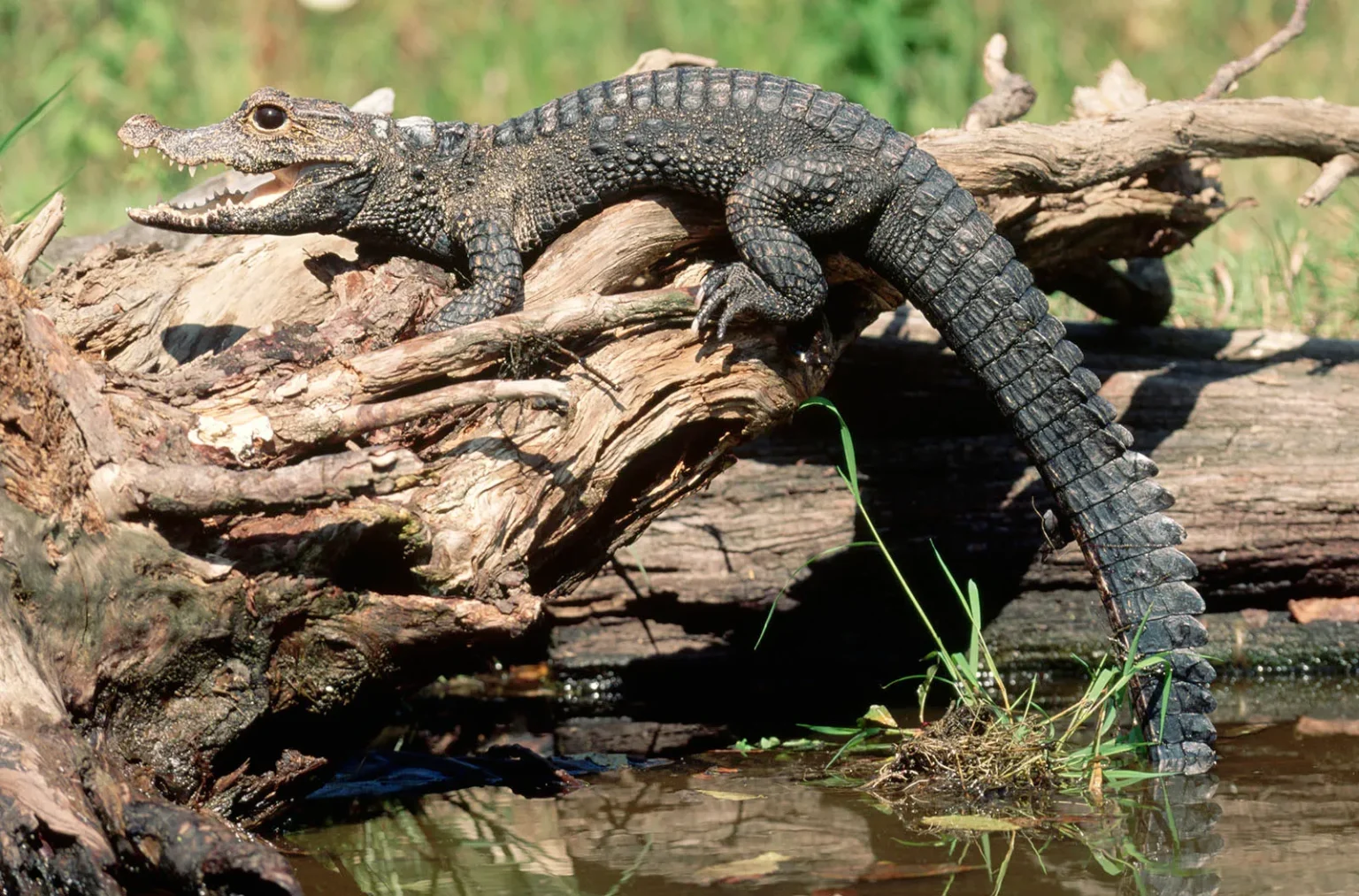
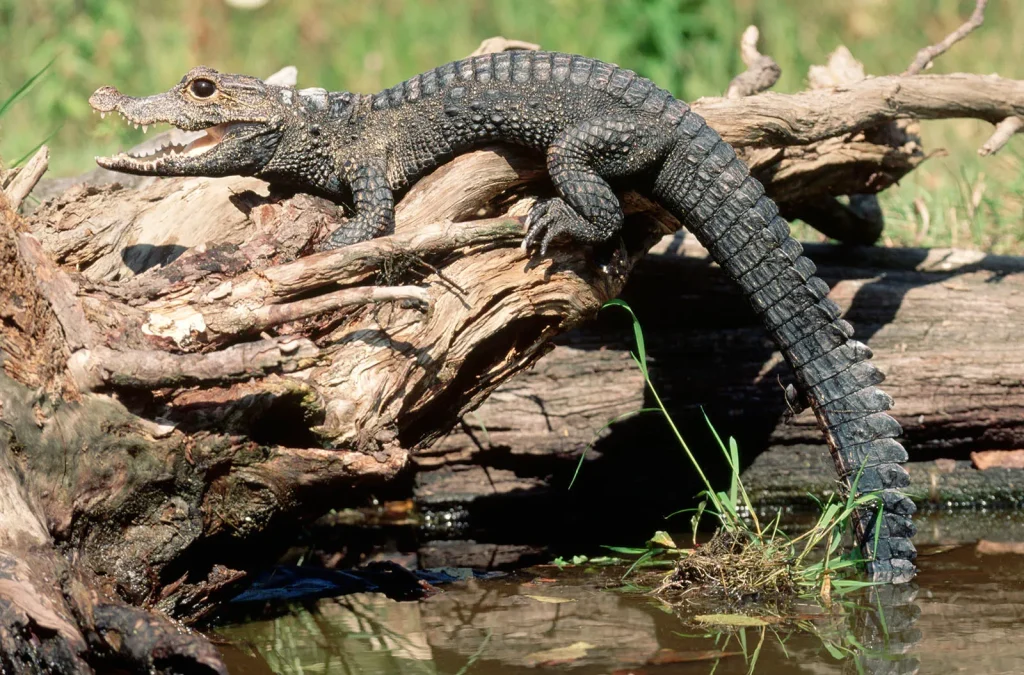
This small, nocturnal crocodile inhabits slow-moving streams, swamps, and flooded forests along the Tano River — particularly in shaded areas with dense vegetation and minimal human disturbance.
It is also found in the Boin Tano Forest Reserve and other wetland zones of Ghana and Côte d’Ivoire, where it prefers murky waters and burrowed banks.
⚠️ Conservation Status
- IUCN Red List: Vulnerable
- Main Threats:
- Wetland degradation due to mining and agriculture
- Poaching for meat and traditional medicine
- Deforestation, especially near riverbanks
- Water pollution and sedimentation from galamsey
🧬 Description
- Smallest crocodile species in Africa (1.3 to 1.9 meters max)
- Stout body, short tail, and armor-like bony scales
- Dark brown to black in color, often with yellowish throat
- Strong limbs for digging and climbing into forested burrows
🧠 Behavior
- Strictly nocturnal and very secretive
- Feeds on crustaceans, small fish, amphibians, insects, and carrion
- Nests in burrows dug near water
- Unlike larger crocodiles, it is non-aggressive and shy of humans
🧘♂️ Cultural Role
In traditional West African beliefs, crocodiles — including the dwarf crocodile — are seen as guardians of sacred waters. Some Akan communities prohibit their killing, believing they carry ancestral spirits or act as divine messengers (notably for Ta Kora, spirit of the Tano River).
🌿 Ecological Role
As a top predator in small aquatic systems, the dwarf crocodile helps regulate fish and insect populations and maintain wetland health. Its presence is a sign of rich, undisturbed biodiversity.
🔥 Conservation Actions Needed
- Strengthen protection of wetlands and riparian forests
- Enforce laws against hunting and illegal water use
- Encourage community-based conservation agreements
- Support research on its population, ecology, and threats


