



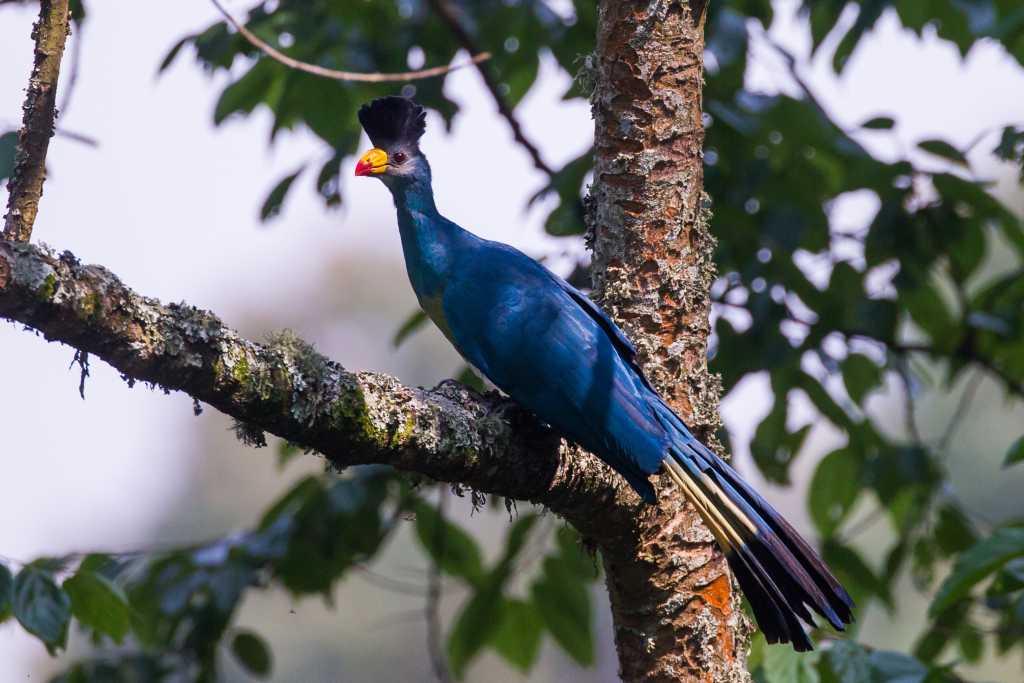
Flash of green, crest of royalty — the secret singers of the canopy
🔎 Overview
Turacos are a family of medium-sized, fruit-eating birds endemic to sub-Saharan Africa. Known for their vibrant plumage, elegant crests, and distinctive calls, they belong to the family Musophagidae, meaning “banana-eaters.”
Common species in the Tano River region include:
- Guinea Turaco (Tauraco persa) – also called Green Turaco
- Violet Turaco (Musophaga violacea)
- Yellow-billed Turaco (Tauraco macrorhynchus) (in deeper forests)
These species are found in Ghana and Côte d’Ivoire, particularly around the Tanoé-Ehy Forest, and in gallery forests and secondary woodland along the Tano River.
🌳 Habitat and Distribution
Turacos prefer:
- Forest canopy, riparian woodlands, and mangrove edges
- In the Tano Basin, they are spotted near:
- Swamp forests near Aby Lagoon
- Rainforest edges, cocoa farms, and sacred groves
They are rarely seen on the ground, using trees for feeding, calling, and nesting.
🎨 Physical Description
- Coloration:
- Guinea Turaco: brilliant emerald green, red flight feathers, white face
- Violet Turaco: deep violet body, yellow forehead, crimson wings
- Yellow-billed Turaco: lush green body, striking yellow beak
- All turacos have:
- Crests that rise when alarmed
- Short, rounded wings and long tails
- Unique pigments: turacins (red) and turacoverdins (green), found in no other birds
Their flight is clumsy but visually dramatic, especially when flushed from trees.
🌿 Diet and Behavior
- Frugivorous:
- Eat mainly figs, berries, bananas, mangos, and wild forest fruits
- Occasionally consume flowers, leaves, and small invertebrates
- Social: Often found in pairs or small family groups
- Territorial: Loud, cackling calls to defend feeding areas
Behavior:
- Move gracefully through treetops with semi-zygodactyl feet (two toes forward, two back)
- Use tail for balance and often freeze when disturbed, making them hard to spot despite their color
🪺 Reproduction
- Build shallow nests in trees using twigs
- Lay 2–3 eggs, incubated by both parents
- Chicks are born covered in down and climb before they can fly, using claws on their wings (a primitive trait)
Turacos rely on undisturbed canopy for successful breeding.
🧭 Cultural Significance
In West African cultures, especially among the Akan and Nzema:
- Turacos are symbols of peace, fertility, and mystery
- Their feathers, especially the red wing feathers, were once used by royalty and warriors
- Featured in folktales and proverbs as messengers, bringers of rain, or keepers of forest secrets
Their eerie calls, especially at dawn, are sometimes seen as warnings or omens.
⚠️ Threats
Turacos face increasing pressure from:
- Deforestation and illegal logging
- Hunting for feathers or traditional medicine
- Loss of fruit-bearing trees due to land conversion
While not currently endangered, habitat fragmentation may lead to local extinctions.
🌊 Why Turacos Matter for the Tano River
Turacos are:
- Seed dispersers critical to forest regeneration
- Symbols of forest vitality and biodiversity
- A reminder that even the most colorful creatures can vanish silently
Their calls echo through the treetops — a chorus for conservation.
🔗 Have you seen a flash of red wings or heard the laughing call of the turaco in the forest? Share your story at [TanoRiver.com/submit]


