



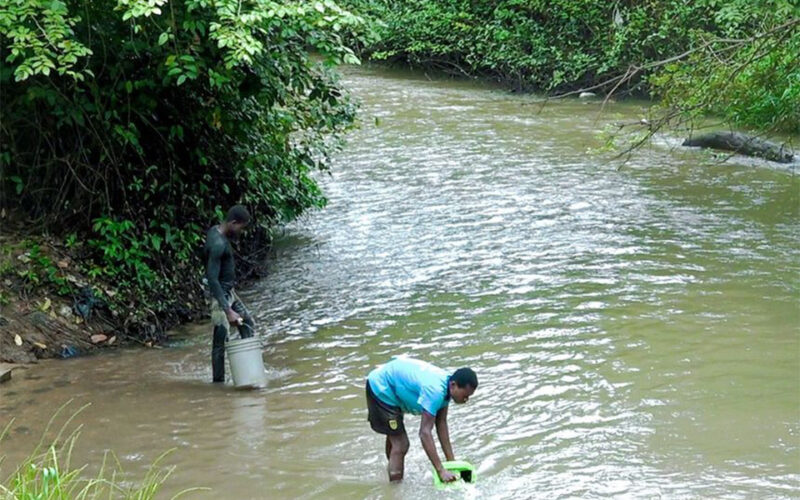
Executive Summary
This report provides an in-depth examination of the traditional river management practices employed by communities along Ghana’s Tano River, with a particular focus on the Bono people, and critically contrasts them with contemporary water resource management approaches. It highlights the deep indigenous knowledge, cultural beliefs, and customary laws that have historically fostered sustainable water and resource use. Concurrently, it analyzes the modern formal frameworks, infrastructure, and scientific initiatives that shape current management efforts.
The analysis reveals that traditional management is profoundly rooted in a spiritual reverence for the Tano River, often personified as a powerful deity, and is enforced through community-based taboos and established traditional institutions. This contrasts sharply with modern approaches, which are characterized by statutory laws, centralized governance bodies such as the Water Resources Commission (WRC) and the Environmental Protection Agency (EPA), and large-scale engineering projects.
A key finding is that while traditional practices sustained resource use for centuries, they are increasingly challenged by the pressures of modernization, escalating economic activities like illegal mining, and a notable lack of formal legal recognition within the broader governance structure. Modern interventions, despite their technological advancements and capacity for large-scale impact, frequently encounter issues related to enforcement, community disengagement, and unforeseen ecological and social consequences.
The report concludes that achieving a truly sustainable future for the Tano River basin necessitates a synergistic approach. This involves integrating the strengths of indigenous knowledge with formal scientific management through the adoption of co-governance models and policy reforms that empower local communities and legally acknowledge their invaluable traditional practices.
1. Introduction: The Tano River Basin in Context
1.1. Geographical and Ecological Significance of the Tano River
The Tano River Basin stands as a critical transboundary river system, shared between Ghana and Côte d’Ivoire, and constitutes one of Ghana’s four primary southwestern river basins, alongside the Ankobra, Bia, and Pra. This extensive watercourse stretches approximately 400 to 512 kilometers, originating from the Boyem Mountain Ranges near Techiman and flowing southwestward before ultimately discharging into the intricate Ehy/Tano/Aby Lagoon complex, which lies across the border with Côte d’Ivoire. The basin encompasses a vast area of about 16,060 square kilometers, with the predominant portion (approximately 92.6%) situated within Ghana. Its varied topography ranges from elevated highlands, reaching an average of 540 meters above sea level in upstream areas, particularly near the Boyem Mountain Ranges in the Bono East Region, to much flatter southern sections, with elevations between 0 and 15 meters above sea level. This diverse landscape supports a well-developed drainage network, comprising the main Tano River and nine major tributaries, which collectively play a vital role in sustaining local ecosystems, agricultural activities, and the livelihoods of communities throughout the basin.
From an ecological standpoint, the Tano Basin is a repository of diverse terrestrial and aquatic ecosystems, which collectively provide indispensable ecosystem services such as clean water, food, and energy to the riparian communities. To safeguard these critical natural assets, several forest reserves have been strategically established to protect the river’s headwaters. These include the Boin Tano, Tano Suraw, Tano Suhien, and Disue Forest Reserves. These forest ecosystems are instrumental in regulating freshwater supply by facilitating natural flow, filtration, and maintaining water quality, thereby underpinning the environmental health and human well-being of the region.
The geographical features of the Tano Basin are intricately linked with its ecological systems and human livelihoods. The river’s physical characteristics—its origin, length, extensive drainage network, and diverse topography—directly support the local ecosystems, which in turn provide essential services like water supply and food. The establishment of forest reserves specifically to protect river headwaters is a clear recognition that the health and integrity of these ecosystems directly ensure the availability and quality of freshwater. This fundamental interconnectedness implies that any disruption to the basin’s ecological balance, whether through deforestation, pollution, or other human activities, will inevitably have profound and direct impacts on the well-being and economic stability of the communities that depend on the river. Understanding this symbiotic relationship is crucial for any effective management approach, traditional or modern.
1.2. Socio-Economic Importance and Demographics of Riparian Communities
The Tano Basin is home to a substantial population, estimated at nearly 2 million people, reflecting a significant human presence across its varied landscapes. The demographic distribution shows that approximately 54% of the population resides in urban communities, while 46% live in rural areas. Internal migration patterns play a considerable role in shaping the urban population centers, with Techiman and Sunyani emerging as major attraction hubs within the basin. Administratively, the Tano Basin spans six regions and encompasses 29 distinct districts and municipal assemblies, highlighting a complex governance landscape.
Economically, the Tano Basin is a region of immense vitality, supporting millions of people through a diverse array of socio-economic activities. Agriculture serves as the primary occupation for over 27% of the basin’s population, a figure that rises to 47% in rural areas. Cocoa stands out as the dominant cash crop, contributing between 70% and 100% of the income for households engaged in cocoa farming. Other significant agricultural products include oil palm, rubber, coffee, plantain, cassava, and coconut, particularly along the coastal areas. Beyond agriculture, the basin is rich in mineral resources, with gold extensively mined in areas like Kenyase, Bibiani, and Sefwi-Surano. Logging and timber processing are also major industries in the forested zones, while non-timber forest products (NTFPs) from community forests can contribute up to 35% of farmers’ annual income. Urban economies within the basin are more diversified, encompassing trading, crafts, machine operation, and small-scale industries such as carpentry, block making, soap manufacturing, and metalwork, with Techiman, Sunyani, Goaso, and Sefwi Wiawso serving as large market towns. Additionally, oil and gas exploration in the lower Tano Basin commenced in 2012, further diversifying the region’s economic landscape.
The economic well-being of the communities within the Tano Basin is directly dependent on the health of the river and its surrounding ecosystems. While diverse socio-economic activities are present, traditional irrigation and fishing practices are noted as being “largely traditional and limited in scale”. This indicates a significant reliance on natural conditions and, consequently, a heightened vulnerability to environmental degradation. The widespread nature of illegal mining, which contributes substantially to water pollution, directly undermines the very resources upon which many livelihoods depend. Similarly, broader human activities and climate change are recognized as significant threats to these vital assets. This demonstrates that short-term economic gains from unsustainable practices, such as illegal mining, can severely jeopardize the long-term economic stability and social fabric of the region. The intimate link between environmental integrity and the economic viability of the basin’s communities underscores the urgent need for sustainable resource management.
1.3. Purpose and Scope of the Report
This report endeavors to systematically investigate the indigenous knowledge and practices of communities, particularly the Bono people, residing along the Tano River, concerning their traditional approaches to water management, resource utilization, and conservation. It will critically contrast these time-honored methods with the modern river management strategies currently implemented in Ghana. The scope of this analysis encompasses the socio-cultural, ecological, and policy dimensions of both traditional and modern systems, aiming to provide a comprehensive understanding of their respective strengths, inherent weaknesses, and the potential for their synergistic integration towards achieving sustainable river management.
2. Indigenous Knowledge and Practices in Tano River Management
2.1. Spiritual and Cultural Foundations of Water Stewardship
For the Bono people, the Tano River transcends its physical form to embody a profound spiritual significance. It is not merely a water body but is revered as a sacred entity, believed to be the dwelling place of local gods and ancestral spirits, including the powerful deity Taakora, who is considered the highest of the Bono gods on Earth. The very name “Tano” is derived from the river itself and is also attributed to several gods, underscoring the deep spiritual connection and personification of the river within their cosmology. This spiritual bond forms the core of their understanding of nature and spirituality, shaping their interactions with the aquatic environment.
Central to these beliefs is the Tanoboase Sacred Grove and Shrine, located near Techiman, which is considered the cradle and traditional home of the Bono people and the fabled source of the Tano River. These sacred groves are cherished as “oases that maintain biodiversity in culture and religious based knowledge system”. Oral traditions recount instructions from the deity Taakora that explicitly prohibited hunting or farming within the sacred grove, establishing early and effective conservation practices rooted in spiritual injunctions.
The spiritual reverence for the Tano River is further manifested through various rituals and festivals. A notable practice involves virgins filling the “Odomankoma Ahina” (Pot of the Creator) at the river’s source, a ceremony performed to ensure bountiful rainy seasons. This ritual highlights the belief in a reciprocal relationship between humans and the divine, where human actions of respect and supplication are believed to influence natural phenomena. The annual Apoo Festival also serves as a significant cultural event that celebrates the river’s vital role in sustaining the community. These practices are not isolated acts but are deeply embedded in the cultural life of the Akan and Ashanti people, reflecting a worldview where the natural world and the spiritual realm are inextricably linked.
The reverence for Tano as a sacred god, coupled with the prohibitions against hunting and farming in sacred groves and the performance of rituals for rain, collectively demonstrates a worldview that can be characterized as an “ecocentric ethic”. This perspective, explicitly noted among the Akwamu people, posits that nature possesses inherent value and is interconnected with human well-being. The belief that neglecting or disrespecting the river can lead to adverse consequences, such as natural disasters or poor harvests, provides a powerful, culturally embedded incentive for conservation. This spiritual framework thus functions as a robust, self-enforcing mechanism for environmental stewardship, often transcending purely utilitarian or economic considerations. This stands in stark contrast to many modern anthropocentric perspectives that tend to value nature primarily for its exploitable resources.
2.2. Traditional Water Management and Allocation Systems
The communities along the Tano River have historically developed intricate systems for water management and allocation, deeply embedded in their social and spiritual structures. The use of the river was systematically regulated through the presence of deities mounted along the upper Tano River, with sub-chiefs and their court of servers responsible for overseeing and enforcing these regulations. This hierarchical yet community-rooted structure indicates a sophisticated, localized governance system for managing water resources.
Under customary law, water in all its forms—including rivers and lakes—was regarded as public property, not subject to individual appropriation. Rules were established to ensure the reasonable and equitable use of water among communities, particularly where multiple settlements relied on the same water source. Specific rules dictated how water could be fetched, often prescribing the use of traditional vessels like earthenware or calabashes and prohibiting metal objects, which were believed to offend the river spirits. Furthermore, designated areas for drinking water were typically located upstream from areas used for bathing or watering animals, a practical measure to maintain water quality.
Traditional knowledge also extended to the astute management of both groundwater and surface water resources. Local farmers possessed the knowledge to accurately locate groundwater points, understand the timing of groundwater recharge, and identify optimal periods for constructing wells. Farmers situated along the Tano River regularly engaged in dry season vegetable farming, utilizing small-scale irrigation facilities, demonstrating an adaptive response to seasonal water availability. A key strategy was the conjunctive use of surface and groundwater, where farmers would delay the use of groundwater to reduce pressure on wells, thereby diversifying their water sources and ensuring availability during critical periods. To cope with water scarcity, some farmers would dig multiple wells or continuously deepen existing ones, showcasing a pragmatic and persistent adaptation to environmental conditions.
Beyond these general practices, indigenous irrigation techniques in Ghana and broader Africa illustrate adaptive solutions. While irrigation practices within the Tano Basin itself are described as “largely traditional and limited in scale” , examples from other regions provide insights into the principles underlying these methods. These include flood recession farming, the construction of small-scale irrigation canals, pitcher irrigation (using buried porous pots), bamboo drip irrigation, jessour (stone and earth walls for runoff retention), and cascade systems that leverage topography for water storage and distribution. These techniques consistently emphasize efficiency, minimal environmental impact, and a deep understanding of local hydrological and ecological conditions.
The diverse traditional water management practices, such as the ability to locate groundwater points, the strategic conjunctive use of water sources, and various ingenious irrigation methods, represent an adaptive system developed through generations of empirical observation and experimentation. These are not rigid, universal rules but rather context-specific solutions meticulously tailored to the unique local hydrology, climate patterns, and agricultural requirements. The explicit mention of “small-scale irrigation facilities” being utilized by farmers along the Tano for dry season cultivation provides tangible evidence of this practical application. This inherent adaptability and reliance on localized knowledge are exceptionally valuable for contemporary water management, particularly in the face of evolving climate patterns. These traditional methods offer resilient, cost-effective, and culturally appropriate solutions that can complement modern interventions.
2.3. Indigenous Resource Use and Conservation Strategies
Indigenous communities along the Tano River have long integrated resource use with robust conservation strategies, deeply rooted in their spiritual beliefs and customary laws. A prominent example of this is the complete prohibition of fishing in the Tano River within the Brong-Ahafo area. This strict regulation stems from the belief that fish are considered “children of the spirit” residing in the river, making their capture a sacrilege. Violating this rule is believed to lead to severe consequences, including illness or even death. This practice aligns with broader Ghanaian taboos that include “taboo fishing zones” and “closed fishing days,” often prohibiting fishing on specific days (e.g., Tuesdays) or during certain seasons, and even restricting the use of metal objects for water collection. These regulations are not merely arbitrary rules but are powerful, culturally embedded mechanisms for resource protection.
Traditional farming methods, often referred to as “cultural practices in sustainable agriculture,” demonstrate a sophisticated understanding of soil and water conservation. These practices include bush fallowing, which allows land to regenerate; crop rotation, which maintains soil fertility by alternating nutrient demands; intercropping, where different crops are grown together to enhance mutual benefits and pest control; contour ploughing and terracing, which prevent soil erosion on slopes; and the use of organic manure to enrich soil. Agro-forestry, the integration of trees into farming systems, and cover cropping, the planting of non-commercial crops to protect and enhance soil, further contribute to soil health and water retention. Practices like timely planting and thinning also optimize resource use and crop health. The adoption of rotational grazing helps manage livestock impact and improves soil infiltration. Additionally, seed saving is a crucial practice, ensuring that farmers maintain a supply of seeds adapted to local climate and soil conditions, thereby promoting resilience and biodiversity in agriculture.
Biodiversity protection is inherently woven into the fabric of indigenous beliefs and practices. Sacred groves, such as the Tanoboase Sacred Grove, serve as natural refuges for diverse flora and fauna, protecting unique ecosystems and supporting species that might not thrive elsewhere. Traditional beliefs and practices, enforced through taboos and totems, are instrumental in conserving biodiversity by regulating human behavior towards natural resources. This comprehensive approach extends to protecting water sources, natural vegetation, wildlife, and endangered species. A notable example is the strict local traditional belief that forbids hunting the West African Slender-snouted Crocodile in the Techiman-Tanoso stretch of the Tano River, demonstrating a direct and effective conservation outcome for a critically endangered species.
The prohibition of fishing in the Tano River, driven by the spiritual belief that fish are “children of the spirit,” exemplifies a powerful, culturally embedded conservation ethic. This is not merely a regulation but a deeply held conviction that directly translates into resource protection. Similarly, the detailed traditional agricultural practices, including crop rotation, terracing, and agro-forestry, demonstrate a sophisticated understanding of ecological processes such as soil fertility, erosion control, and pest management, developed and refined over countless generations. These examples illustrate that traditional societies inherently integrate resource use with conservation, ensuring long-term sustainability. This approach fundamentally differs from modern models that often separate resource exploitation from conservation, requiring external regulations and enforcement mechanisms. The traditional system, conversely, intrinsically links human well-being with the health and integrity of the ecosystem.
2.4. Role of Traditional Institutions and Customary Laws in Governance
Traditional institutions and customary laws form the bedrock of indigenous resource management along the Tano River, providing a robust, community-driven governance framework. Traditional leaders, including chiefs, clan heads, and traditional priests, serve as the primary custodians and agents of indigenous knowledge. They have historically acted as stewards of natural resources, ensuring the preservation of forests, rivers, and wildlife through the enforcement of customary laws and practices. This role underscores their deep responsibility for the collective well-being and the long-term sustainability of their environment.
The enforcement of these customary laws is achieved through a variety of mechanisms, including taboos, totems, and ceremonies, which collectively serve as major instruments for the conservation and management of rivers. These laws were widely respected by all members of the indigenous communities. For instance, clan heads play a crucial role in ensuring that taboos against harming totemic plants and animals are strictly observed, thereby contributing directly to biodiversity conservation. Violations of these customary rules were not taken lightly and were typically punishable by fines, which could be in money or in kind, payable to the local chief or priests. The fear of spiritual retribution, often invoked through traditional beliefs, further reinforced compliance with these customary laws.
The governance system is inherently community-based, providing the communities with their core identity and maintaining its effectiveness through established structures and mechanisms. These traditional systems regulate access to land, mediate disputes over resource use, and spearhead collective community activities related to resource management. This localized approach ensures that management decisions are contextually relevant and benefit from intimate local knowledge.
Traditional governance is not merely a legal framework; it is deeply interwoven with cultural identity, spiritual beliefs, and the very social structures of the communities. The enforcement of taboos through the deeply ingrained belief in spiritual consequences, rather than solely through external policing, represents a powerful, internalized form of regulation. This means that compliance is often driven by a shared worldview and a collective sense of responsibility, rather than just fear of punitive measures. This comprehensive socio-cultural system inherently promotes compliance and fosters a collective sense of stewardship. This contrasts sharply with modern attempts to manage resources, which often fail to account for this holistic nature, leading to a disconnect between formal policies and local realities. Recognizing and re-enacting traditional laws can therefore help restore a sense of collective ownership and responsibility towards the sustainable use of natural resources.
Table 1: Key Traditional Water Management Practices and Their Principles
| Category | Practice/Belief | Principle/Objective | Relevant Snippets |
| Water Management | Regulation of River Use by Deities/Sub-Chiefs | Structured, community-based governance; controlled access | |
| Designated Water Access Points | Water quality maintenance; equitable access | ||
| Groundwater Location & Well Construction | Adaptive water access; understanding local hydrology | ||
| Conjunctive Use of Surface & Groundwater | Water efficiency; resource diversification; drought resilience | ||
| Small-Scale Irrigation Facilities | Adaptive agriculture; dry season farming | ||
| Pitcher Irrigation, Bamboo Drip Irrigation, Jessour, Cascade Systems | Water efficiency; localized irrigation; runoff retention | ||
| Resource Use | Sustainable Agricultural Practices (e.g., Crop Rotation, Terracing, Agro-forestry, Cover Cropping, Seed Saving) | Soil conservation; fertility maintenance; erosion control; biodiversity in agriculture; climate adaptation | |
| Conservation | Tano as a Deity; Sacred Groves & Shrines | Spiritual reverence; inherent value of nature; biodiversity protection; cultural heritage preservation | |
| Fishing Taboos (e.g., Tano River prohibition, specific days/seasons) | Resource regulation; species protection; ecosystem health | ||
| Protection of West African Slender-snouted Crocodile | Species-specific conservation; traditional beliefs as protective measures | ||
| Governance | Traditional Leaders (Chiefs, Clan Heads, Priests) as Custodians | Local authority; enforcement of customary laws; community mobilization | |
| Customary Laws, Taboos, Totems, Ceremonies | Social regulation; behavioral norms; spiritual enforcement; dispute resolution | ||
| Community-Based Governance | Local ownership; cultural identity; effective implementation |
3. Modern Approaches to Tano River Management
3.1. Formal Governance and Policy Frameworks
Modern water resource management in Ghana, including the Tano River Basin, is primarily structured around formal governance and policy frameworks, with key institutions playing central roles. The Water Resources Commission (WRC), established by Act 522 of 1996, serves as the overarching body responsible for water resources management across Ghana. Under this legal framework, water resources are vested in the President on behalf of the people, signifying that there is no private ownership of water resources in Ghana. The WRC’s mandate encompasses a broad range of core functions, including policy formulation and planning, particularly through the adoption of Integrated Water Resources Management (IWRM) principles. It is also responsible for regulating water use by granting water use rights, coordinating the activities of various institutions involved in water management, conducting research and monitoring water resource conditions, and collaborating with relevant agencies on pollution control.
Ghana has actively embraced the principles of Integrated Water Resources Management (IWRM), which advocates for the coordinated development and management of water, land, and related resources. The ultimate aim is to maximize economic and social welfare without compromising the sustainability of vital ecosystems. Since 2007, six River Basin plans, including one for the Tano Basin, have been developed, providing crucial inputs for the overarching National IWRM Plan. To facilitate localized management, the Tano Basin Board was constituted in 2011-2012, tasked with overseeing water resources at the basin level.
Complementing the WRC’s efforts is the Environmental Protection Agency (EPA), established in 1973 under Act 490 of 1994. The EPA is dedicated to the improvement, conservation, and promotion of Ghana’s environment, overseeing the implementation of the National Environment Policy. The EPA collaborates closely with the WRC on various initiatives, such as the Ghana Landscape Restoration and Small-Scale Mining Project (GLRSSMP). This multi-agency initiative aims to address environmental degradation and promote sustainable water resource management in selected catchments and river basins, including the Tano. Under the EPA-led component of GLRSSMP, the WRC is developing IWRM Plans, empowering local communities in water governance, streamlining permitting processes, and enhancing water quality monitoring.
The formal governance framework in Ghana, particularly through the WRC and EPA, reflects a tension between centralized authority and the recognized need for decentralized implementation. While the WRC is a national, centralized body responsible for overarching policy and regulation, its IWRM framework explicitly promotes “decentralized IWRM initiatives” and the establishment of “river basin boards”. This approach acknowledges that effective water management requires local engagement and context-specific solutions. The GLRSSMP’s inclusion of “Empowerment of local communities to manage water resources in their areas” further illustrates a deliberate move towards more participatory governance. The success of these modern policies largely depends on effectively bridging the gap between national mandates and local implementation. This necessitates genuine devolution of power and resources to basin-level and community-level institutions, ensuring that local knowledge and needs are integrated into formal decision-making processes.
3.2. Modern Water Infrastructure and Development Projects
Modern approaches to river management in Ghana involve significant investments in infrastructure and development projects aimed at harnessing water resources for economic growth and societal well-being. While the Tono Irrigation Scheme is located in the Upper East Region, not directly on the Tano River, it serves as a prominent example of a large-scale modern irrigation project in Ghana. This scheme features a substantial dam, approximately 2.5 miles long, designed to irrigate about 2,500 hectares of land through an extensive network of main and lateral canals. Such projects are intended to facilitate year-round farming, significantly increasing agricultural output and contributing to food security.
Beyond irrigation, the Tano River Basin also holds potential for hydropower development. Studies have identified several sites along the Tano River with significant energy potential for small hydropower (SHP) installations. This aligns with Ghana’s broader national strategy to utilize hydropower for electricity generation, as evidenced by major dams like Akosombo, Kpong, and Bui, which collectively account for a substantial portion of the country’s installed power capacity.
Furthermore, modern engineering extends to improving connectivity within the basin. The ongoing construction of the Tano Bridge on the Ntotroso-Acherensua Highways exemplifies this. This critical infrastructure project is designed to enhance road connectivity, particularly by making routes passable during the rainy season when the river previously overflowed. The new bridge, built with reinforced concrete and modern engineering techniques, aims to ease transport disruptions, improve safety for commuters, and stimulate economic activity by facilitating the movement of goods and people.
Modern infrastructure projects, such as large dams and bridges, are typically undertaken with the aim of delivering substantial economic and social benefits, including increased agricultural production, reliable electricity supply, and improved transportation networks, all of which contribute to poverty reduction. However, the documentation also highlights significant negative impacts associated with these large-scale interventions. These can include the displacement of communities, loss of valuable farmlands, an increase in water-borne diseases, accidental deaths due to drowning, soil degradation, and adverse effects on aquatic life resulting from altered water levels and abstraction. Furthermore, such projects can lead to profound socio-cultural changes due to the influx of migrant workers, potentially stressing local resources and disrupting community norms. This demonstrates that while modern engineering solutions can be highly efficient in delivering specific services, they often come with considerable environmental and social costs if not planned and managed holistically. This underscores the critical importance of comprehensive environmental and social impact assessments (ESIA) and robust mitigation measures to ensure that the benefits outweigh the unintended consequences.
3.3. Scientific Research, Monitoring, and Conservation Initiatives
Scientific research and monitoring form a critical component of modern river management, providing data-driven insights into the health and dynamics of the Tano River ecosystem. The Water Resources Commission (WRC) actively conducts water quality monitoring across Ghana’s basins. This includes studies that assess groundwater quality for drinking and irrigation purposes. A significant focus of this monitoring is on surface water quality, particularly in relation to heavy metal contamination, which is often attributed to human activities such as artisanal small-scale gold mining (ASGM). These studies are essential for identifying pollutants and understanding their distribution and impact on human and ecological health.
Ecosystem health assessment is another key area of scientific endeavor. Programs like Conservation International’s Rapid Assessment Program (RAP) deploy expert teams to critically important field sites to evaluate biodiversity, ecosystem health, and the multiple benefits nature provides to people. These rapid assessments provide timely scientific information to guide conservation decision-making. Drawing lessons from models like the River Health Programme (RHP) in South Africa, which assesses river ecosystems by using in-stream and riparian biological communities as indicators of environmental response to disturbances, Ghana has also initiated projects such as “Tool-kits for the Sustainable Management of Riverine Biodiversity.” This project aims to assess aquatic communities and develop ecosystem health indicators specifically adapted for use within West Africa.
Modern conservation initiatives are also actively implemented within the Tano Basin. The WRC has established several forest reserves to protect vital river headwaters, recognizing their critical role in maintaining water quality and flow. The Ghana Landscape Restoration and Small-Scale Mining Project (GLRSSMP) is a multi-agency effort, with the WRC playing a strategic role, designed to address environmental degradation and promote sustainable water resource management in selected basins, including the Tano. Specific conservation efforts extend to protecting endangered species, such as the West African Slender-snouted Crocodile, whose largest unprotected population resides in the Techiman-Tanoso stretch of the Tano River.
Scientific research and monitoring primarily serve a diagnostic purpose, focusing on identifying environmental problems, such as heavy metal contamination, declining water quality, and biodiversity loss, and understanding their underlying causes, including ASGM, other human activities, and climate change. This systematic data collection and analysis provide crucial information for informed decision-making and the formulation of effective policies. However, the effectiveness of scientific findings in leading to tangible implementation and behavioral change is not always guaranteed. While indispensable for comprehending complex environmental issues and guiding policy, scientific knowledge often lacks the inherent social and cultural mechanisms for enforcement and community buy-in that are characteristic of traditional systems. This highlights a gap between scientific understanding and practical, widespread adoption of sustainable practices.
3.4. Contemporary Flood Control Strategies
Contemporary flood control strategies in Ghana, as in many parts of the world, employ a combination of structural and non-structural measures, drawing on modern engineering and planning principles. Structural measures, often referred to as “hard engineering” approaches, involve the construction of artificial structures designed to control and redirect water flow. These include dams, tunnels, levees, and dredging of river channels. The primary objective of dredging, for instance, is to enhance the water transport capacity of a river and, in some cases, to realign channels to convey floodwaters past critical areas. These interventions aim to provide direct physical protection to communities and infrastructure.
Alongside structural measures, non-structural approaches focus on preparedness, mitigation, and working with natural processes. These include the implementation of ordinances that help reduce flood threats, public awareness campaigns, the establishment of flood warning systems, and promoting community participation in flood insurance programs. Increasingly, there is a recognition of the value of “green infrastructure” features, such as stormwater parks and floodplain preservation, which are designed to mimic nature’s functions to slow runoff, reduce sediment, and improve water quality. These approaches aim to reduce flood risk while providing additional environmental benefits.
The concept of Integrated Flood Risk Management (IFRM) is gaining traction, advocating for a comprehensive approach that categorizes efforts into protection and preparedness. For example, the San Antonio River Authority (SARA) model illustrates such a comprehensive strategy. In Ghana, the Integrated Water Resources Management (IWRM) Action Plan also includes the review of existing basin IWRM plans to explicitly address flood risks, indicating a move towards more integrated and proactive flood management.
While hard engineering structures are considered essential for preventing river flooding, their limitations and potential unintended consequences are becoming increasingly apparent. Such measures can, paradoxically, increase flood risk downstream, destabilize riverbanks, exacerbate erosion, and damage existing infrastructure. This growing understanding of the drawbacks of purely engineered solutions has led to a noticeable shift towards more ecologically sound approaches. The increasing emphasis on “green strategies” and “nature-based solutions” reflects a desire to work in harmony with natural processes rather than against them. These nature-based solutions often provide multiple co-benefits beyond just flood control, such as improved water quality, habitat creation, and recreational opportunities. Therefore, effective flood management increasingly requires a balanced blend of structural and non-structural measures, with a growing preference for ecosystem-based solutions that offer broader environmental and social advantages.
4. Contrasting Traditional and Modern Approaches: A Critical Analysis
4.1. Divergent Philosophies, Methodologies, and Governance Structures
The fundamental differences between traditional and modern river management along the Tano River are evident in their underlying philosophies, methodologies, and governance structures. Traditional management is deeply rooted in an ecocentric and spiritual worldview, where the Tano River is not merely a resource but a sacred entity, home to deities like Taakora. This philosophy views humans as an integral part of nature, fostering a profound respect and a reciprocal relationship with the environment. Water is seen as a life-giving force with inherent spiritual value, and its well-being is intrinsically linked to human prosperity. In contrast, modern management, while increasingly incorporating principles of environmental sustainability (e.g., Sustainable Development Goals, IWRM), often operates from an anthropocentric perspective. Water is primarily viewed as a resource to be managed and harnessed for human use and economic development, with a focus on maximizing utility and efficiency.
Methodologically, traditional practices are empirical and adaptive, developed over “generations of experimentation” and “lived experience”. This knowledge is often holistic, intuitive, and passed down orally, encompassing an intricate understanding of local ecosystems, flora, fauna, and weather patterns. For example, farmers use local knowledge to locate groundwater and time well construction. Modern methodologies, conversely, are predominantly scientific and data-driven, relying on systematic research, monitoring, and modeling to diagnose environmental problems, assess ecosystem health, and inform policy. This approach emphasizes quantifiable data and replicable scientific methods.
In terms of governance, traditional systems are typically decentralized, community-based, and holistic. Authority rests with traditional leaders such as chiefs, clan heads, and priests, who act as custodians of resources and enforce customary laws, taboos, and totems. These systems are deeply integrated with cultural identity and social structures, promoting compliance through shared beliefs and social sanctions. Modern governance, on the other hand, is generally centralized and statutory, characterized by formal institutions like the Water Resources Commission (WRC) and the Environmental Protection Agency (EPA). These bodies operate under national laws and policies, often with a sectoral focus, and aim for broad, standardized implementation across different regions. While there is a stated aim for decentralization through IWRM and basin boards, the underlying structure remains formal and hierarchical.
The difficulty in integrating these two distinct management systems stems from fundamental differences in worldview, legal standing, and power structures. Modern systems, with their scientific and technical orientation, often struggle to fully grasp and incorporate the inherent conservation ethics embedded within traditional practices, which are driven by spiritual beliefs and cultural norms. Conversely, traditional systems, while highly effective at the local level, may lack the formal legal authority or the scale of resources needed to combat large-scale environmental threats, such as illegal mining, that transcend local boundaries. This creates a persistent challenge in harmonizing top-down statutory regulations with bottom-up customary governance.
4.2. Strengths and Weaknesses of Each Approach
Both traditional and modern approaches to river management in the Tano Basin possess distinct strengths and weaknesses, which become apparent when critically analyzed.
Traditional Strengths: Traditional management systems are characterized by an inherent sustainability, deeply ingrained in the cultural and spiritual fabric of the communities. The reverence for the Tano River as a sacred deity, along with the establishment of sacred groves, fosters a strong, self-enforcing conservation ethic that transcends mere utilitarian value. This spiritual connection leads to high community buy-in and compliance with customary laws and taboos, such as the prohibition of fishing in the Tano River, which effectively regulates resource use. Traditional practices are highly adapted to local ecological conditions, developed through generations of empirical observation and experimentation, making them resilient and often low-cost. They offer a holistic integration of social, ecological, and spiritual aspects, where resource management is not separate from daily life or cultural identity. The presence of traditional leaders and customary laws provides effective local governance and dispute resolution mechanisms.
Traditional Weaknesses: Despite their strengths, traditional systems face significant vulnerabilities, particularly from external pressures. Modernization, the influence of new religions, and increasing poverty can erode traditional belief systems and the authority of customary laws, leading to a breakdown in adherence. A major challenge is the lack of formal legal backing for indigenous institutions and customary laws, which can marginalize their effectiveness in a statutory governance landscape. Furthermore, traditional systems, typically operating at a local scale, may struggle to address large-scale environmental issues like widespread illegal mining, which often involve external actors and powerful economic incentives.
Modern Strengths: Modern approaches bring significant technical expertise and scientific data to river management. They enable comprehensive water quality monitoring, ecosystem health assessments, and the development of sophisticated hydrological models. Modern frameworks facilitate the implementation of large-scale infrastructure projects, such as dams for irrigation and hydropower, and bridges for improved connectivity, which can yield substantial economic benefits and improve living standards. The statutory nature of modern laws provides a basis for legal enforceability and allows for broad policy implementation across national boundaries, addressing transboundary water management issues.
Modern Weaknesses: A significant weakness of modern approaches is their frequent top-down implementation, which can lead to a lack of local ownership and community disengagement. Despite legal frameworks, enforcement gaps are common, particularly in addressing illicit activities like illegal mining, which continue to severely pollute water bodies. Large-scale infrastructure projects, while beneficial, often come with unintended ecological and social impacts, including displacement of communities, loss of livelihoods, increased water-borne diseases, and environmental degradation if not carefully managed. Modern solutions can also be high-cost and tend to prioritize technical fixes over holistic, culturally appropriate solutions, often failing to integrate local context effectively.
4.3. Challenges in Integrating Traditional and Modern Approaches
The integration of traditional and modern water management approaches in the Tano River Basin, while promising, is fraught with significant challenges stemming from fundamental disparities in their underlying structures and operational philosophies.
One primary obstacle lies in the epistemological and institutional barriers that separate these two knowledge systems. Traditional ecological knowledge (TEK) is often holistic, intuitive, and deeply embedded in cultural practices and spiritual beliefs, making it difficult to quantify or categorize within a Western scientific framework. Modern scientific knowledge, conversely, is typically reductionist, data-driven, and relies on formal, standardized methodologies. This difference in how knowledge is generated and validated can lead to a lack of understanding and appreciation from formal institutions towards indigenous wisdom. The institutional structures themselves present a challenge: informal, customary governance systems often clash with rigid, statutory frameworks, creating friction and inefficiency in collaborative efforts.
A critical challenge is the lack of formal legal recognition and enforcement for indigenous institutions and customary laws. Despite their historical effectiveness, traditional practices often operate without the backing of national legislation, rendering them vulnerable to being marginalized or overridden by statutory systems. This absence of legal instruments to support the enforcement of indigenous knowledge weakens the authority of traditional leaders and undermines their capacity to manage resources effectively in a modern legal landscape.
Furthermore, power dynamics and trust deficits frequently impede successful integration. Modern water policies are often formulated and implemented in a top-down manner, with limited genuine consultation or participation from indigenous communities. This exclusion from decision-making processes can lead to feelings of disengagement and resentment among local populations, fostering a lack of trust in governmental initiatives. Instances where traditional leaders, who are meant to be custodians of communal land, act as landowners for personal economic gain further complicate these power dynamics and erode trust within communities and with external bodies.
Finally, external pressures from modernization, the spread of new religions, and persistent poverty continuously threaten the efficacy and sustainability of traditional practices. The pervasive issue of illegal mining (galamsey) in the Tano Basin serves as a stark example of a threat that traditional governance structures struggle to combat effectively without robust formal backing. The economic incentives driving such illegal activities often overpower traditional social sanctions and customary regulations, leading to severe environmental degradation.
The difficulty in integrating these systems fundamentally arises from the clash between distinct worldviews, legal standings, and power structures. Modern systems frequently fail to fully comprehend or value the inherent conservation ethics that underpin traditional practices, which are deeply rooted in spiritual and cultural connections to the environment. Conversely, traditional systems, despite their proven sustainability at a local scale, are often ill-equipped to contend with the immense pressures exerted by large-scale economic forces and the complexities of national and international legal frameworks. This ongoing tension highlights the need for a more nuanced and collaborative approach to water resource management.
5. Lessons Learned and Recommendations for a Synergistic Future
5.1. Lessons from the Tano Experience
The experience of the Tano River basin provides invaluable lessons regarding the complexities and potential of both traditional and modern approaches to water resource management.
Firstly, the case unequivocally demonstrates the invaluable nature of traditional ecological knowledge (TEK). Indigenous communities along the Tano possess profound, adaptive knowledge and practices for sustainable water and resource management, deeply embedded in their cultural and spiritual fabric. Practices such as the spiritual reverence for the Tano River, the establishment of sacred groves, the strict fishing taboos, and sophisticated traditional agricultural techniques (e.g., conjunctive water use, terracing, crop rotation) illustrate a long-term, holistic understanding of ecosystem health and resource sustainability. These practices are not merely rules but are integral to the communities’ identity and worldview, fostering an inherent conservation ethic.
Secondly, the Tano experience underscores the limitations of purely top-down, centralized approaches. While modern management, with its technical strengths and statutory frameworks, aims for efficiency and broad coverage, it often struggles with effective local enforcement and securing genuine community buy-in. The persistent challenges posed by illegal mining, despite formal regulations and monitoring efforts, highlight a significant disconnect between national policies and local realities. The implementation gaps in Integrated Water Resources Management (IWRM) plans, as observed in other Ghanaian basins, further illustrate that technical solutions alone are insufficient without robust local engagement and ownership.
Finally, the increasing degradation of the Tano River, including pollution and instances of drying up, unequivocally demonstrates the imperative for integration. Neither traditional nor modern approaches, when applied in isolation, are sufficient to address the complex and escalating environmental pressures facing the basin. The challenges faced by indigenous institutions due to a lack of formal legal backing, coupled with the socio-ecological impacts of large-scale modern projects, emphasize that a truly sustainable future for the Tano River requires a deliberate and synergistic blending of traditional wisdom with modern science and governance frameworks.
5.2. Recommendations for Sustainable River Management
Based on the critical analysis of traditional and modern river management practices along the Tano River, the following recommendations are proposed to foster a more synergistic and sustainable future for the basin:
- Legal Recognition and Policy Integration of Indigenous Knowledge: It is crucial to enact bye-laws and legislative instruments that formally recognize, support, and integrate indigenous knowledge and customary laws into national water resource management policies. This provides the necessary legal backing for traditional institutions and practices, empowering them to enforce conservation measures effectively within the broader statutory framework. This integration should move beyond mere acknowledgement to active incorporation into planning and implementation.
- Empowering Community-Based Co-Governance: Strengthen the existing River Basin Boards and local community structures by genuinely empowering them in decision-making processes, resource allocation, and enforcement. This includes providing capacity building and allocating adequate resources to indigenous institutions, enabling them to play a more active and recognized role in water management. Such empowerment fosters a sense of ownership and builds mutual trust between communities and formal authorities, which is vital for sustainable natural resource management.
- Promoting Biocultural Conservation: Adopt and actively promote approaches that recognize the inseparable link between biological diversity and cultural diversity. Sacred sites and traditional conservation areas, such as the Tanoboase Sacred Grove, should be formally supported and integrated as integral components of national conservation strategies. Leveraging their inherent conservation ethics and spiritual significance can provide powerful, culturally resonant mechanisms for biodiversity protection and ecosystem health.
- Adaptive and Participatory Planning: Implement water management plans that are flexible, adaptive, and responsive to local conditions and changes, including those induced by climate change. This requires actively incorporating local ecological knowledge and supporting community-based monitoring initiatives. Genuine participation of indigenous communities must be ensured at all stages—from the design and planning to the implementation and monitoring—of all water-related projects, fostering solutions that are both technically sound and socially acceptable.
- Addressing Threats Collaboratively: Develop joint strategies between traditional authorities, government agencies (such as the WRC and EPA), and other relevant stakeholders to combat pervasive threats like illegal mining and other forms of water pollution. This requires robust enforcement mechanisms that blend the legal power of formal institutions with the social sanctions and community cohesion inherent in traditional systems. Such collaboration can enhance the effectiveness of monitoring, reporting, and punitive actions against environmental degradation.
- Investment in Sustainable Livelihoods: Support and promote traditional sustainable agricultural and fishing practices by providing access to appropriate modern technologies, training, and market linkages. This can reduce the economic pressure that drives communities towards unsustainable activities, such as illegal mining, and ensure long-term food security and economic stability for riparian populations. Initiatives should focus on enhancing the efficiency and productivity of traditional methods while preserving their ecological integrity.
By embracing these recommendations, Ghana can move towards a more integrated and resilient water management paradigm for the Tano River basin, one that honors its rich cultural heritage while addressing contemporary environmental challenges.


