



Introduction
This report presents a comprehensive study of existing kingdoms and traditional communities situated around the Tano River, traversing the modern-day nations of Ivory Coast and Ghana. The Tano River, also known as Tanoé, is a significant geographical feature, flowing approximately 400 kilometers from its source near Techiman in Ghana’s Bono East Region to the Ehy, Tendo, and Aby Lagoons in Ivory Coast, ultimately discharging into the Atlantic Ocean. Notably, the river forms the final kilometers of the international land boundary between Ghana and Ivory Coast, underscoring its trans-national relevance.
Beyond its geographical importance, the Tano River holds profound cultural and spiritual significance for the communities along its banks. In Akan and Ashanti mythology, Tano, often referred to as Tano Kwesi or Ta Kora, is revered as the god of the river, symbolizing the vital connection between humans and the natural world, particularly the life-giving force of water. This deification of the Tano River, and its association with agriculture, fertility, and community well-being, means that traditional communities in the basin possess a deep, sacred bond with the river. This spiritual connection inherently influences their governance structures, resource management practices, and cultural ceremonies. For instance, local folklore warns of Tano’s wrath if the river is neglected or disrespected, potentially leading to natural disasters or poor harvests, which highlights the importance of maintaining balance in the human-nature relationship. This spiritual bond is a foundational element underpinning local conservation efforts and traditional laws related to the river’s ecosystem.
Ethnic Landscape and Historical Context
The Tano River basin is a culturally rich area, predominantly inhabited by various subgroups of the Akan people, a Kwa ethnolinguistic group residing primarily in Ghana and parts of Ivory Coast. Their presence and historical movements have profoundly shaped the traditional political and social landscape of the region.
Dominant Ethnic Groups and Migratory Patterns
The Akan people constitute the most prevalent ethnolinguistic grouping in both Ghana and Ivory Coast, with a significant concentration around the Tano River basin. Key Akan subgroups found in this region include the Bono (also known as Brong or Abron), Sefwi, Aowin (historically known as Agni or Anyi), Nzema, Baoulé, Asante, Akyem, Denkyira, Fante, Kwahu, and Wassa.
The origins of the Akan people are traced through oral traditions and archaeological evidence to the forest and forest-savanna transition zones of present-day Ghana. The Bono people, with their foundational state of Bonoman, are widely recognized as establishing the first centralized Akan state. Its capital, Bono Manso, was reputedly founded by King Asaman, who, according to oral tradition, emerged with his people from the sacred Amowi cave near modern-day Techiman. This historical prominence of the Bono Kingdom as the “cradle of Akan civilization” suggests its foundational influence on the political and cultural structures of many other Akan groups, including those that later settled along the Tano River. Oral traditions indicate that nearly all other Akan groups, including the powerful Asante, trace their origins to Bono.
The historical narrative of the region is characterized by significant migrations and state formations. Many Akan subgroups moved westward from Ghana into Ivory Coast, often spurred by the expansion and rising power of the Asante Empire. For instance, the Baoulé, led by Queen Awura Pokou, migrated around 1750 following a chieftaincy dispute, ultimately settling in central Ivory Coast between the Comoé and Bandama rivers. Similarly, the Anyi/Agni people were largely expelled from Ghana by the Asante in the mid-18th century, leading them to establish influential polities in southeastern Ivory Coast, such as Indénié and Sanwi. The Sefwi, another significant group in the Tano basin, formed as a confederation of migrant groups fleeing political upheaval from older Akan states like Bono, Adansi, Denkyira, and Asante, settling in lands previously held by the Aowin polity. The Aowin themselves were a prominent early presence in the western forests, dominating regional trade and offering refuge to displaced groups before their decline due to conflicts with Denkyira and Asante. The formation of the Sefwi as a “confederation of migrant groups fleeing political upheaval” and their later strategic alignment with the Asante Empire to gain territory demonstrates that traditional kingdoms were not static entities but dynamic political actors, adapting to regional power shifts and leveraging alliances for survival and expansion. This highlights the complex interplay of migration, conflict, and diplomacy in shaping traditional states.
The fluidity of identity and territorial claims is also evident in the case of the Nzema people, who are found in both southwestern Ghana and southeastern Ivory Coast. The observation that “Nzema has been used historically as a multiple term to describe different but interrelated social, political and territorial realities” implies a fluid and complex understanding of identity and jurisdiction. This challenges simplistic categorizations and suggests that traditional boundaries are often more dynamic and less fixed than modern administrative divisions might suggest, potentially contributing to persistent ambiguities in contemporary contexts.
Traditional Political Structures and Governance
Akan traditional governance, prevalent throughout the Tano River basin, is characterized by several shared principles, alongside unique adaptations in specific kingdoms.
Shared Akan Governance Principles
A fundamental principle across most Akan subgroups is matrilineal descent, which governs the inheritance of property and succession to high political office. This system ensures that royal lineage is maintained through the maternal line, with all Akans considered royal in status, though not all are in direct succession. The shared matrilineal descent system across these groups suggests a common underlying governance philosophy, even if specific structures vary. This commonality points to a deep-rooted cultural unity that transcends modern national borders.
Stools serve as central symbols of authority in Akan political and spiritual life. These ceremonial stools are not merely furniture but are considered sacred objects embodying ancestral spirits and representing the unity between the ancestors and living lineage members. The lineage head is the custodian of these stools. This emphasis on stools as symbols of unity and ancestral connection across Akan groups indicates that traditional authority is not merely political but deeply spiritual and communal. This spiritual legitimacy contributes significantly to the resilience of chieftaincy, allowing it to endure despite colonial and modern state interventions. The concept of the ceremonial stool embodying ancestral spirits and linking the living with the dead, combined with its role in legitimizing the chief’s authority, reinforces the profound spiritual dimension of chieftaincy across Akan groups. This means the stool is not just a symbol but a sacred vessel of power and continuity, making it a tangible representation of intangible authority.
The process of succession is overseen by kingmakers, who play a crucial role in the selection, nomination, and approval of chiefs and kings from eligible royal families, ensuring adherence to customary law and usage. Beyond selection, kingmakers are also responsible for mentoring leaders in governance, cultural preservation, and conflict resolution, thereby promoting smooth leadership transitions and safeguarding cultural heritage.
Specific Kingdom Structures
While sharing core Akan principles, traditional kingdoms around the Tano River exhibit diverse political structures:
- Bono Kingdom (Ghana): Historically recognized as the first centralized Akan state, with significant political centers at Bono Manso and Begho. The expansion of the Bono state occurred through shared religious cosmology and social cohesion rather than solely through military conquest, indicating a strong spiritual and communal basis for their governance and the consolidation of power. The symbolic association of the Bono Queenmother with the “daughter of the moon” and the King as the “Sungod,” with the state representing the “Universe,” reveals a profound cosmological basis for Bono traditional governance. This spiritual symbolism, linking leadership to cosmic order, provides a powerful source of legitimacy and cultural continuity, particularly in the context of matrilineal succession.
- Sefwi States (Ghana): The Sefwi collectively comprise three autonomous states—Sefwi Wiawso, Sefwi Anhwiaso, and Sefwi Bekwai. Each is governed by its own paramount chief, yet they share a common language, religious tradition, and festival system. Their political administration generally mirrored broader Akan traditions, incorporating offices such as the Krontihene, Gyaasehene, and Ankobeahene, but also adapted through a fusion of Bono-Aowin customs. A notable adaptation is seen in the Sefwi Obeng-Mim’s adoption of “Royal Orders modeled after traditional European orders,” which exemplifies how traditional institutions actively adapt and hybridize with external influences to maintain relevance and prestige in the modern era. This indicates a proactive strategy of cultural synthesis rather than static preservation.
- Aowin Traditional Area (Ghana): Operates under a centralized chieftaincy system where the Omanhene (paramount chief) serves as the head of state, supported by a council of sub-chiefs and elders responsible for various clans and villages. The Royal Family, primarily from the Oyoko Clan, acts as custodians of cultural heritage and governance. The intricate traditions of succession in Aowin culture involve tracing lineage through both matrilineal and patrilineal lines.
- Nzema People (Ghana/Ivory Coast): The Nzema follow a hereditary chieftaincy system, with successors typically chosen from eligible family candidates, often the eldest son or nephew. Their matrilineal kinship system dictates descent and property transmission through maternal lines. The political organization is hierarchical, headed by the royal court (ahenfie), with the King (hene) and Queen Mother (obahene) personifying the nation. Actual decision-making power rests with an assembly of notables representing local chiefdoms, who are responsible for electing the king from among royal candidates.
- Baoulé People (Ivory Coast): Despite their Akan origins, the Baoulé exhibit a distinct political structure characterized by “extreme individualism” and a “deep aversion to rigid political structures”. The “chef superior,” residing in Sakassou, functions as a symbolic figurehead, recognized as chief or king, but possesses no de facto political control or military force. His position is rooted solely in tradition, without performing the usual functions of a political leader. Instead, the village serves as the largest functional political unit, with hereditary village chiefs and appointed “chefs du quartier” holding actual power and managing local affairs. This decentralized structure challenges the assumption that “kingdoms” must be centrally governed, illustrating a unique adaptation to historical circumstances, possibly influenced by their migration from the powerful Asante Empire.
- Anyi/Agni People (Ivory Coast/Ghana): The Anyi maintain a monarchical political system consistent with broader Akan traditions. Historically, their society was stratified into nobility, freemen, and slaves, governed by chiefs and local headmen supported by councils of elders. Matrilineality is central to their kinship, inheritance, and succession, granting women considerable economic authority and political influence. A significant aspect of Anyi/Agni society is the role of the Kômian, a spiritual specialist who mediates between the living and spiritual realms, often through trance states. Their involvement in enthroning chiefs and resolving conflicts highlights the enduring influence of spiritual authority within traditional governance. This indicates that the legitimacy of leadership is deeply intertwined with religious sanction and the ability to connect with the supernatural realm.
Roles and Responsibilities of Traditional Leaders
Traditional leaders in the Tano River basin, encompassing both Ghana and Ivory Coast, fulfill multifaceted roles that extend beyond mere ceremonial duties, deeply embedding them within the social, cultural, and administrative fabric of their communities.
Local Governance and Administration
Historically, chiefs were sovereign rulers, governing independent states with their own laws, courts, police, and military. In contemporary Ghana, the institution of chieftaincy is formally recognized and guaranteed by the 1992 Constitution (Chapters 270–277) and the Chieftaincy Act of 2008. While chiefs are legally distinct from political rulers and are required to maintain neutrality, being forbidden from active partisan politics, they remain highly visible and complementary to the modern government. In many towns and villages, where the central government’s presence may be less pronounced, chiefs serve as the primary local governance institution, responsible for maintaining law and order, acting as counselors, and often being the first point of contact for community issues.
Traditional leaders are recognized as vital for community development, fostering social cohesion, mobilizing resources, and advocating for initiatives that resonate with community values and priorities. For example, the Aowin Traditional Council actively works to balance the preservation of cultural heritage with the demands of modernization, implementing initiatives aimed at improving education, infrastructure, and economic development within their area.
A critical aspect of their administrative role, particularly in Ghana, is their function as land custodians. The Ghanaian constitution vests 80% of the nation’s land in traditional stools, making chiefs indispensable managers of these lands. They preside over stool lands, permit land acquisition, and manage community resources. This legal recognition, while empowering, also places them at the center of complex challenges, including “indeterminate boundaries,” “poor or no record keeping,” “multiple registrations,” and “chieftaincy/land disputes”. The authority of chiefs extends to shaping the physical and social landscape of their jurisdictions. The concept that chiefs have the “power to redefine the very nature, size and scope of the place/locality they embody” and can “re-shape, manipulate, enlarge or shrink boundaries” indicates their significant agency and influence over territoriality, which is particularly relevant for land disputes and the dynamic nature of traditional jurisdictions.
Dispute Resolution
A core responsibility of traditional leaders is conflict resolution. Chiefs and their councils of elders are instrumental in alternative dispute resolution (ADR), presiding over cases and offering counsel to disputing parties. They are tasked with settling disputes of all kinds, with land disputes being a particularly prominent area, and are responsible for making and enforcing customary by-laws. Their active involvement in conflict resolution contributes significantly to maintaining peace and stability within communities. Evidence from south-central and western Ghana indicates that traditional mechanisms remain a preferred forum for land dispute resolution, demonstrating their resilience and adaptability in the face of changing socio-economic conditions. The collaboration between traditional leaders (chiefs, elders) and modern state actors (such as District Chief Executives and Regional Security Councils) in conflict resolution further demonstrates a practical, hybrid governance model in Ghana. This suggests that the formal prohibition on political involvement does not preclude their essential role in maintaining social stability at the local level.
Cultural Preservation and Spiritual Custodianship
Traditional leaders serve as vital custodians of local customs and traditions, embodying the values and beliefs of their ancestors. They are perceived as the essential link between the ancestors and the living, acquiring a sacred personality and legal status through elaborate enstoolment rituals. A significant part of their role involves celebrating festivals and performing ceremonies to strengthen ties with ancestors and to reaffirm their sacred duties to the community. Examples include the Akwasidae festival observed by the Ashanti, which serves to remember ancestors and honor chiefs, and the Alluolue Festival celebrated by the Aowin people.
The Tano River itself is a sacred entity in Akan and Ashanti mythology, with traditional festivals dedicated to its vital role in agriculture and community well-being. This deep reverence for the river extends to modern environmental activism, where traditional knowledge is leveraged to protect natural water sources, showcasing the enduring influence of spiritual beliefs on contemporary issues.
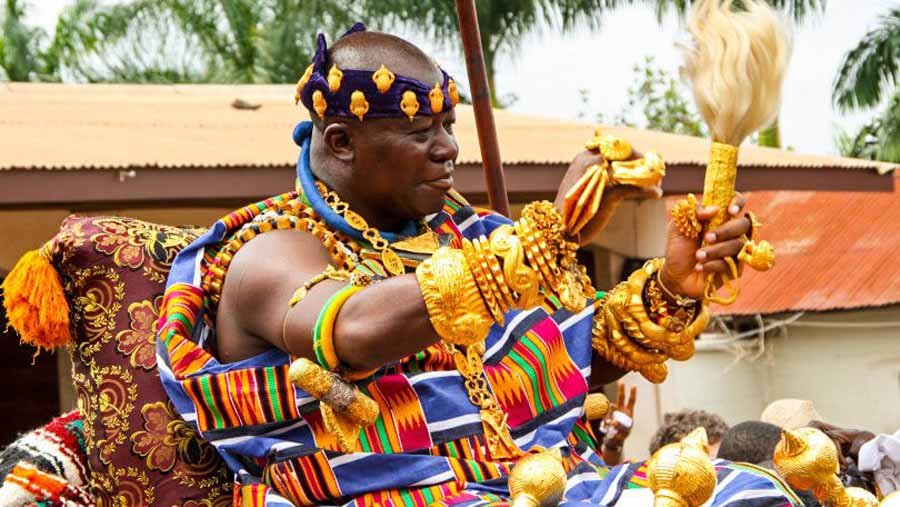
Material culture plays a crucial role in embodying and transmitting traditional authority. Artifacts such as ceremonial stools, staffs, and royal regalia are not merely symbolic; they are active instruments that define political power, leadership status, and legitimize authority. These tangible objects embody and transmit intangible power and cultural values across generations. The detailed description of artifacts as not just symbols but active instruments that “define political power and leadership status” and “legitimize political authority” underscores the integral role of material culture in traditional governance. This highlights how tangible objects embody and transmit intangible power and cultural values across generations. In Ivory Coast, masks are considered sacred, embodying spirits, and their ownership and wearing are often restricted to powerful individuals or families, suggesting a direct link to traditional authority and specialized spiritual knowledge. The Abissa festival of the N’zima people in Ivory Coast offers a compelling example of a traditional ceremony serving as a mechanism for social accountability and communal expression. During this festival, the “cosmic drum frees the N’zima to speak freely to the leaders,” demonstrating a built-in feedback loop for governance that is distinct from modern democratic processes.
Contemporary Dynamics and Challenges
The traditional kingdoms and communities around the Tano River navigate a complex landscape shaped by their historical legacies, evolving state relations, and contemporary socio-economic and environmental pressures.
State Integration and Legal Frameworks
The approaches to integrating traditional authorities into modern governance structures differ significantly between Ghana and Ivory Coast, largely due to their distinct colonial legacies.
Ghana’s Approach: Ghana has adopted a more formal and constitutionally enshrined approach to chieftaincy. The Ghanaian state formally recognizes and guarantees the institution of chieftaincy through its 1992 Constitution and the Chieftaincy Act of 2008, explicitly forbidding its abolition by legislation. This legal framework provides a strong foundation for the institution’s continued existence and influence, despite the curtailment of direct political power. While chiefs are legally required to maintain neutrality and are barred from active partisan politics, their constitutional recognition ensures their enduring presence and a defined, albeit evolving, role within the national framework.
Ivory Coast’s Approach: In contrast, Ivory Coast’s experience was shaped by the French colonial policy of direct rule, which often aimed to dismantle traditional authorities and replace them with a centralized, French-style administration. This historical trajectory led to a weakening or disappearance of traditional power structures in many areas. However, in contemporary Ivory Coast, a “National House of Traditional Kings and Chiefs” exists and is governed by an “organic law”. This indicates a more recent effort to formally integrate traditional authorities into the modern state, though it is generally perceived as less deeply embedded compared to Ghana’s constitutional guarantees. The historical suppression of traditional authority by modern state powers, particularly in Ivory Coast, is evident in instances where traditional rulers were “forced into exile” and their declarations of independence were rendered “without effect”.
Across both nations, a significant challenge arises from the fact that traditional authorities’ powers are “often uncodified under modern law,” yet they continue to “play a pervasive and ever-present role” in rural areas, settling disputes and administering customary law. This highlights a disconnect between
de jure (legal) and de facto (actual) governance. This informal power, rooted in “homegrown legitimacy and deep roots,” underscores their resilience despite formal legal ambiguities or limitations imposed by the state. The concept of “poly-centric decentralized democratic governance” offers a theoretical framework for understanding the ongoing efforts to integrate traditional and modern systems, where multiple decision-making centers interact to solve common problems. This integration is sometimes manifested by traditional chiefs holding modern political offices, such as Municipal Councillors, Mayor, or even Parliament, which further blurs the lines between traditional and modern authority. A notable historical example is Félix Houphouët-Boigny, Ivory Coast’s first president, who himself was a traditional leader (initially called to be a village chief and later a “chef de canton” administering 36 villages). This personal connection demonstrates the deep integration of traditional authority into the highest echelons of modern Ivorian political life, suggesting a pragmatic approach to co-optation or collaboration.
Land Disputes and Resource Management
Land disputes represent a persistent and often violent root cause of conflict in Ivory Coast, particularly between migrants and those claiming customary land rights. Property and land rights remain weak, especially in western regions, where conflict over land tenure is a significant source of tension, with migrants sometimes facing discrimination even with legal documents for their property titles.
In Ghana, despite traditional chiefs constitutionally owning 80% of the land, numerous challenges persist. These include “indeterminate boundaries,” “poor or no record keeping,” “multiple registrations,” and ongoing “chieftaincy/land disputes” often exacerbated by a lack of accurate maps. The historical use of chiefs by colonial powers for “indirect rule,” empowering them in administrative and adjudicative roles, contrasts with their post-independence prohibition from “active politics.” This reveals a complex evolution of their state integration, suggesting that while their political autonomy was curtailed, their functional roles in local governance and dispute resolution were often retained or adapted, highlighting their pragmatic utility to both colonial and modern states.
These land disputes are further complicated and exacerbated by external factors such as climate change, which drives migration and illegal farm expansion, and intensifies competition over pasture and water access between farmers and herders. This confluence of environmental factors with social tensions and traditional land rights presents a complex, multi-layered challenge to traditional land management and dispute resolution mechanisms. The need for a “hybrid approach incorporating state law” for “external conflicts, such as land disputes with government entities,” highlights a key limitation of traditional dispute resolution mechanisms when confronted with modern legal frameworks and state power. This indicates an ongoing tension and negotiation between customary and statutory law. A practical manifestation of this challenge is the issue of “missing or unusable” archival information on Bono chieftaincy, often due to lawyers contesting “numerous interstate and intrastate chieftaincy and land disputes”. This situation underscores a critical challenge: the formalization and legal contestation of traditional authority and land rights in modern Ghana, suggesting that the interface between customary law and statutory law is a significant source of ongoing conflict and a barrier to clear governance.
Modernization and Generational Shifts
Traditional institutions face the inherent challenge of balancing the preservation of cultural heritage with the demands of modernization. This includes actively engaging in initiatives aimed at improving education, infrastructure, and economic development within their communities.
A significant internal challenge to the long-term sustainability and relevance of chieftaincy is the “generational gap,” where “younger community members often view traditional leadership as outdated”. This suggests that for traditional institutions to maintain legitimacy across generations, they must actively adapt and demonstrate their value in contemporary terms, for example, by leading development initiatives and addressing modern community needs.
Furthermore, internal tensions can arise from the interaction of traditional practices with modern economic realities. For instance, the “tension” stemming from matrilineal inheritance (for land and succession) combined with patrilocal residence and patrilineal work patterns (where a young man works with his father but may not inherit his plantation) highlights a significant internal challenge within Anyi/Akan traditional systems. This tension is particularly exacerbated by the introduction of cash crops, suggesting a potential source of social and economic conflict that traditional leaders must actively navigate to maintain social cohesion.
Conclusion
The study of existing kingdoms and traditional communities around the Tano River in Ivory Coast and Ghana reveals a dynamic and complex landscape where ancient traditions persist and adapt within modern state frameworks. The Akan people, with their shared matrilineal descent, reverence for sacred stools, and intricate selection processes involving kingmakers, form the bedrock of traditional governance in this trans-national basin. While specific structures vary—from the historically centralized Bono Kingdom, with its profound cosmological underpinnings, to the decentralized, village-centric Baoulé, who prioritize emotional unity over centralized political power—the spiritual and cultural roles of chiefs remain paramount.
Traditional leaders are not mere relics of the past; they are active agents in local governance, dispute resolution, and cultural preservation. In Ghana, their constitutional recognition and custodianship of vast land resources underscore their enduring practical utility, even as they are legally mandated to remain politically neutral. In Ivory Coast, despite a history of colonial suppression, traditional authorities are increasingly being integrated into the state apparatus, albeit in a different manner than in Ghana.
However, this integration is not without its challenges. Land disputes, exacerbated by migration and climate change, represent a critical flashpoint where customary law intersects with modern legal systems, often leading to conflict. Internally, the institution of chieftaincy faces the challenge of a generational gap, necessitating active adaptation and demonstration of contemporary relevance to younger community members. The complexities arising from the interplay of matrilineal inheritance with patrilocal residence and cash crop economies further highlight the internal pressures on these traditional systems.
Ultimately, the traditional kingdoms and communities around the Tano River exemplify the resilience and adaptability of indigenous governance. Their continued existence and evolving roles demonstrate that traditional authority remains a vital, complementary force to modern state structures, deeply embedded in the cultural, social, and spiritual lives of the people it serves. Understanding these intricate dynamics is crucial for fostering sustainable development and peace in the region.


