



(Symbolic species: Crocodylus suchus / Mecistops cataphractus)
🧭 Cultural Identity
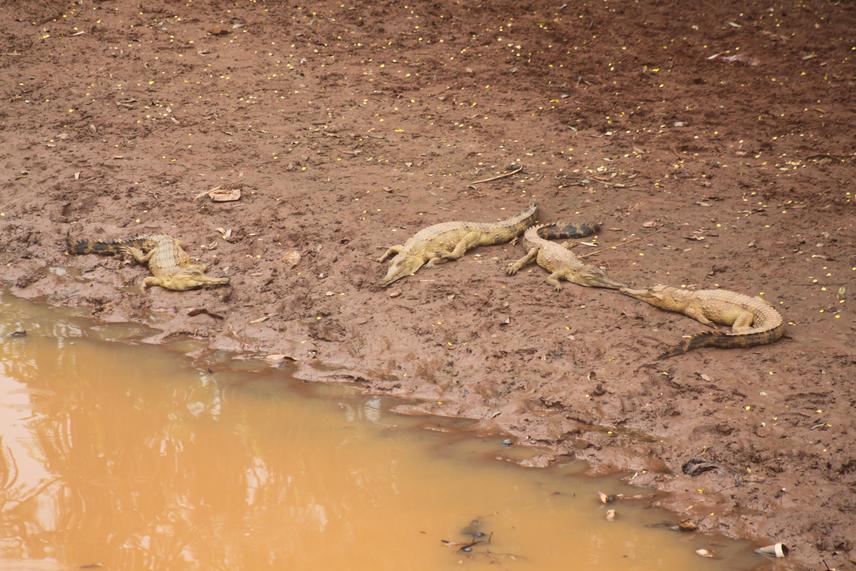
In Akan spirituality, particularly among the Aowin, Bono, Nzema, Ahanta and other riverine peoples of southwestern Ghana and southeastern Côte d’Ivoire, crocodiles are not just animals — they are considered spiritual entities, messengers of the river god Ta Kora.
Killing a crocodile is traditionally seen as a spiritual transgression, and in some communities, sacred crocodiles are protected by taboo and honored through libations, songs, or rituals.
🐊 Species Represented
The “sacred crocodile” can refer to:
- The West African Slender-Snouted Crocodile (Mecistops cataphractus) — shy, river-dwelling
- The West African Nile Crocodile (Crocodylus suchus) — more aggressive, larger
Both species are present in the Tano River, though increasingly rare due to habitat destruction.
🧬 Symbolism in Akan Cosmology
- Power of water and the unknown: crocodiles represent the invisible world beneath the surface
- Guardianship: they are seen as protectors of sacred sites, ancestral spirits, and river boundaries
- Reincarnation: in some traditions, crocodiles are believed to house the souls of the dead, especially warriors or elders
- Balance: they embody both creation and destruction, calm and violence
🧘♂️ Ritual Presence
- Libations are poured near known crocodile pools before major ceremonies
- Fetish priests (akomfo) may interpret crocodile sightings as messages from the river gods
- In some Tano shrines, the crocodile is the totem animal of the deity, and its image appears on stools, drums, and shrine sculptures
⚠️ Threats to the Sacred
- Gold mining has polluted many traditional crocodile pools
- Disruption of sacred groves and ritual sites
- Young generations may lose connection to traditional beliefs protecting these animals
- Poaching, despite taboo, is increasing in some areas
🌍 Cultural Conservation
Efforts to protect sacred crocodiles often align with environmental conservation, offering an opportunity to bridge traditional knowledge and modern ecology.
Supporting local taboos and spiritual beliefs may help:
- Protect habitat zones unofficially conserved by belief
- Encourage local stewardship of biodiversity
- Revive intergenerational transmission of river-related knowledge


