



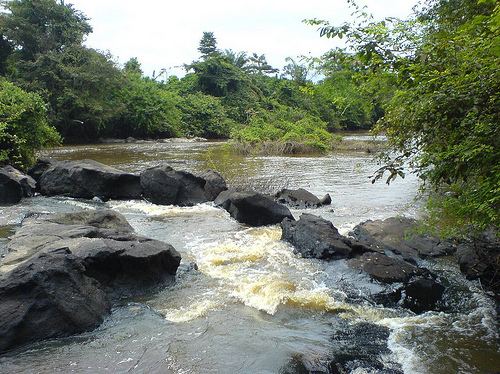
1. Introduction: Echoes of the Tano – An Auditory Journey
The Tano River, a vital artery winding through West Africa, offers a rich tapestry of sounds that define its unique riverine life. Originating near Techiman in western Ghana, this significant waterway stretches approximately 400 kilometers (250 miles) southward, eventually merging with the Gulf of Guinea at Aby Lagoon in Côte d’Ivoire, and notably forming a segment of the international boundary between Ghana and its western neighbor. The Tano Basin itself is a region of considerable ecological diversity, characterized by wet semi-equatorial and south-western equatorial climatic zones that experience double rainfall maxima. This climate supports a vibrant ecosystem, encompassing extensive forest cover, which accounts for about 50% of the total landmass, alongside significant commercial farming of crops such as cocoa and plantain.
Beyond its geographical and ecological significance, the Tano River is deeply interwoven with the cultural and spiritual fabric of the Akan and Ashanti peoples. It is revered as a sacred deity, Taakora, embodying life, fertility, and justice within their cosmology. The river’s naturally deep and clear waters are symbolically associated with purity in various ceremonies, underscoring its profound spiritual resonance.
Understanding the Tano River through its soundscape provides a unique lens into its intricate dynamics. Acoustic ecology, the discipline dedicated to studying the relationship between living organisms and their sonic environment, offers a framework for this exploration. Through this approach, soundscapes emerge not merely as collections of noises but as vital barometers of environmental health and cultural vibrancy. The auditory elements—from the whispers of the wind through the trees to the rhythmic pulse of human activity—collectively narrate the story of the river and its surrounding life.
This report undertakes a sensory exploration of the Tano River, delving into its ambient sounds, the calls of its diverse avian and other wildlife, the dynamic sounds of its water, and the intricate voices and activities of its human communities. This comprehensive approach aims to paint a holistic auditory portrait, reflecting both the river’s inherent natural splendor and the growing challenges it faces from human impact. The sounds emanating from the Tano are not merely ecological phenomena; they are profoundly cultural expressions. The river’s physical characteristics, such as its historical clarity, are directly linked to its spiritual symbolism of purity. Consequently, any alteration to the river’s physical state inevitably impacts its cultural perception and the associated sonic rituals that have been practiced for generations. This means that environmental degradation, such as pollution, will not only change the natural sounds of the river but also disrupt the cultural soundscape and the deep spiritual connection people share with this vital waterway.
2. The Liquid Symphony: Water’s Many Voices
The Tano River, in its pristine state, presents a captivating auditory experience, a “serene escape” characterized by “gentle currents” and an overarching “peaceful ambiance”. The natural flow of the river creates a soothing and calming sound, often described as a “symphony of water, rocks, and earth,” capable of transporting listeners to a state of tranquility and relaxation. This liquid symphony includes the rhythmic energy of rushing water, the subtle whispers of nature carried on the current, and the gentle flow of clear water over its bed. More dynamic expressions of the river’s power manifest as the “thunderous roar of the rapids” and the “relentless surge of the rushing water” in certain sections.
A significant feature in the Tano River’s natural acoustic profile is the presence of Sutre Falls. Located near Tanoso, these falls serve as a natural impediment to river navigation. While direct audio recordings of Sutre Falls are not available, the general characteristics of waterfalls provide a comparative understanding of their sound. Waterfalls are known for their calming yet powerful presence, producing “soothing waterfalls water sounds” that can induce deep sleep, relaxation, and mental clarity. The sound is often a profound “roar” or “raging” torrent , capable of being “deafening” in close proximity. A parallel can be drawn from Ghana’s Wli Waterfalls, which, though distinct from Sutre, are locally known as “Agoomatsa waterfalls,” meaning “Allow Me to Flow.” The discovery of Wli Waterfalls by hunters who mistook its powerful sound for a talking drum highlights the immersive and deceptive nature of such natural acoustic phenomena.
However, the Tano River’s liquid symphony has been increasingly marred by a “discord of disruption,” primarily stemming from irresponsible mining activities, locally known as ‘galamsey’. The once “clear waters have turned a murky brown, with little sign of life,” a stark visual and auditory transformation. Measurements have revealed turbidity levels exceeding 100 times the accepted standard for drinking water, indicating a severe degradation of water quality. This physical change directly alters the river’s acoustic signature. Clear, flowing water produces distinct sounds of ripples and gentle currents, characterized by a certain crispness and fluidity. In contrast, muddy, polluted water, laden with suspended sediment and mining waste, will possess a duller, heavier, and perhaps more viscous or sloshing sound. The presence of “slime” from mining wastewater is a particularly disturbing auditory indicator of this pollution.
The shift from a harmonious “liquid symphony” to a “discord of disruption” serves as a profound indicator of the river’s deteriorating environmental health. The soundscape itself becomes an auditory barometer of ecological degradation. This phenomenon aligns with the principles of acoustic ecology, which posits that underwater soundscapes are not only aesthetically rich but also valuable measures of environmental well-being. Furthermore, the statement that polluted water shows “little sign of life” carries a deeper implication: a reduction in biophony, the sounds of biological origin. If the water is too turbid or toxic, aquatic life, including fish, insects, and amphibians, will decline or vanish. This leads to a quieter, less biodiverse underwater soundscape, where the natural “clicks, chirps, and whistles” that characterize a healthy aquatic environment are diminished or entirely absent. The loss of the river’s natural, vibrant water sounds, replaced by the mechanical and abrasive sounds of pollution and the eerie silence of absent aquatic life, serves as a powerful, albeit subtle, auditory warning of ecological collapse. This “silent” aspect of the soundscape is as significant as the overtly audible pollution.
3. Feathered Choristers: Birdsong Along the Banks
The Tano Basin is a vibrant sanctuary for avian life, with its dense forest cover and riverine habitats providing a haven for numerous bird species. The Boin Tano Forest Reserve, a significant area within the basin, has been recognized as an Important Bird Area (IBA) by BirdLife International, signifying its crucial role in supporting substantial bird populations. Ghana, as a nation, boasts a remarkable diversity of bird species, many of which thrive in environments like the Tano River’s forests and wetlands. These feathered inhabitants contribute significantly to the Tano’s soundscape, their calls weaving a complex and dynamic acoustic tapestry that changes with the time of day and season.
Among the prominent avian choristers are the Turacos, including species such as the Great Blue Turaco, Guinea Turaco, Yellow-billed Turaco, and Violet Turaco. Their vocalizations are often described as “evocative sounds” of the rainforest, characterized by their loudness, which creates echoes across the landscape, and sometimes even resembling the “clucking” of a giant hen. The Yellow-billed Turaco, in particular, is noted as a “star bird” in Ghana, indicating its distinctive presence.
Hornbills, such as the West African Pied Hornbill, Brown-cheeked Hornbill, Western Long-tailed Hornbill, Yellow-casqued Hornbill, and Red-billed Dwarf Hornbill, also inhabit the region. While specific call descriptions for these Tano-resident hornbills are not detailed, related species like the Southern Ground Hornbill offer a general auditory reference, known for their “deep, rhythmic hooting calls” that carry for kilometers and are frequently heard at dawn as they declare their territory.
Kingfishers, including the Chocolate-backed Kingfisher, African Dwarf Kingfisher, White-bellied Kingfisher, and Shining Blue Kingfisher, are integral to the riverine soundscape. Woodland Kingfishers, a broader African example, are recognized for their “trilling calls,” often performed in duets, heralding the arrival of summer. The Brown-hooded Kingfisher offers “typical advertising calls” and a harsh chattering sound as it takes flight. The presence of Giant Kingfishers in riverine forests further enriches this acoustic layer.
Other notable contributors include Francolins and Guineafowl, such as the White-breasted Guineafowl, Helmeted Guineafowl, and Western Crested Guineafowl, which are ground-nesting birds resembling partridges. Various
Cuckoos, including the Yellow-throated Cuckoo, African Emerald Cuckoo, and Olive Long-tailed Cuckoo, add their distinctive calls to the mix.
Owls, such as the Akun Eagle-Owl and Rufous Fishing Owl, contribute their nocturnal vocalizations, shaping the soundscape after dusk.
Bee-eaters and a variety of Sunbirds and Greenbuls also populate the area, their softer chirps, trills, and melodic songs forming a consistent background hum.
The presence of such a wide variety of bird species, each with unique vocalizations, provides a clear indication of the Tano’s ecological health. Birds are sensitive bio-indicators, and their diverse calls signify a thriving ecosystem. The specific patterns of birdsong, such as hornbills calling at dawn or turacos at dusk and dawn, illustrate how the avian soundscape transforms throughout the day and night, adding a temporal dimension to the sensory experience. The observation that Turacos are common in “undisturbed rainforest areas” suggests that their vocal presence is directly linked to the integrity of their habitat. Therefore, a rich and varied birdsong chorus along the Tano River serves as a vibrant acoustic signature of its ecological well-being. Conversely, a diminished chorus would signal habitat degradation.
However, this vibrant avian soundscape faces a severe and silent threat. The pervasive illegal mining, or ‘galamsey’, directly impacts forest cover and water quality. The destruction of habitats and the pollution of water bodies inevitably lead to a decline in bird populations, particularly those dependent on healthy riverine ecosystems, such as kingfishers and various waterfowls. Beyond habitat loss, the noise pollution generated by mining equipment can disrupt bird communication and behavior, making it harder for them to find mates, avoid predators, or establish territories. The current vibrancy of the bird soundscape, while still notable, exists within an increasingly challenged environment. Without intervention, these feathered choristers may sing in a significantly quieter Tano Basin in the future due to human-induced pressures.
Table 1: Characteristic Bird and Other Animal Calls of the Tano River Basin
| Species (Common Name) | Characteristic Call Description | Time of Vocalization | Relevant Snippet IDs |
| Great Blue Turaco | Evocative, loud calls, creating echoes; can sound like a “giant hen clucking.” | Dusk and Dawn | |
| Yellow-billed Turaco | (Specific description not provided, but noted as a “star bird” in Ghana) | Not specified | |
| Southern Ground Hornbill | Deep, rhythmic hooting calls, far-carrying (up to 3km); pairs often duet with male lower pitch. Used for territorial advertising. | Dawn | |
| Woodland Kingfisher | Trilling call; pairs often sing in duet with outstretched wings. Heralds summer. | Not specified | |
| Brown-hooded Kingfisher | Typical advertising calls; harsh chattering when flying off. | Not specified | |
| African Bullfrog | Loud, deep “whoomp” sounds, often in competitive choruses. | During rains, at dusk | |
| Bubbling Kassina | Loud “quoip” given at regular intervals. | Late afternoon into night | |
| Banded Rubber Frog | Loud, high-pitched “pirrrrrrrrrr” call, repeated every 4-5 seconds. | Breeding season | |
| Mona Monkey | Expressive moans; alarm calls like sneezes; males use “boom” and hacking calls for rank/territory (can sound like a quacking duck). | Diurnal | |
| Black and White Colobus (general Colobus) | Loud roars and growls; territorial calls with low frequencies for thick jungles. | Early morning, dusk |
This table serves to consolidate and present specific examples of bird and other animal vocalizations found within or characteristic of the Tano River Basin. By detailing the species, their distinctive call descriptions, and the typical times of their vocalizations, this structured format enhances the sensory understanding of the Tano’s soundscape. It moves beyond a mere listing of species to provide concrete auditory details, highlighting the diversity of sounds and their ecological functions, such as territorial marking or mating calls. This comprehensive presentation underscores the richness of the Tano’s biophony, making the complex auditory information more accessible and impactful for the reader.
4. Hidden Harmonies: Insects, Amphibians, and Other Wildlife
Beyond the prominent avian voices, the Tano River’s soundscape is intricately layered with the subtler, yet equally vital, contributions of insects, amphibians, and other terrestrial wildlife. These “hidden harmonies” form a significant part of the riverine environment’s acoustic identity, particularly as day transitions to night.
The pervasive insect chorus is a fundamental component of the Tano Basin’s forest environment, creating a “symphony of insect calls” that is a “ubiquitous and mesmerizing feature of the night”. This chorus is primarily composed of singing insects such as cicadas, grasshoppers, locusts, and crickets. Typically, it is the male insects that vocalize, primarily to attract mates, but also to establish territory or warn off predators. Cicadas, for instance, are renowned as the loudest insects, with recorded sounds reaching up to 107 dB. They produce their distinct buzzing sounds using specialized organs called tymbals located in their abdomen. The Say’s pruinose cicada, a specific example, emits a loud, pulsating “zee-oo-zee-oo” for extended periods. Crickets and katydids generate their sounds through stridulation, a process of rubbing specific body parts, usually their wings or legs, together. Their vocalizations encompass a range of buzzes, chips, chirps, or clicks. Ground crickets contribute soft, high-pitched trills or buzzes, while meadow katydids produce a distinctive “click, click, click” followed by louder buzzes. Bush katydids add a sharp “zick” call during the day and a creaking “zeep-zeep-zeep” song at night. This insect chorus intensifies during warmer months, peaking in late summer and early autumn, coinciding with the insects’ mating seasons.
The croaking choir of amphibians further enriches the Tano’s soundscape, particularly in moist areas and near water bodies. Frogs are more often heard than seen, and their calls are critical for their survival, serving multiple purposes: attracting mates, establishing territorial boundaries between males, signaling release during mating, and alarming predators. The calls vary significantly by species. The African Bullfrog, for example, is known for its loud, deep “whoomp” sounds, often heard in competitive choruses. The Broad-banded Grass Frog contributes a loud series of duck-like quacks, while the tiny Bubbling Kassina emits a loud “quoip” at regular intervals from late afternoon into the night. The Banded Rubber Frog is characterized by a loud, high-pitched “pirrrrrrrrrr” call, repeated every few seconds during its breeding season , and the Bushveld Rain Frog produces a series of short, sharp chirps. These amphibian calls often coalesce into “loud choruses” at dusk and during warmer, rainy periods.
Beyond insects and amphibians, other wildlife vocalizations contribute to the Tano’s auditory environment. Primates are a notable presence, with several species inhabiting the Tano region. This includes the critically endangered Miss Waldron’s Red Colobus , a species that is “highly vocal,” communicating through “loud calls, shrieks and chattering”. Mona monkeys are recognized for their “expressive moans” and alarm calls that resemble “sneezes.” Male Mona monkeys also produce “boom” and “hack” calls to assert rank and territory, sometimes sounding remarkably like a “quacking duck”. Olive Colobus monkeys further contribute to the primate soundscape with their loud roars and growls, often used for territorial defense. The night soundscape is also enriched by the distant calls of
nocturnal mammals such as tree hyraxes and bushbabies, along with the subtle rustling sounds of bush pigs, genets, and civets moving through the underbrush. The high-pitched echolocation calls of bats, as they navigate the forest in search of insects, add another layer to the nocturnal acoustic environment.
The detailed descriptions of insect and amphibian calls, their timing, and their purposes (such as mating or territorial defense) illustrate a complex and vibrant acoustic environment. These insect choruses and frog choirs are not merely background noise; they represent active communication systems that signify a thriving and biodiverse ecosystem. The presence of diverse primate calls further adds to this rich biophony, demonstrating the intricate layers of life supported by the Tano Basin. The richness and variety of these non-avian animal sounds are critical components of the Tano’s natural soundscape, acting as indicators of a healthy and complex food web. Their consistent presence points to robust ecological processes, and any significant reduction or alteration in their vocalizations would serve as a strong indicator of environmental stress.
However, these “hidden harmonies” are under existential threat. The critically endangered status of Miss Waldron’s Red Colobus underscores the vulnerability of these vocal species. The widespread illegal mining, or ‘galamsey,’ leads to extensive forest destruction and severe water pollution, directly impacting the habitats essential for insects, amphibians, and primates. Beyond direct habitat loss, the intrusive noise pollution generated by mining equipment can interfere with animal communication, making it harder for them to find mates, avoid predators, or establish territory, even in areas not directly destroyed by mining operations. The soundscape of the Tano is not static; it is a dynamic system whose natural components are being eroded by human activities. This erosion could potentially lead to a “silent spring” effect in the Tano Basin, where the once vibrant chorus of hidden harmonies is tragically diminished if current trends persist.
5. Human Rhythms: Voices, Work, and Culture
The Tano River is not merely a natural feature but a vibrant nexus of human life, serving as a “lifeline for wildlife and people for centuries”. The human soundscape along its banks is a dynamic blend of daily routines, traditional livelihoods, and rich cultural expressions, now increasingly juxtaposed with the jarring sounds of environmental degradation.
The ambient sounds of human settlements along the Tano include the general chatter of crowds and the bustling atmosphere of daily life. The joyful sounds of children playing, whether rolling tires with sticks or splashing as they swim in the river, contribute a lively and innocent layer to the soundscape. The presence of markets, such as the large Makola Market in Ghana, implies a cacophony of human voices and activities: the distinct calls of vendors hawking their wares, the ebb and flow of bargaining, the rhythmic shuffle of countless footsteps, and the general hum of communal commerce.
Traditional livelihoods along the Tano are deeply embedded in its acoustic environment. Fishing activities, despite the growing challenges of pollution, remain a traditional pursuit, albeit one regulated by the river’s sacred status. An integral part of this activity is the use of work songs, which are sung to pace strenuous tasks such as pulling fish nets onto the shore or coordinating rowing in heavy surf. These songs are a direct continuation of rich West African traditions, reflecting generations of communal labor and cultural heritage. The sounds of wooden canoes paddling, characterized by the gentle splash and creak of paddles against the water, are quintessential to this riverine life. The voices of canoe operators or other residents along the river further punctuate these tranquil sounds.
Farming activities also contribute significantly to the human soundscape, as the Tano Basin is a major area for commercial cultivation, particularly of cocoa and plantain. Sounds associated with cocoa farming include the distinct thud and crack of harvesting cocoa pods, as well as the rustle and scrape of beans being filled into sacks. The broader process of cocoa cultivation, from seedling distribution to post-harvest handling like fermentation and drying, each carries its own set of characteristic sounds. Similarly, plantain farming involves sounds related to cultivation efforts, which may range from the rhythmic thud of manual tending to the hum of any mechanization used.
The Tano River is central to the cultural and spiritual expressions of the Akan and Ashanti people, serving as a focal point for their traditions. The Sacred Grove of Tano is a revered site for offerings, sacrifices, prayers, rituals, and festivals. These events are vibrant with “ecstatic singing, accompanied by a colorful palette of instruments”. Akan traditional drumming holds immense significance, with drums often used for communication, famously known as “talking drums”. Specific drum ensembles and styles, such as Kete, Adowa, Fontomfrom, and Kpanlogo, each contribute distinct polyrhythmic patterns to the soundscape, reflecting diverse social functions from honoring ancestors to celebrating life and healing. Vocal styles include call-and-response singing, chanting, and performances by various vocal bands. A unique ritual, the “bailing ceremony,” involves physically bailing the Tano River to expose live fish for worship, with strict protocols to prevent the fish from touching the ground, ensuring the deity Taakora is not offended. This ceremony would undoubtedly generate its own unique and culturally significant sounds.
The human soundscape of the Tano is a vibrant manifestation of cultural identity and livelihood. The detailed descriptions of work songs, traditional drumming, and market sounds demonstrate that human sound is not merely incidental but deeply embedded in the cultural fabric and daily survival along the Tano. The “talking drums” serve as a prime example of sound as a medium for complex communication and cultural preservation. The sacred status of the river directly influences rituals like the bailing ceremony, making these sounds expressions of a profound human-nature relationship. This intricate human soundscape is a testament to the resilience and richness of Akan culture, embodying generations of interaction with the river, history, tradition, and community cohesion.
However, this rich tapestry of human sounds is increasingly disrupted by the “discord of disruption” caused by illegal gold mining, known as ‘galamsey’. The sounds associated with galamsey are harsh, intrusive, and mechanical, presenting a stark contrast to the natural and traditional soundscape. These include the grinding and roaring of heavy equipment like excavators and bulldozers, the churning sounds of dredging operations, and the general cacophony of industrial mining activity. The pollution resulting from galamsey, visible as murky water and chemical contamination (heavy metals, sulfuric acid spills), directly impairs the river’s ecological health and the ability of communities to sustain traditional livelihoods such as fishing and farming. The noise pollution itself can drown out traditional music and human communication, signifying a direct threat to the cultural soundscape. This creates an acoustic conflict, where the rhythmic, communal sounds of traditional activities are increasingly overwhelmed by the industrial cacophony of destructive exploitation. This escalating dominance of galamsey sounds indicates a severe disruption of both the natural and cultural harmony, representing a profound loss of heritage and a threat to the very identity of the riverine communities. The voices of the people are not merely present; they are actively protesting and suffering from this sonic intrusion, as evidenced by public demonstrations against galamsey.
Table 2: Human Activities and Associated Sounds in Tano River Communities
| Activity | Characteristic Sounds | Cultural/Livelihood Significance | Relevant Snippet IDs |
| Community Life | Crowd chatter, children playing (rolling tires, swimming), general bustling of daily life. | Reflects vibrant social fabric, innocence, and communal interaction. | |
| Market Activity | Vendors’ calls, bargaining, footsteps, general human cacophony. | Core to economic and social exchange; a hub of community interaction. | |
| Traditional Fishing | Work songs (pacing net pulling, rowing), gentle splashes and creaks of wooden paddles, voices of canoe operators. | Functional for labor coordination, deeply rooted in West African traditions, reflects sustainable interaction with the river. | |
| Cocoa Farming | Smashing cocoa pods, filling sacks, sounds of cultivation and post-harvest handling. | Essential agricultural livelihood; sounds reflect stages of production for a key cash crop. | |
| Plantain Farming | Sounds of manual tending, potential mechanization. | Vital food and commercial crop; sounds reflect cultivation efforts. | |
| Traditional Ceremonies & Festivals | Ecstatic singing, rhythmic drumming (talking drums, Kete, Adowa, Fontomfrom, Kpanlogo), chanting, call-and-response vocals. | Expressions of spiritual reverence, community cohesion, historical memory, and cultural identity. Drums used for communication. | |
| Bailing Ceremony | Sounds of bailing water, careful handling of fish, associated prayers/chants. | Unique sacred ritual demonstrating profound spiritual connection to the river and its deity. | |
| Illegal Mining (Galamsey) | Roaring of excavators/bulldozers, churning of dredges, general mechanical noise, sounds of protest. | Represents destructive, intrusive, and unsustainable human activity; a source of conflict and environmental degradation. |
This table provides a structured overview of the diverse human activities and their associated sounds along the Tano River, emphasizing their cultural and livelihood significance. By categorizing these sounds, it becomes clear how human presence shapes the auditory landscape, from the everyday rhythms of community life and traditional work to the profound expressions of spiritual practice. The table also serves to highlight the stark acoustic contrast introduced by illegal mining, which represents an intrusive, destructive force against the backdrop of established cultural harmonies. This detailed breakdown allows for a deeper appreciation of the human layer within the Tano’s soundscape and the challenges it currently faces.
6. Conclusion
The Tano River, a geographical cornerstone and a spiritual heartland in Ghana, possesses a dynamic and deeply resonant soundscape. This auditory tapestry is woven from the diverse threads of natural phenomena—the varied voices of water, the rich choruses of birds, and the hidden harmonies of insects, amphibians, and other wildlife—intertwined with the intricate rhythms of human life. From the soothing whispers of natural currents and the thunderous roars of waterfalls to the vibrant calls of turacos and the croaking choirs of frogs, the Tano’s natural soundscape reflects a healthy and biodiverse ecosystem. Similarly, the human soundscape, characterized by the rhythmic work songs of fishermen, the bustling chatter of markets, and the profound polyrhythms of traditional Akan drumming, speaks volumes about the enduring cultural identity and livelihoods intrinsically linked to the river.
However, this delicate acoustic balance is under severe threat. The pervasive and destructive activities of illegal gold mining, or ‘galamsey,’ introduce a jarring cacophony of mechanical noise and transform the clear waters into murky, lifeless flows. This not only alters the natural sounds of the river but also diminishes the biophony, silencing the calls of aquatic life and threatening the habitats of diverse species. The presence of these harsh, intrusive sounds of extraction directly clashes with the traditional, harmonious sounds of riverine communities, creating an acoustic conflict that mirrors a broader struggle for environmental and cultural survival. The degradation of the river’s physical state, evident in its altered sounds and appearance, directly impacts its sacred status and disrupts the spiritual connection held by the Akan people.
The Tano River’s soundscape, therefore, serves as a powerful, real-time indicator of its health and the well-being of its surrounding communities. The diminishing natural sounds and the rising dominance of anthropogenic noise signal a profound ecological and cultural crisis. Preserving the vibrant and diverse sounds of the Tano River is not merely an aesthetic concern; it is fundamental to safeguarding its ecological integrity, supporting traditional livelihoods, and protecting the rich cultural heritage of the people who call its banks home. Continued acoustic monitoring and soundscape studies are crucial to understanding these ongoing changes and informing urgent conservation efforts to restore the resonant heart of Ghana.


