



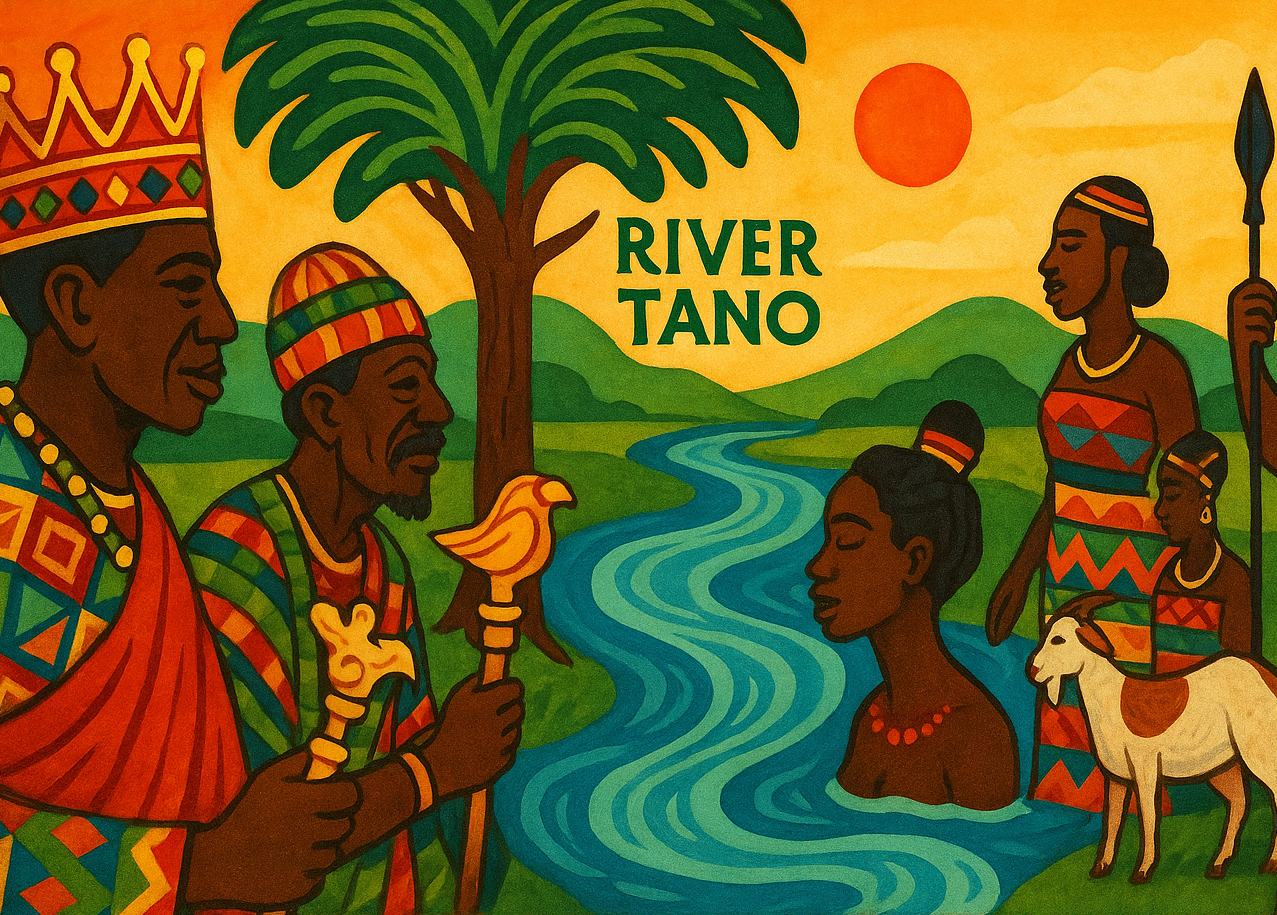
1. Introduction to the River Tano: A Geographical and Ecological Overview
1.1 Physical Characteristics and Basin Geography
The Tano River Basin represents a critical transboundary hydrological system, shared by Ghana and Côte d’Ivoire, and constitutes one of Ghana’s four primary southwestern river networks. Its geographical footprint extends across latitudes 5°00′ N and 7°40′ N, and longitudes 1°48′ W and 3°05′ W, encompassing a significant portion of western-northern Ghana. The basin’s total area spans approximately 16,060 square kilometers, with the vast majority—92.6% (14,875 km²)—situated within Ghana, and the remaining 7.4% (1,185 km²) extending into Côte d’Ivoire.
The Tano River, serving as the basin’s principal watercourse, stretches for an impressive 512 kilometers. Its journey commences in the Boyem Mountain Ranges near Techiman, flowing southwestward before ultimately discharging into the Ehy/Tano/Aby Lagoon complex, a system that straddles the international border between Ghana and Côte d’Ivoire. A notable geographical feature is that the predominant portion of this lagoon system lies within Côte d’Ivoire. Furthermore, the final few kilometers of the Tano River delineate the international land boundary between Ghana and Côte d’Ivoire, underscoring its role as a natural demarcation.
The basin’s topography exhibits considerable variation, ranging from highlands in its upstream areas, with average elevations around 540 meters above sea level near the Boyem Mountain Ranges in the Bono East Region, to middle sections that descend to approximately 225 meters. The southern reaches are notably flatter, with elevations between 0 and 15 meters, averaging 50 meters above sea level. A well-developed drainage network characterizes the basin, comprising the Tano River itself and nine major tributaries: Boin, Disue, Amama, Abu, Gaw, Suraw, Samre, Totua, and Disri. This interconnected system maintains a drainage density of 0.032 km²/km.
Geologically, the Tano Basin is underlain by Ghana’s extensive Precambrian basement complex, predominantly composed of crystalline igneous and metamorphic rocks, with the metamorphosed and folded rocks of the Birimian system playing a pivotal role in the region’s structural geology. The most prevalent geological formations include Granite (38.1%), Birimian Sediments (31.9%), and Birimian Volcanics (25.5%). Administratively, the basin spans several regions within Ghana, with the Western North Region covering approximately 40%, Ahafo Region 25%, Ashanti Region 15%, Western Region 10%, Bono Region 8%, and Bono East Region 2%.
The Tano River’s transboundary nature and extensive basin area position it as a fundamental natural asset that shapes both the human and natural landscapes across national borders. This geographical reality inherently creates challenges and opportunities for shared resource management between Ghana and Côte d’Ivoire. Its function as an international boundary implies a history of ongoing interactions, which could range from cooperative endeavors to potential points of contention, between communities and states along its course.
The geological composition of the Tano Basin, particularly the presence of the Birimian system, has historically predisposed the region to specific resource extraction activities, most notably gold mining. This geological endowment has, in turn, profoundly influenced settlement patterns, economic development, and environmental pressures over centuries. The varied topography, from mountainous headwaters to flat coastal plains, further dictates where early settlements could thrive, where agricultural productivity would be highest, and where mining activities would naturally concentrate, establishing a long-standing human-environment interaction shaped by the underlying geology.
Table 1: Key Geographical and Physical Characteristics of the Tano River Basin
| Characteristic | Detail |
| Length | Approx. 512 km |
This table provides a concise overview of the Tano River Basin’s fundamental geographical and physical attributes. For a report delving into its history and legends, understanding these core characteristics is essential. This information grounds the subsequent discussions on human interaction, resource utilization, and mythological interpretations within a tangible environmental reality, allowing for a clearer appreciation of the river’s profound influence.
1.2 Ecological Significance and Biodiversity
The Tano Basin is recognized as an ecologically and economically vital region, providing sustenance and livelihoods for millions of people through diverse activities such as agriculture, forestry, tourism, and fisheries. Its rich terrestrial and aquatic ecosystems deliver essential services, including water supply, biodiversity conservation, and climate regulation.
The basin’s terrestrial landscape is characterized by a mosaic of semi-deciduous dense forests, dry dense forests, and clear forests, alongside extensive farmlands and areas of degraded land. To safeguard critical hydrological resources, several forest reserves have been established specifically to protect river headwaters. These include the Boin Tano, Tano Suraw, Tano Suhien, and Disue Forest Reserves, reflecting a historical and ongoing commitment to conservation in these vital areas.
The Tano Basin is also a habitat for a significant population of forest elephants. Of particular concern for global conservation efforts, the last remaining individuals of Miss Waldron’s Red Colobus, one of the world’s most critically endangered primates, are believed to inhabit the forest situated between the Tano River and Ehy Lagoon. However, as of mid-2008, this crucial habitat was slated for logging by Unilever, with the intention of converting it into oil palm plantations.
The consistent description of the Tano Basin as “ecologically and economically vital” for supporting human livelihoods and providing essential services stands in stark contrast to the concurrent mention of severe threats. The same sources that highlight its importance also point to “unsustainable land use practices, pollution, illegal mining, and invasive species” , and the specific logging plans for the endangered primate habitat. This juxtaposition reveals a fundamental tension within the basin. The Tano River Basin, despite its immense ecological value and critical role in sustaining human populations, is under considerable anthropogenic pressure. This situation suggests a systemic challenge in achieving a balance between economic development and environmental sustainability, which leads to the degradation of the very natural resources that underpin the region’s prosperity. The presence of critically endangered species within the basin further underscores a global conservation responsibility that is directly impacted by local economic decisions.
2. The Tano River in Akan Mythology and Spirituality: Legends and Deities
2.1 Ta Kora: The Principal River Deity and His Attributes
The Tano River is inextricably linked to the formidable Akan deity, Ta Kora, who is also widely known as Tano or Tanoɛ, and as Tando among the Fante people. His full name, Ta Kora, is understood as an abbreviation of Tano Kora/Akora. The term “kora” signifies “the immense,” while “ta” may derive from a word meaning “father,” collectively reflecting his esteemed status as the progenitor of numerous
abosom (deities).
Ta Kora is revered as the Abosom of war and strife within general Akan mythology, and specifically as the Abosom of Thunder and Lightning in Asante mythology, a role also recognized in the Agni mythology of Côte d’Ivoire. He holds the distinguished position as the highest and king of all
Obosom, with the Atano (Water/Tano-Abosom) divinities considered his direct descendants, said to “descend” from him and the Tano River itself.
The deity is recognized by four significant epithets that encapsulate his diverse powers: ‘Asuhyia Tano’ (“The Blessed Waters of Tano”), which acknowledges his identity as a river deity; ‘Nana Ko Nim’ (“The One Who Wins Wars”), emphasizing his martial prowess; and ‘Obomuhene’ (“King Within The Rock”), connecting him to the prominent rock formation from which the Tano River originates. Despite his formidable reputation as a war deity, Ta Kora is also regarded as a nature
abosom. A compelling aspect of his character is his portrayal as merciful, willing to grant forgiveness to witches who confess their misdeeds and commit to change. This duality in his divine nature reflects a complex spiritual understanding where immense power is balanced with principles of justice and redemption.
A foundational myth within Akan cosmology details Ta Kora’s relationship with Nyame, the supreme being, and his elder brother, Bia, who is also a river god. Ta Kora famously outwitted Bia, thereby cheating him out of his inheritance. This act resulted in Tano receiving the fertile lands west of Ghana, while Bia was left with the more barren territories of the Ivory Coast. This profound narrative serves to explain the traditional belief that the Tano and Bia rivers are “mortal enemies,” and a strict taboo dictates that attempting to mix their waters is forbidden, with dire consequences, including death, believed to result from such an act.
Another significant narrative in Ta Kora’s mythology involves his continuous rivalry with Owuo (Death), whom he profoundly despises. A compromise was eventually reached, stipulating that if Ta Kora approaches a dying person first, that individual belongs to him and will survive, thus preventing Death’s claim. This positions Ta Kora as a powerful protector against mortality.
Ta Kora’s visual and symbolic representations are rich and varied. His animalistic symbols include baboons, fish, crocodiles, elephants, and goats. Fish, in particular, are considered his children, and he is sometimes depicted as a bearded fish adorned with a double line of cowrie shells and a braided dorsal midrib. His regalia, which are central to his worship, include a crown, staffs, large ornamental umbrellas,
Akrafena (swords), precious beads, and a brass pan. His emblem is notably composed of stones gathered from a riverbed.
The Tano River, through the deity Ta Kora, is not merely a geographical feature but a powerful symbol and a literal manifestation of divine power within Akan cosmology. The myths associated with Ta Kora, such as his cunning interaction with Bia and his enduring rivalry with Owuo, serve to explain natural phenomena like river characteristics and the fundamental aspects of life and death. These narratives also convey profound moral lessons, reinforcing cultural norms and the sacred relationship between the Akan people and their environment. The river is thus perceived not merely as a natural resource but as an active participant in their spiritual and ethical existence.
Akan mythology, as exemplified by the evolving roles of Ta Kora, is not a static belief system but a living tradition that demonstrates adaptability and reinterpretation of divine attributes and narratives over time and across different Akan subgroups, such as the Asante and Fante. The shift in Ta Kora’s role from “God of Lightning to the God of War” and the variation in his thunder deity role between Fante and other Akan groups illustrate this dynamic quality. This adaptability allows the mythology to maintain its relevance and resonate with changing societal understandings and inter-group dynamics, highlighting the fluidity and richness inherent in oral traditions.
Table 2: Major Akan Deities and Their Connection to the Tano River
| Deity Name | Primary Connection to Tano River | Key Roles/Attributes | Relationships | Animal Symbols |
| Ta Kora (Tano/Tanoɛ/Tando) | Represents the Tano River, identified with its source rock promontory. | Abosom of War & Strife, Thunder & Lightning, Nature Deity, Highest Obosom. | Son of Nyame, Rival of Owuo (Death), Father of Atano divinities, Enemy of Bia. | Fish (his children), Baboons, Crocodiles, Elephants, Goats |
| Nyame (Nyankopon, Odomankoma, Ɔbɔadeɛ) | Supreme Creator, father of Tano and other major rivers. | Omniscient, Omnipotent Creator. | Creator of Asase Yaa and various Abosom. | (Not explicitly mentioned in sources for Tano) |
| Bia | River god, elder brother of Tano, cheated out of inheritance by Tano. | River deity. | Son of Nyame, Mortal enemy of Tano. | (Not explicitly mentioned in sources for Tano) |
| Owuo (Death) | Powerful Asante deity, in continuous rivalry with Ta Kora. | Spirit of Death. | Rival of Ta Kora. | (Not explicitly mentioned in sources for Tano) |
| Atano (Water/Tano-Abosom) | Descend from Ta Kora and the Tano River. | River deities. | Sons of Ta Kora. | (Not explicitly mentioned in sources for Tano) |
This table serves to clarify the complex Akan pantheon and delineate the central role of Ta Kora within this spiritual system. By outlining his direct connections to other significant figures like Nyame and Bia, the table visually demonstrates the interconnectedness of these spiritual entities and how their interactions shape the mythological landscape surrounding the Tano River. Furthermore, consolidating Ta Kora’s multiple roles and epithets provides a comprehensive understanding of his multifaceted divine identity, which is crucial for appreciating the depth of reverence and the various cultural practices associated with him and, by extension, the Tano River.
2.2 Sacred Sites, Rituals, and Taboos Associated with the Tano
The profound reverence for the Tano River is concretized through a variety of sacred sites and established cultural practices. A prime example is the Sacred Grove of Tano, located in the Brong-Ahafo Region, which is specifically dedicated to the Tano River deity. This grove has served as a central hub for religious and cultural activities for centuries, with beliefs tracing its use for worship and ritual back to the earliest settlements of the Akan people in the area.
The Sacred Grove functions as a spiritual sanctuary where offerings and sacrifices are made to honor the Tano deity, who is believed to protect the community and ensure prosperity. It is the venue for various rites, ceremonies, prayers, rituals, and festivals that are integral to the spiritual life of the Akan people. Access to this grove is typically restricted to ritual specialists and members of the local community, a practice that underscores its profound sacred status. The Tanoboase Sacred Grove and Shrine further highlights the river’s historical importance, having served as a crucial hideout during periods of slave trade and inter-tribal wars, with its natural caves providing security for Bono kings. Indigenous beliefs among the Bono people assert that Taakora, regarded as the highest of their gods on Earth, resides at the very source of the Tano River.
Deeply ingrained taboos and customs govern interactions with the Tano River, reflecting a profound respect for its sacred nature. Residents of Tanoso, for instance, adhere to a cultural belief that prohibits them from consuming fish from the Tano, as these fish are considered sacred and are likened to human beings—specifically, the children of the river god Kwadwo Tano. This reverence is powerfully encapsulated in a solemn Asante maxim: “From the river whose fish we do not eat, we do not [even] take a [gold] nugget,” which vividly demonstrates the profound respect accorded to the Tano River and Ta Kora. Further taboos include prohibitions for women during their menstrual periods from approaching the river and a directive that individuals must not enter the water wearing footwear, both serving as explicit signs of deep respect. Palm fruits are also said to be disliked by the river god, adding another layer to the intricate customs.
Rituals, such as the bailing ceremony, are performed with meticulous care: priests bail the river and expose live fish for worship, ensuring that the fish never touch the ground, as this act would offend Ta Kora. The Tano River is also incorporated into other significant ceremonies, including the Odwjra ceremony and funerals. A specific historical legend underscores the river’s active role in human affairs: the Aowin people, facing a battle against the Anyi at Sutri, an island in the Tano River, sought Ta Kora’s aid. Ta Kora reportedly intervened by lowering the river’s level, enabling the Aowin to cross and defeat their enemies. This miraculous intervention led to Sutri becoming the primary Tano shrine for the Aowin people. The mythical enmity between the Tano River and Bia River, stemming from Ta Kora cheating Bia, manifests as a strict taboo: attempting to fetch water from one river into the other is believed to result in death, as exemplified by the legend of an Asante hunter who was transformed into a Palm Tree for violating this sacred rule.
The numerous taboos and rituals surrounding the Tano River are not abstract beliefs but concrete rules that govern daily life and interaction with the river. The prohibition on fishing, the restrictions on women during menstruation, and the requirement to remove footwear before entering the water are direct extensions of the river’s divine authority. Similarly, the restricted access to sacred groves further emphasizes how deeply intertwined spiritual beliefs are with the practical, everyday existence of the communities. This demonstrates that the sacredness of the Tano River is not merely a theological concept but a deeply embedded cultural practice that dictates social behavior, influences resource management (e.g., the no-fishing rule), and shapes community rituals. These practices serve to preserve the river’s sanctity, reinforce social cohesion, and transmit cultural values across generations, effectively functioning as a form of indigenous environmental governance.
Beyond its physical utility, the Tano River, personified by Ta Kora, is perceived as a sentient and influential entity in historical events and conflicts. The legend of Ta Kora lowering the river for the Aowin in battle is a powerful narrative that depicts the river (through its deity) as an active participant in historical conflicts, rather than merely a geographical backdrop. Similarly, the Tano shrine’s advice against the Opoku Ware war suggests its perceived influence on political and military decisions. This belief system likely shaped strategic decisions, alliances, and the moral interpretations of victories and defeats, demonstrating how spiritual narratives can directly impact historical outcomes and collective memory.
2.3 Intertwined Myths, Folklore, and Cultural Proverbs
The Tano River occupies a central position within a rich tapestry of Akan oral literature and proverbs, which collectively reflect profound philosophical and cultural insights. A prominent example is the Ashanti drum poem composed in praise of the river god Tano, frequently addressed with revered epithets such as “Kokon Tano” and “Birefia Tano”. This poetic form, often performed on
atumpan (talking drums), literally “speaks” the deep reverence for the river, creating an auditory manifestation of its cultural significance.
The aforementioned poem contains a particularly profound philosophical proverb: “The path has crossed the river, The river has crossed the path, Which is the elder? We made the path and found the river: The river is from long ago, The river is from the Creator of the universe”. This proverb encapsulates a deep-seated respect for the ancient origins of nature and the divine creation of the river, positioning it as an eternal entity that predates and transcends human endeavors.
Beyond specific poems, the broader Akan oral tradition, exemplified by the widely known Anansi stories, is deeply interwoven with the cultural fabric of the people. While Anansi is primarily recognized as a trickster figure, some myths connect him to the creator role, and narratives exist where the role of Tano Akora shifts from God of Lightning to God of War following a conflict, possibly with Owuo. This demonstrates the dynamic and interconnected nature of Akan myths, where deities and their attributes can evolve within the narrative landscape.
Akan oral tradition also recounts a foundational myth wherein Nyame, the Creator, sent his children—including River Tano, Pra, Lake Bosomtwe, River Bia, and Opo the Sea—to Earth to bestow blessings upon mankind. This myth establishes the Tano River as one of the primordial, divine gifts to humanity, thereby reinforcing its sacred status and its essence as a life-giving force within the Akan spiritual landscape. The belief that rivers and other water bodies contain inherent power or spirits from the divine Creator underscores their significance as “great life-giving forces”. This worldview forms the basis for extensive taboos and institutionalized norms governing water use, access, and distribution, with severe consequences believed to follow any violation of these sacred rules.
The proverbs and drum poems concerning the Tano River are not merely poetic expressions; they convey a deep reverence and comprehensive knowledge about the river’s ancient origins and its direct connection to the Creator. The taboos, in particular, are explicitly linked to beliefs about the potential for “disasters (e.g. flooding and drought), illness, misfortunes, and death” if these sacred rules are violated. This indicates that the folklore and proverbs serve a dual purpose: they function as a means of cultural transmission and as practical guidelines for environmental management. The oral traditions surrounding the Tano River therefore operate as a sophisticated system for transmitting ecological knowledge, ethical principles, and sustainable resource management practices across generations. By imbuing the river with divine origin and associating consequences with disrespect, these narratives fostered a profound sense of responsibility and stewardship towards the natural environment, highlighting the historical wisdom embedded in indigenous cultures.
3. Historical Significance: Settlements, Conflicts, and Socio-Economic Evolution
3.1 Ancient Settlements and Early Human Interaction
Archaeological and oral evidence strongly suggests that the Akan people, whose history is deeply intertwined with that of the Tano River, trace their origins to the forest and forest-savanna transition zones of present-day Ghana and Côte d’Ivoire. Their earliest cultural developments are linked to the Kintampo Complex (c. 2000–500 BCE), a period that marked a crucial transition from a nomadic foraging lifestyle to sedentary village life.
Significant early settlements, situated either directly along or within the broader Tano River basin, include Bono Manso, Begho, Wenchi, Asantemanso, and Adansemanso. These sites played central roles in the historical development and state formation of the Akan people. The Bono people, in their oral traditions, recount Bono Manso as the first centralized Akan state, with its capital founded by a leader named Asaman, who is said to have emerged with his people from a sacred cave known as Amowi, located near modern-day Techiman. Bono Manso, specifically situated in the Tain basin within the forest-savanna transition zone, likely began its consolidation into a formalized polity between the 11th and 13th centuries.
Adanse is widely regarded as a sacred place of creation and early political formation for numerous Akan clans, described as the foundational state among five (collectively known as Akanman Piesie Anum). Archaeological investigations conducted at Adansemanso, a former capital of the Adanse state, have revealed continuous forest settlement from at least the 9th century CE. Furthermore, archaeological surveys specifically within the Tano River region have identified prehistoric settlements directly associated with the oldest Tano shrines. This evidence suggests that the Tano deities, referred to as
tete abosom (ancient gods), likely predate the rise of social complexity and formal Akan state formation by the 16th century. This finding points to a long-standing spiritual connection to the river that existed even before the establishment of formalized political structures.
The Aowin ancestors, an Akan subgroup, notably undertook migrations along key river corridors, with the Tano River being particularly significant. They eventually settled in the region between the Tano and Bia Rivers, an area rich in alluvial gold and other natural resources. This strategic settlement allowed the Aowin to emerge as a powerful gold-rich kingdom, leveraging the river’s resources for their economic and political ascendancy.
The Tano River was not merely a geographical feature but a vital artery that facilitated the emergence and development of early Akan civilizations. The existence of early Akan settlements like Bono Manso and Adansemanso, crucial for state formation, in the broader region is well-documented. More specifically, archaeological sites linked to “oldest Tano shrines” that predate the 16th-century Akan state formation underscore the river’s profound historical depth. The migration of the Aowin people along the Tano further emphasizes the river’s role in population movements and the establishment of new settlements. This suggests that the Tano was not just a convenient location for human habitation but a foundational element in the very fabric of early Akan society. Its spiritual significance, evidenced by ancient shrines, appears to have been deeply intertwined with the processes of human settlement and social organization, indicating that the legends of the river are as ancient as, if not older than, the documented history of the Akan states themselves.
3.2 The River’s Role in Pre-Colonial Economies and Trade Networks
Pre-colonial Ghana, including the territories encompassed by the Tano Basin, was characterized by a diverse array of industries and agricultural activities that were fundamental to its socio-economic development. These economic pursuits included specialized crafts such as pottery, goldsmithing, leatherwork, and bead making, alongside essential agricultural activities like hunting, gathering, farming, fishing, and the domestication of animals.
While the available information does not extensively detail the Tano River’s direct use as a major transport route for large-scale trade, it clearly indicates that fishing was a significant activity in the inland forest zones of pre-colonial Ghana. Canoe builders, for instance, played a crucial role in sustaining communities by crafting vessels that enabled fishing populations to access deeper waters and secure better catches.
The wealth generated from industries, particularly gold mining, contributed significantly to the growth and development of urban centers such as Begho, Obuasi, Tarkwa, and Techiman. The Aowin kingdom, strategically situated between the Tano and Bia Rivers, effectively leveraged its control over inland goldfields to dominate long-distance trade routes. These routes extended northward to major markets like Begho and southward to coastal trading posts operated by European merchants. This strategic geographical positioning allowed the Aowin to serve as a key intermediary in the vibrant regional commerce of the time.
The arrival of direct sea trade with Europe, established in the 15th century, profoundly impacted the region. Initially, trade focused on the readily available gold, which gave the future British colony its name, “Gold Coast.” However, this focus shifted dramatically to the highly lucrative slave trade in the 17th century. Later, cacao cultivation emerged as a significant export commodity, continuing its importance into modern Ghana.
Pre-colonial gold mining, which included traditional gold panning methods , was characterized by principles of equity and the common good. Gold nuggets, when discovered, were often presented to local rulers or traditional priests, ensuring that wealth accumulation was monitored and democratized within communities. This suggests a more sustainable and communally regulated approach to resource utilization compared to the more extractive and often unregulated practices that would emerge in later historical periods.
The Tano River, even in the absence of extensive documentation detailing its direct use for large-scale navigation and trade, was an indispensable natural asset that underpinned the economic activities and trade networks of pre-colonial Akan states. Its presence provided crucial resources such as gold, fish, and fertile land for agriculture, which were fundamental to the region’s economy. The river’s basin supported the very industries and settlements that engaged in trade. This demonstrates the river’s foundational, albeit sometimes indirect, economic role, enabling the rise of powerful trading polities and shaping the economic landscape of the region.
Table 3: Historical and Contemporary Socio-Economic Activities in the Tano Basin
| Activity | Historical Context (Pre-Colonial) | Contemporary Context (21st Century) | Key Impacts/Changes |
| Agriculture | Mixed farming, animal domestication ; Shift from hunting/gathering to agrarian. | Primary occupation (27% population); Cocoa dominant cash crop; Oil palm, rubber, coffee, plantain, cassava. | Shift to commercial crops; Vulnerability to water hyacinth and climate change. |
| Forestry | Clearing for agrarian settlements ; Dense forest cover. | Major industries (logging, timber processing); NTFPs. | Significant deforestation ; Loss of primary forest. |
| Mining (Gold) | Central to community, ethnic, royal prestige; Principles of social justice and common good ; Gold panning. | Extensive mining; Widespread illegal mining. | Major water pollution (trace metals, mercury) ; River morphology alteration ; Health risks. |
| Trade | Intermediary role (Aowin) between savannah and European coastal posts ; Gold-focused, then slave trade. | Diversified urban economies (trading, crafts, small-scale industries). | Evolution from resource-specific trade to diversified urban commerce; Continued influence of global markets. |
| Fisheries | Fishing communities access deeper waters via canoes ; Traditional and limited scale. | Sacred fish taboo ; Fish contamination from pollution. | Decline in fish health/safety due to pollution; Continued traditional practices alongside modern threats. |
| Oil & Gas | (Not present/significant in historical records). | Exploration began 2012 in lower Tano Basin. | New economic opportunity; Potential for industrial growth; New environmental risks. |
This table clearly illustrates the continuity and transformation of economic activities within the Tano Basin over centuries. It moves beyond a mere snapshot to demonstrate how livelihoods and resource utilization have adapted and changed from pre-colonial times to the present. By comparing historical and contemporary contexts side-by-side, the table effectively highlights how the impacts of these activities on the river and its communities have evolved. For instance, the stark contrast between the “social justice” principles in pre-colonial mining and the “widespread illegal mining” with “significant water pollution” observed today is particularly salient. The inclusion of recent developments like oil and gas exploration allows the report to capture the full scope of contemporary economic drivers and their associated environmental and social implications, providing a comprehensive overview for the expert audience.
3.3 Major Historical Conflicts and the Tano River’s Strategic Importance
The Tano River and its surrounding basin have been central to significant historical conflicts among Akan states, often reflecting its profound strategic importance. The Asante-Takyiman War of 1722/1723, for example, resulted in the destruction of Takyiman’s power by Asante, a major regional conflict that unfolded within the broader geographical and political sphere influenced by the Tano River.
The deity Ta Kora, who embodies the Tano River, is explicitly identified as an Abosom of war, assuming this role during periods of conflict. This spiritual dimension suggests that the river was not merely a physical boundary or a resource to be controlled, but also a divine force that was invoked and believed to influence the outcomes of battles. A specific legend vividly illustrates the river’s active role in human affairs: the Aowin people appealed to Ta Kora for assistance in a battle against the Anyi at Sutri, an island located within the Tano River. Ta Kora reportedly intervened by lowering the river’s level, enabling the Aowin to cross and decisively defeat their enemies. This perceived divine intervention led to Sutri becoming a primary Tano shrine for the Aowin, cementing the river’s sacred significance as a site of direct divine involvement in military strategy.
The Tanoboase Sacred Grove, situated near the Tano River, served as a crucial hideout during periods of the slave trade and inter-tribal wars, with its natural caves providing essential security for Bono kings. This demonstrates the physical utility of the river’s landscape in offering refuge during turbulent times. During the Asantehene Opoku Ware’s war against the Bono, the Tano Shrine at Tanoboase notably advised reconciliation, emphasizing the deity Tano’s preference for peace. Despite this counsel, the Bonohene chose to engage in battle and was subsequently defeated, seeking refuge in Gyaman. Significantly, Asantehene Opoku Ware, after his victory, honored the Tano shrine, acknowledging its spiritual power and influence. This incident illustrates the complex interplay between spiritual guidance, political decisions, and military outcomes in pre-colonial Akan society.
The Aowin kingdom, strategically positioned between the Tano and Bia Rivers, leveraged this location to control vital trade routes. Their decisive defeat by the Asante Empire in 1715 triggered a significant westward migration of royal lineages and elites, who subsequently established new polities, such as Moronou, west of the Tanoé river in Côte d’Ivoire. This historical event clearly demonstrates the river’s role in defining territorial boundaries and influencing large-scale population movements following major conflicts. Furthermore, the Tano River forms the last few kilometers of the international land boundary between Ghana and Côte d’Ivoire , implying an ongoing strategic importance for border control and potential geopolitical considerations, although specific historical conflicts directly related to this boundary role are not detailed in the provided information.
The Tano River’s strategic importance in historical conflicts extended beyond its physical attributes to encompass its profound spiritual dimension. The river is described both as a physical feature that could be strategically utilized (e.g., the Aowin crossing it with divine aid, the Tanoboase grove serving as a hideout) and as a manifestation of a powerful war deity (Ta Kora) whose counsel and direct intervention were actively sought. This highlights a holistic view of warfare where physical geography and spiritual forces were considered inseparable. Indigenous military strategies and outcomes were likely influenced by beliefs in the river deity’s power and willingness to intervene, demonstrating a unique integration of the natural and supernatural in historical warfare.
Beyond individual battles, the Tano River served as a crucial geographical reference point and a catalyst for broader demographic and political realignments in pre-colonial Ghana. The defeat of the Aowin by the Asante led to significant population displacement and the establishment of new polities west of the Tano River. This illustrates the river acting as a geographical boundary that defined the limits of influence or the direction of forced migration following major power shifts. The Asante-Takyiman war also underscores the intense regional power struggles that characterized the Tano basin. Its location and features influenced the territorial expansion and contraction of states, thereby shaping the long-term human geography of the region.
4. Environmental History and Contemporary Challenges
4.1 Historical Environmental Conditions and Resource Utilization
In the pre-colonial period, the Tano Basin was characterized by extensive dense forest cover, particularly evident in the Ankobra and the middle and lower Tano River basins, a condition sustained by substantial annual rainfall. Early Akan communities engaged in mixed farming and the domestication of animals, indicating an established agricultural interaction with their natural environment. This era saw a significant transformation from a primary dependence on hunting and gathering to the establishment of agrarian settlements, a process that involved the exploration and clearing of forestlands for cultivation.
Pre-colonial gold mining was a central economic activity, deeply integrated into community life and guided by principles of social justice and sustainable development. The wealth generated from this mining contributed significantly to the growth of urban centers such as Begho and Techiman.
Currently, the Tano Basin continues to be an ecologically and economically vital region, supporting millions of people through a diverse range of socio-economic activities, including agriculture, forestry, tourism, and fisheries. Agriculture remains the primary occupation for over 27% of the population, with cocoa serving as the dominant cash crop. Other significant crops cultivated include oil palm, rubber, coffee, plantain, and cassava. The basin is also rich in mineral resources, particularly gold, which is extensively mined. Logging and timber processing constitute major industries in forested areas, providing livelihoods and contributing substantially to the regional economy. Additionally, Non-Timber Forest Products (NTFPs) provide a substantial portion of farmers’ annual income. More recently, oil and gas exploration commenced in the lower Tano Basin in 2012, introducing another layer of resource utilization and economic activity to the region.
There has been a notable historical shift in the approach to resource utilization within the Tano Basin, transitioning from what appears to have been a more communally regulated and potentially sustainable model in pre-colonial times to a more intensive, often unregulated, and environmentally damaging extractive economy in the modern era. The description of pre-colonial gold mining as adhering to “equity, social justice, and common good” principles, with wealth democratized , stands in stark contrast to the contemporary reality of “widespread illegal mining” that contributes “significantly to water pollution”. Similarly, the early clearing of forests for agriculture has evolved into major logging industries and widespread deforestation. This transition highlights the profound impact of modernization, escalating economic pressures, and potentially the weakening of traditional governance structures on environmental stewardship.
4.2 Impacts of Mining, Pollution, and Deforestation
The Tano River and its basin are currently experiencing severe environmental degradation, primarily driven by human activities. Illegal mining, locally known as “galamsey,” is rampant and constitutes a major source of significant water pollution. Investigative reports have documented mining operations occurring directly on the riverbed, with mining residue flowing directly into the river, leading to widespread devastation of forests and water courses.
This mining activity results in substantial trace metal pollution, with elevated levels of Chromium (Cr), Arsenic (As), and Mercury (Hg) detected in fish samples, often exceeding acceptable limits and posing considerable health risks to consumers. Artisanal Small-Scale Gold Mining (ASGM) specifically alters river morphology, increases water conductivity and sediment loads, and introduces high concentrations of various metals, frequently rendering the water unsuitable for drinking. The mercury processing techniques commonly employed in ASGM operations emit toxic vapors, contributing significantly to global mercury emissions. Beyond direct mining impacts, the clearing of riparian vegetation, the discharge of unregulated sewage from mining camps, and improper rubbish disposal further degrade the river’s water quality by impacting nutrient concentrations and destroying aquatic habitats. A specific incident in January 2020 involved a truck carrying sulfuric acid plunging into the Tano River, leading to contamination warnings, although the river was subsequently reported to have been restored.
Deforestation represents another critical environmental challenge. Between 1986 and 2020, the basin experienced a significant conversion of dense forest to open forest, and subsequently to settlements and cropland. Dense forest cover decreased at an alarming rate of 298.4 km² per year, and open forest by 173.9 km² per year during this period. For example, Tano South lost 9.4% of its humid primary forest and 24% of its total tree cover between 2002 and 2024. Tano North experienced even more drastic losses, with a 45% decrease in humid primary forest and a 25% loss of total tree cover over the same period. Furthermore, the invasion of water hyacinth in the Tano River and Tano Lagoon poses a significant threat to smallholder farming, as it blocks water bodies, destroys farm produce, increases travel time for farmers, and has forced some farmers to abandon their lands, leading to reduced incomes.
The contemporary environmental challenges in the Tano Basin, particularly those stemming from illegal mining, are not isolated issues but form a complex web of interconnected problems. Unregulated resource extraction directly causes water pollution and contributes to deforestation. This pollution, in turn, contaminates fish , rendering them unsafe for consumption, which directly conflicts with the traditional taboo against eating Tano fish and adversely impacts local livelihoods, including fishing and farming. The destruction of forests and water courses also affects agricultural productivity and contributes to internal migration. This creates a clear and detrimental chain of negative effects. The Tano River Basin serves as a microcosm of the global challenge of balancing economic development with environmental preservation. The immediate economic benefits derived from resource extraction, particularly gold and timber, often come at a severe long-term cost to the environment and the sustainability of traditional livelihoods, presenting a critical dilemma for regional governance and development.
Table 4: Environmental Impacts and Challenges Facing the Tano River
| Impact Type | Specific Causes | Consequences/Evidence | Relevant Sources |
| Water Pollution | Illegal mining (galamsey), Industrial effluents, Truck acid spill (Jan 2020), Unregulated sewage/rubbish disposal. | High levels of Cr, As, Hg in fish; Water unfit for drinking; Muddy turbidity; River morphology alteration; Fish stress. | |
| Deforestation | Logging/timber processing, Unsustainable agriculture (cocoa farming in protected areas), Expansion of cropland/settlements. | Loss of dense/open forest (e.g., Tano South: 9.4% primary forest loss, 24% total tree cover loss 2002-2024; Tano North: 45% primary forest loss, 25% total tree cover loss 2001-2024); Increased CO2 emissions; Increased flood/drought risks. | |
| Climate Change Effects | Increasing temperatures, Changes in rainfall patterns, Decreased precipitation, Increased evaporation. | Worsened water security; Reduced streamflow (19.9-37.5% projected decrease); Increased frequency of droughts/floods; Impact on hydropower, food security, agriculture, fisheries; Increased waterborne diseases. | |
| Invasive Species | Water hyacinth invasion. | Blocked water bodies; Destruction of farm produce; Increased travel time for farmers; Abandoned farms; Reduced incomes for smallholder farmers. |
This table provides a clear, categorized overview of the multifaceted environmental challenges confronting the Tano River. It moves beyond general statements to list specific causes and observable consequences, offering a detailed understanding of the issues. By presenting various impacts—such as pollution, deforestation, and climate change—in one consolidated table, it implicitly demonstrates how these issues are often interconnected and exacerbate one another. For instance, deforestation directly contributes to climate change and increases the risks of floods and droughts. The inclusion of specific statistics, such as deforestation rates and projected streamflow reductions, along with direct source references, provides strong empirical support for the claims, thereby enhancing the report’s credibility for an expert audience.
4.3 Climate Change Effects and Water Security
Climate change poses a growing and significant threat to Ghana, manifesting through rising temperatures, altered rainfall patterns, and an increased frequency of extreme weather events, including droughts and floods. These climatic shifts are projected to have substantial negative impacts on the country’s infrastructure, hydropower production, food security, and agricultural and fisheries livelihoods.
Specifically concerning the Tano River, climate change is expected to exacerbate existing water security challenges. Projected decreases in water volume within primary river basins, including the Tano, could intensify difficulties in accessing clean drinking water for communities. Projections for the Tano River Basin indicate a notable decrease in mean annual streamflow, with reductions estimated at 19.9% under the RCP4.5 scenario and a more pronounced 37.5% under the RCP8.5 scenario. Concurrently, a projected increase in mean annual temperature of 2.1 °C and 2.6 °C is anticipated. Historical data for the region already reflects a trend of significantly increased temperatures and decreased precipitation.
The synergistic effects of human activities and climate change are evident. The combination of widespread deforestation and the construction of new dams, which have contributed to the drying up of rivers, has already negatively impacted agriculture and spurred internal migration. This has led to the development of poor-quality, unplanned settlements that are highly vulnerable to flash floods. The Tano Basin’s diverse ecosystems and valuable assets are explicitly identified as facing growing threats from both human activities and the overarching impacts of climate change. The continuous loss of forest cover within the Tano basin, observed between 1986 and 2020 , further exacerbates climate change impacts by contributing to increased CO2 emissions and heightening the risks of both floods and droughts.
The Tano River Basin is currently caught in a dangerous feedback loop where human-induced environmental degradation, such as deforestation and unsustainable water use, significantly exacerbates the impacts of climate change. This includes reduced water availability and an increase in extreme weather events. These climate impacts, in turn, further stress the natural environment and human populations. This complex interplay highlights that the problems are not isolated but mutually reinforcing. Addressing these challenges effectively necessitates integrated environmental management strategies that concurrently tackle both local anthropogenic pressures and broader climate change adaptation measures to ensure the long-term health and sustainability of the basin.
5. Cultural and Artistic Representations of the Tano River
5.1 The River in Oral Literature and Poetry
The Tano River occupies a prominent and revered position in Akan oral literature, particularly within drum poetry and proverbs, which serve as vital cultural expressions and historical records. A notable example is the Ashanti drum poem dedicated to the river god Tano, frequently invoked with sacred epithets such as “Kokon Tano” and “Birefia Tano”. This poetic form, performed on
atumpan (talking drums), is unique in its ability to literally “speak” the reverence for the river, creating an auditory manifestation of its profound cultural significance.
The aforementioned poem contains a deeply philosophical proverb: “The path has crossed the river, The river has crossed the path, Which is the elder? We made the path and found the river: The river is from long ago, The river is from the Creator of the universe”. This proverb transcends mere observation, encapsulating a deep-seated respect for the ancient, primordial nature of the river. It asserts the river’s existence prior to human endeavors and directly links it to the divine act of creation, positioning it as an eternal entity.
Beyond specific poems, the broader Akan oral tradition, exemplified by the widely known Anansi stories, is deeply interwoven with the cultural narratives of the people. These stories, often synonymous with skill and wisdom in speech, contribute to the rich oral heritage that shapes the Akan worldview. This worldview includes the Tano River’s mythological roles and its intricate relationships with other deities, demonstrating the interconnectedness of their narratives.
The narratives also detail the divine origin of the Tano River, alongside other major rivers and lakes, as children sent by Nyame, the Creator, to confer blessings upon mankind. This foundational myth elevates the river to a sacred, life-giving force within the Akan spiritual landscape. The repeated emphasis in the drum poem on the river being “from long ago” and “from the Creator of the universe” is not merely poetic; it reflects a deep cultural understanding of the river’s fundamental and enduring importance. This positions the river not as something discovered or conquered by humans, but as an ancient, almost eternal, entity. The oral literature surrounding the Tano River therefore serves as a powerful cultural mechanism for preserving and transmitting the profound reverence for the river’s ancient origins and its divine connection. This perpetuates a worldview where the river holds a sacred, foundational status, influencing how communities perceive and interact with it across generations, even in the face of modern challenges.
5.2 Musical Traditions and Performances
Akan musical traditions, particularly those centered around drumming, serve as a significant medium for expressing cultural reverence for the Tano River. The “Akan Poem & Drumming” genre prominently features the atumpan, a pair of low- and high-pitched drums, which are played in both speech and dance modes. These drums are renowned as “talking drums” due to their unique ability to literally “speak” by mimicking the tonal patterns of the Twi language.
In performances, ensembles recite ancient Akan poetry honoring the River Tano, with the text simultaneously articulated on the atumpan in the speech mode. This intricate integration of spoken word and rhythm creates a powerful, multi-sensory homage to the river, reinforcing its cultural significance through auditory means. The texts frequently incorporate traditional phrases and proverbs, further embedding the river’s cultural narratives within the musical fabric of the performance.
Beyond traditional forms, the name “Tano Rivers” appears as a contemporary artist, with tracks that, while not explicitly traditional Akan music about the river, indicate the river’s name as a source of inspiration or identity in modern musical expression. This suggests a continued, albeit evolving, presence of the river in the broader cultural consciousness. The use of “talking drums” to recite poetry honoring the Tano represents a highly sophisticated form of cultural transmission. It enables the preservation of complex narratives and proverbs within a dynamic, performative context. The fact that modern artists still incorporate “Tano Rivers” in their nomenclature suggests a contemporary resonance, even if the musical style has evolved. Akan musical traditions, particularly drumming, are not merely entertainment but active cultural institutions that embody and transmit the historical and legendary narratives of the Tano River. This ensures that the river’s sacred status and cultural importance remain vibrant and accessible across generations, adapting to new forms while retaining core reverence.
5.3 Visual Arts and Traditional Sculptures
The Tano River deity, Ta Kora, is a significant subject within Akan visual arts, often represented directly by the Tano River itself and the distinctive rock promontory from which it originates. His divine appearance is described as a “big and strong warrior” possessing the ability to shapeshift, armed with
Akrafena (swords) and a legendary gun.
His associated animalistic symbols—including baboons, fish, crocodiles, elephants, and goats—are frequently depicted in artistic representations. Fish, in particular, are notably portrayed as his children, sometimes taking the form of a bearded fish adorned with cowrie shells. These visual cues are integral to understanding his presence and power within traditional art forms. Ta Kora’s regalia, comprising a crown, staffs, large ornamental umbrellas,
Akrafena, precious beads, and a brass pan, along with his emblem crafted from stones sourced from a riverbed, suggest a rich tradition of ceremonial objects and sculptures associated with his worship. These items would undoubtedly be central to shrines and various religious rituals.
The Ashanti Traditional Buildings Site, a UNESCO-listed cultural landmark, includes the Tano Yaw shrine in Ejisu-Besease. This site features four traditional single-room buildings constructed from timber, bamboo, and mud, adorned with intricate bas-reliefs depicting animals, birds, plants, and ‘Adinkra’ geometrical symbols. These architectural and artistic elements directly reflect the deeply held cultural beliefs and the visual language associated with the Tano deity. The shrine itself, often surrounded by gin bottles as offerings, serves as a tangible representation of ongoing worship and cultural continuity. The existence of a film titled “Atano: River Deities of the Akan” (1986), which documents religious ceremonies related to the gods of the Tano River, further confirms the visual representation of these deities and their associated practices. More broadly, Akan art and regalia, encompassing sculptured figures, swords, staffs, and umbrellas, were historically used to express identity, values, and to delineate the hierarchical structures of chiefs. Priestly regalia, specifically, were based on the dictates of the gods, implying that artistic forms served as direct conduits for divine expression and authority. While this broader context is not exclusive to the Tano deity, it provides a valuable framework for understanding how river deities would have been visually honored and represented within Akan artistic traditions.
The descriptions of Ta Kora’s physical representations, such as his warrior form, shapeshifting abilities, and animal symbols, along with his elaborate regalia , demonstrate how abstract divine concepts are given tangible, visual form. The bas-reliefs at the Tano Yaw shrine and the documentation found in the “Atano” film illustrate a deliberate effort to embody the spiritual in physical objects and spaces. Akan visual arts and traditional sculptures therefore serve as crucial material expressions of the Tano River’s spiritual significance. They act as a bridge between the human and divine realms, making the abstract power and attributes of Ta Kora tangible and accessible. This materialization of the divine reinforces cultural identity, perpetuates religious practices, and ensures the collective memory of the river’s sacred status endures across generations.
6. Conclusion: The Enduring Legacy of the River Tano
The River Tano, a transboundary lifeline shared by Ghana and Côte d’Ivoire, stands as a profound testament to the intricate relationship between nature, culture, and human history. Its physical characteristics, from its extensive length and diverse topography to its rich geological composition, have fundamentally shaped the human experience within its basin for millennia. The river’s geological endowment, particularly its association with gold, has historically dictated settlement patterns and economic activities, creating a deep-seated connection between the land, its resources, and the communities that depend on them.
Beyond its geographical and economic utility, the Tano River is imbued with profound spiritual significance, serving as a central entity in Akan mythology. Embodied by the powerful deity Ta Kora, the river is perceived as a living, active force that influences war, natural phenomena, and even the delicate balance between life and death. The rich tapestry of myths, folklore, and proverbs surrounding Ta Kora and the Tano River not only explains the natural world but also transmits a complex moral framework and a deep reverence for the environment. Sacred groves, rituals, and strict taboos concretize this spiritual connection, demonstrating how indigenous beliefs have historically guided human interaction with the river, fostering a unique form of environmental stewardship.
Historically, the Tano River basin served as a cradle for early Akan civilizations, with ancient settlements and shrines predating formal state formations. It underpinned pre-colonial economies through fishing and, crucially, through its gold resources, which facilitated extensive trade networks. However, the river’s history is also marked by conflict, where its strategic importance was both a physical and spiritual determinant in inter-state warfare and subsequent migrations.
In the contemporary era, the Tano River faces unprecedented environmental challenges, a stark contrast to the more communally regulated resource utilization of pre-colonial times. Widespread illegal mining has led to severe water pollution, contaminating fish and altering the river’s very morphology, posing significant health risks to communities. Rampant deforestation, driven by logging and agricultural expansion, exacerbates these issues, contributing to carbon emissions and increasing vulnerability to extreme weather events. These human-induced pressures are compounded by the overarching impacts of climate change, which threaten water security, reduce streamflow, and increase the frequency of droughts and floods, creating a dangerous negative feedback loop. The invasion of alien species like water hyacinth further stresses the basin’s ecosystems and livelihoods.
Despite these profound environmental threats, the cultural and artistic representations of the Tano River endure. Its presence in oral literature, drum poetry, and visual arts continues to transmit its ancient narratives, sacred status, and the collective memory of its significance. This cultural resilience highlights the deep-seated identity and spiritual connection that communities maintain with the river, even as its physical health deteriorates.
The history and legends of the River Tano offer a compelling narrative of a dynamic human-environment relationship. The tension between traditional reverence and modern exploitation, particularly from unregulated resource extraction, underscores the critical need for integrated approaches to conservation. Preserving the Tano River’s ecological health is not merely an environmental imperative but a cultural and historical one, essential for sustaining both the natural ecosystems and the rich heritage of the Akan people for future generations. This requires a concerted effort to integrate traditional ecological knowledge with contemporary scientific conservation practices, recognizing the river as a vital natural and cultural landmark.


