



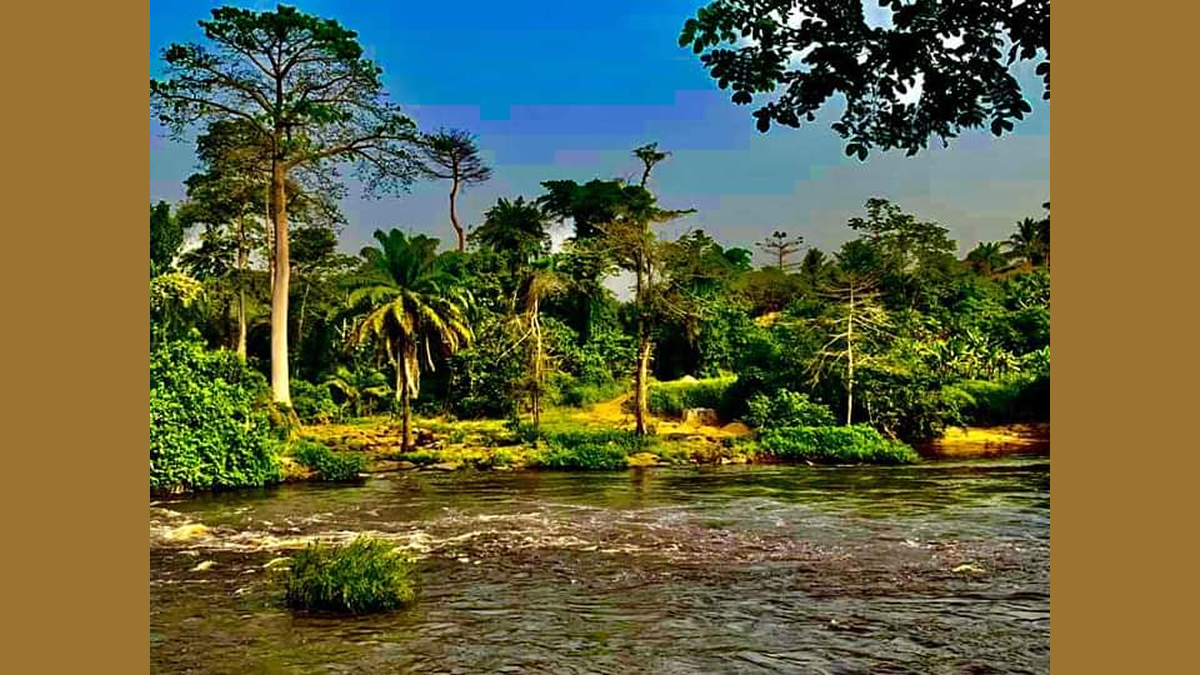
The Bia River is one of the most important rivers in southwestern Ghana, a powerful force in the landscape, ecology, and heritage of the Western North Region. Rising from the rainforests of Ghana and flowing across the border into Côte d’Ivoire, the Bia River plays a vital role in sustaining both natural ecosystems and human livelihoods. It is a lifeline for biodiversity, a boundary marker, and in many ways, a sister river to the sacred Tano.
Though the Bia and Tano rivers do not directly connect hydrologically, they flow through adjacent forest systems and are both protected by some of Ghana’s most critical conservation areas. Together, they form the ecological heart of the Ghana–Côte d’Ivoire rainforest corridor—a region under siege from mining, logging, and agricultural expansion.
📍 Geography and Hydrology
- Country: Ghana (origin), Côte d’Ivoire (major course and mouth)
- Region: Western North Region of Ghana
- Districts: Bia West, Bia East, and parts of Juabeso and Suaman
- Source: Bia Forest Reserve, near the town of Essam
- Course: Flows westward into Côte d’Ivoire, eventually merging with the Comoe River
- Basin: Part of the Comoe River Basin, but ecologically close to the Tano Basin
- Length: Approximately 250 kilometers
- Function: A transboundary river and one of the largest rivers in Ghana that exits into Côte d’Ivoire
The Bia River is a major freshwater system for the western region, feeding wetlands, farms, villages, and wildlife habitats across two countries.
🌿 Ecological Importance
The Bia River and its surrounding ecosystems represent some of the last remaining tracts of primary rainforest in Ghana. The river originates in the Bia National Park and Resource Reserve, a UNESCO Biosphere Reserve and one of the most biologically diverse areas in West Africa.
Biodiversity Highlights:
- Over 160 bird species and nearly 100 mammal species recorded in the Bia area
- Home to rare and endangered animals such as:
- Forest elephants
- Bongo antelope
- Chimpanzees
- Olive colobus and black-and-white colobus monkeys
- Slender-snouted crocodiles
- Fish species adapted to slow-moving, shaded freshwater systems
- The Bia River supports large stretches of riparian forest, swamp forests, and gallery forests that are increasingly rare in West Africa
The Bia corridor is also a migration and genetic exchange route for forest-dwelling species between Ghana and Côte d’Ivoire—especially for elephants, which move seasonally along the river.
🧭 Cultural and Community Significance
The Bia River holds deep significance for the Sefwi, Aowin, Nzema, and Akan-speaking peoples of western Ghana. It has long been revered not just as a water source, but as a spiritual being with character and lineage.
In traditional Akan cosmology:
- The Bia River is considered the mythological brother of the Tano River.
- While Tano is associated with strength, truth, and kingship, Bia represents protection, quiet wisdom, and deep connection to the animal world.
- The rivers are often invoked together in ancestral prayers, libations, and seasonal rites.
- Some oral traditions say that Bia was assigned to guard the forest creatures, while Tano watches over humans and justice.
This mythological relationship affirms their spiritual unity, despite flowing into different basins, and reflects the Akan worldview where rivers are family—guardians of both the physical and metaphysical worlds.
⛔ Environmental Threats
Despite being home to one of Ghana’s most protected national parks, the Bia River system is facing rising pressure from human activity:
1. Illegal Mining
- Galamsey activity is creeping into the upper catchment and buffer zones of the Bia Reserve
- Mercury and other pollutants are leaking into the water, threatening both humans and aquatic life
2. Deforestation
- Logging, both legal and illegal, is fragmenting the forest corridors along the river
- Riparian zones are being cleared for cocoa farms, reducing water quality and bank stability
3. Poaching and Human-Wildlife Conflict
- As wildlife habitats shrink, elephants and primates enter farms, triggering conflict
- Some sacred zones are being lost as younger generations move away from traditional practices
4. Climate Change
- Unpredictable rainfall and rising temperatures are disrupting the river’s flow
- Wetlands and seasonal floodplains are drying up earlier than expected
💚 The Bia River and the Tano River Collective Project
Though the Bia and Tano Rivers belong to different hydrological basins, they are ecological allies. Both flow through Western Ghana’s critical forest belt and both are threatened by the same forces. Any conservation work done for one benefits the other.
The Tano River Collective Project supports a trans-basin approach to environmental and cultural protection, especially across these shared forest systems.
Collaborative Opportunities:
- Create a shared conservation corridor linking Bia National Park and Tano Nimiri/Boin Tano reserves
- Develop community-led buffer zone management plans for both riverbanks
- Highlight river rituals, taboos, and stories to engage local youth in cultural conservation
- Facilitate cross-border forest patrols in cooperation with Côte d’Ivoire’s conservation agencies
- Support reforestation, elephant corridors, and sustainable cocoa initiatives
📢 Conclusion: Two Rivers, One Destiny
The Bia River, mythological brother of the Tano, carries more than water. It carries memory, meaning, and the sacred duty to protect life. Flowing from the same ancient forests, Bia and Tano are twin sentinels of the rainforest, watching over elephants, elders, spirits, and streams.
To protect one is to honor the other.
To forget one is to risk the loss of both.
By including the Bia River in the vision of TanoRiver.com, we celebrate a forgotten brother—and reignite the power of kinship between land, water, and people.
🌍 www.TanoRiver.com
Bia River: Brother of Tano, Keeper of the Forest.
Join the Tano River Collective Project – For the Rivers Who Remember.


