



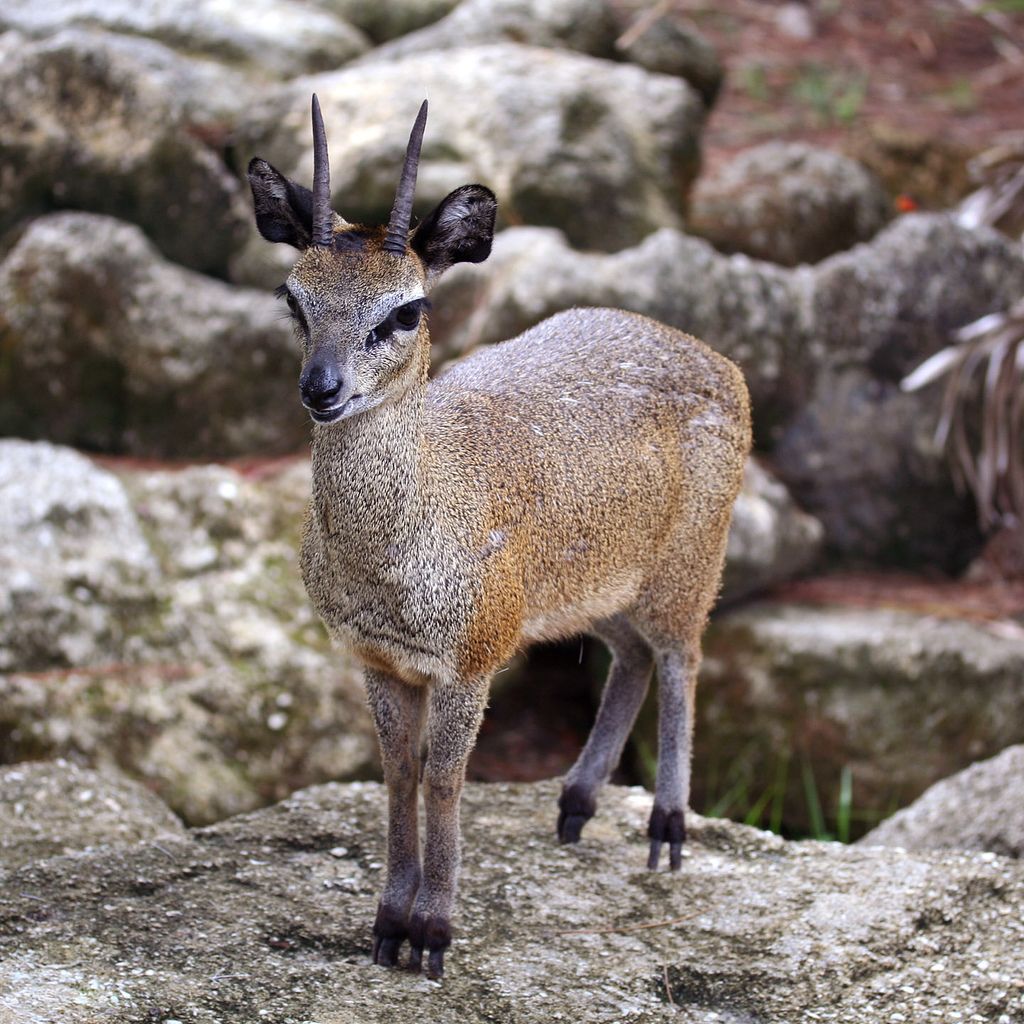
The tiniest antelope in Africa, quietly leaping through the forests of the Tano River
Contents
🌍 Where It Lives
The Royal Antelope is found in the dense, humid forests of West Africa, including:
- Ghana and Côte d’Ivoire, especially near the Tanoé-Ehy Forest Reserve
- Prefers lowland rainforests, swampy undergrowth, and quiet forest edges
It is active mostly at night, hiding in thick vegetation during the day.
📏 Size and Appearance
- Height: Just 25–30 cm tall at the shoulder
- Weight: Only about 2.5 to 3 kg
- Color: Reddish-brown with a pale belly
- Horns: Tiny, straight horns in males (barely 2–3 cm)
Despite its small size, it is incredibly quick and agile.
🌿 Life in the Forest
- Nocturnal and solitary
- Feeds on young leaves, fallen fruit, and tender shoots
- Uses tiny forest trails to move undetected
- Freezes when threatened, then makes fast, bounding escapes
🐣 Reproduction
- Breeds all year in tropical climates
- Females give birth to one tiny fawn, hidden in dense ground cover
- Newborns stay still and scentless to avoid predators
🧭 Why It Matters
The Royal Antelope:
- Helps disperse seeds by eating fruit
- Is prey for eagles, snakes, and wild cats
- Is a symbol of beauty and rarity in forest folklore
- Survives only in quiet, intact forests
⚠️ Threats
Although listed as Least Concern globally, it faces pressure in the Tano River region from:
- Deforestation and illegal gold mining
- Hunting (accidental or for bushmeat)
- Loss of habitat corridors for safe movement
Its shy nature makes it especially vulnerable to environmental changes.
🌊 A Forest Jewel
The Royal Antelope is:
- The smallest antelope in Africa
- A symbol of how delicate life thrives in strong forests
- A creature that proves small doesn’t mean insignificant
When the forest is quiet and still, look closely — you may spot royalty in the leaves.
🔗 Have you ever seen or heard about the Royal Antelope in your village or forest? Share your story at [TanoRiver.com/submit]


