



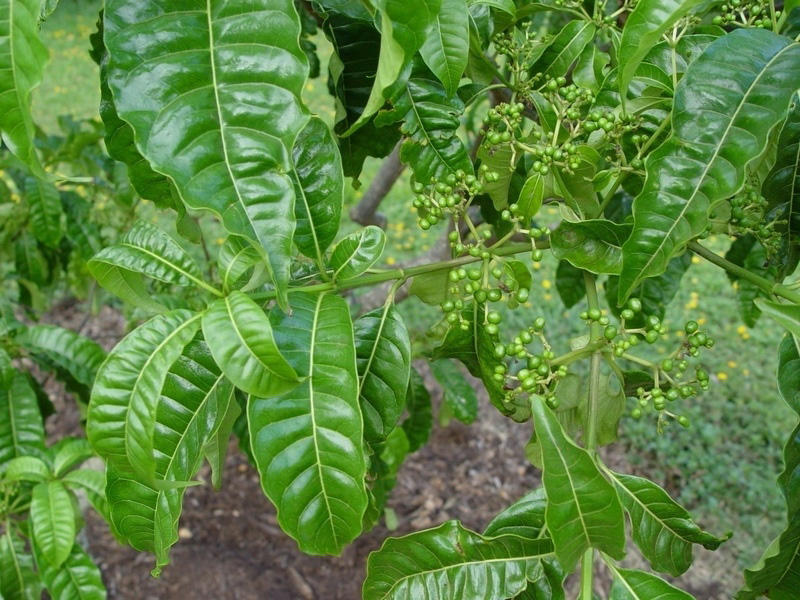
A sacred medicinal tree rooted in power, ritual, and ancestral science along the Tano River
🔎 Scientific Name: Rauvolfia vomitoria
Common names: African serpentwood, Swizzle stick, “Kyenkyen” (Akan), “Pali” (Baoulé), “Vomirier d’Afrique” (Fr.)
Family: Apocynaceae (dogbane family)
📍 Habitat and Distribution
Native to tropical West and Central Africa, Rauvolfia vomitoria is found in:
- Rainforests, swamp forests, and forest-savanna transition zones
- Widely distributed in Ghana, Côte d’Ivoire, Nigeria, and beyond
In the Tano River Basin, it grows:
- In moist, shady areas along riverbanks and forest edges
- Near village compounds, sacred groves, and traditional healer gardens
It prefers rich, well-drained soil and partial shade, flourishing in lowland and riverine environments.
🌳 Botanical Description
- Leaves: Glossy, dark green, arranged in whorls of 3–4
- Height: Typically a small to medium tree, 4–8 meters tall
- Flowers: Small, white or pinkish, star-shaped
- Fruits: Bright red to black berries resembling small cherries
- Bark and roots: Rich in alkaloids, highly valued in herbal medicine
🌿 Ecological Role
- Attracts fruit-eating birds and forest mammals
- Provides shade and soil stability on riverbanks
- Leaves and fruit support small forest herbivores
- May be part of regeneration patches in disturbed forest zones
🌍 Traditional Medicinal Uses
One of the most powerful medicinal plants in African traditional medicine, Rauvolfia vomitoria is used to treat:
🩺 Internal Ailments:
- High blood pressure
- Malaria and fever
- Stomach ulcers, worms, and gastrointestinal issues
- Anxiety, epilepsy, and madness
🧪 Key Parts Used:
- Root bark: Ground or boiled for decoctions and powders
- Leaves and fruit: Crushed and used in poultices or teas
- Stem bark: Used in ritual cleanses or spiritual baths
The plant contains powerful indole alkaloids, including reserpine and ajmaline, which have sedative and hypotensive effects.
🧙🏾♂️ Spiritual and Ritual Significance
In many Akan, Nzema, and Baoulé traditions, this tree is:
- Considered a protective plant against evil forces
- Used in purification ceremonies, especially for mentally ill or spiritually afflicted persons
- Planted near shrines, healing centers, or initiation sites
Its bark and roots are sometimes buried beneath new buildings for protection or used in ritual libations during ancestral ceremonies.
It is often referred to as a “talking tree” in folklore — one that can reveal hidden illnesses or intentions.
⚠️ Conservation and Safety Notes
- While not endangered, Rauvolfia vomitoria is at risk from overharvesting, especially for:
- Export to pharmaceutical industries
- Unsustainable root harvesting by herbalists
- Toxicity risk:
- Strong sedative properties — not recommended without trained supervision
- Overdose can lead to vomiting, depression, or nervous system complications
Conservationists advocate controlled harvesting and replanting to preserve its role in African ethnobotany.
🌱 Why It Matters for the Tano River
Rauvolfia vomitoria embodies the river’s dual identity:
- Mystical and medicinal
- Rooted in the past but vital for the future
It represents the Tano River’s role as:
- A healing artery of the forest
- A keeper of sacred plants and wisdom
🔗 Have you used or grown this sacred tree near the Tano? Share your story or photo at [TanoRiver.com/submit]


