



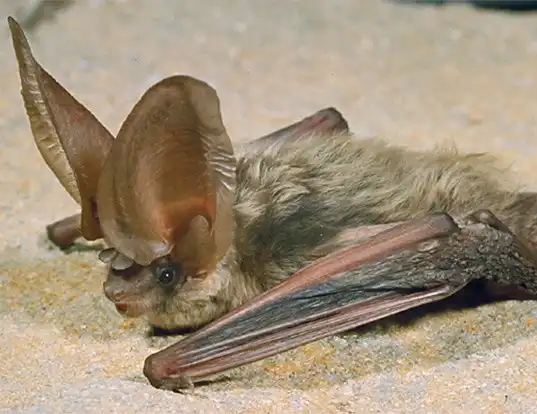
A swift, silent hunter of the night sky over the Tano forests
🔍 Quick Facts
- Common Name: White-winged Serotine
- Scientific Name: Pseudoromicia tenuipinnis (formerly Neoromicia tenuipinnis)
- Family: Vespertilionidae (Vesper bats)
- IUCN Status: Least Concern, but rarely studied
- Activity: Nocturnal
- Habitat: Tropical rainforests, river edges, swamp forests
- Diet: Insectivorous
🌍 Distribution and Habitat
The White-winged Serotine is found in forested parts of West and Central Africa, including:
- Côte d’Ivoire, Ghana, Liberia, Nigeria, and the Congo Basin
In the Tano River region, it likely inhabits:
- Riparian corridors along the river
- Edge habitats near the Tanoé-Ehy Swamp Forest
- Canopy gaps, wetlands, and marshy lowland forests
It is often recorded using mist nets set at low heights, showing its preference for cluttered forest interiors.
🦇 Appearance
- Fur: Dark brown to black body fur with contrasting pale or white wings
- Wings: Thin, translucent, and slender — ideal for maneuverable flight
- Size: Small-bodied; ~6–8 grams
- Ears: Broad with a prominent tragus, helping with echolocation
Its white wings are distinctive and unusual among African bats.
🌿 Behavior and Ecology
- Nocturnal aerial insectivore
- Uses echolocation to navigate and hunt in complex forest environments
- Diet: Moths, beetles, mosquitoes, and other flying insects
- Flight is quick, erratic, and acrobatic — suited for chasing prey in closed habitats
Roosting behavior is poorly documented, but likely uses:
- Tree holes, under bark, or dense foliage
- Occasionally roosts in abandoned structures near forest edges
🧭 Ecological Role
The White-winged Serotine plays a crucial part in:
- Controlling insect populations, especially mosquitoes and crop pests
- Supporting pollination indirectly by reducing herbivorous insect pressure
- Indicating the health of undisturbed forest microclimates
Like many small bats, its presence is critical yet often overlooked.
⚠️ Conservation Concerns
Although listed as Least Concern, this bat may be at risk in localized areas due to:
- 🏭 Deforestation, especially in moist lowland forests
- 🛢 Pollution from illegal mining (galamsey) affecting insect prey
- 🔥 Fires and habitat fragmentation reducing foraging and roosting areas
- ❌ Lack of field data to assess trends
Its dependence on insect-rich, intact forest makes it vulnerable to ecological disruption.
🌊 Why It Matters for the Tano River
The White-winged Serotine is:
- A symbol of invisible biodiversity, thriving quietly in the night
- A natural mosquito control agent, benefiting forest-edge communities
- A sign that healthy airspace and insect webs still exist above the Tano River
Each time it flies, it reminds us that the forest breathes and listens, even after dark.
🔗 Have you seen bats flitting near the river or around your farms at dusk? Have elders spoken of “white-winged night spirits”? Share your encounters at [TanoRiver.com/submit]


