



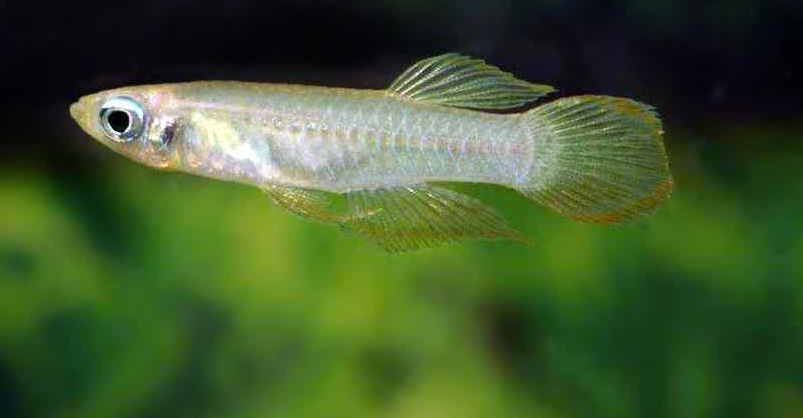
A tiny flash of light dancing in the shallow waters of the Tano River
🔎 Scientific Name: Poropanchax normani
Common names: Norman’s lampeye, Blue-eye killifish
Family: Poeciliidae (sometimes listed under Procatopodidae)
🌍 Distribution and Habitat
Poropanchax normani is native to freshwater systems of West and Central Africa, found in:
- Ghana, Côte d’Ivoire, Nigeria, Cameroon, and surrounding countries
🌊 In the Tano River system, it lives in:
- Shallow, slow-moving freshwater: pools, edges of streams, flooded grassy areas
- Especially common near the forested margins, swamps, and calm backwaters
It thrives in warm, plant-rich environments, with soft water and low current.
🐟 Physical Description
- Size: Very small – up to 3.5 cm (1.4 inches)
- Body: Slim, slightly translucent
- Coloration:
- Silvery to olive body with subtle horizontal lines
- A striking iridescent blue “lamp” above each eye, visible in low light
- Fins: Transparent or faintly colored, sometimes edged with pale yellow in males
When seen in schools under sunlight, their glowing eyes resemble tiny floating lights — hence the name “lampeye.”
🧬 Behavior and Ecology
- Diet: Insectivorous
- Feeds on microscopic plankton, insect larvae, and small invertebrates
- Also consumes algae and fine detritus
- Reproduction:
- Lays adhesive eggs among aquatic vegetation
- No parental care; fry are free-swimming a few days after hatching
- Breeds seasonally in response to rainfall and temperature
- Behavior:
- Peaceful, social, and schooling
- Active during the day, especially early morning and late afternoon
They play a role in mosquito control by feeding on larvae.
🌱 Ecological Importance
- A key component of the micro-food web
- Prey for small birds, frogs, and larger fish
- Bioindicator of clean, well-oxygenated waters with moderate vegetation
Their presence in the Tano’s backwaters reflects a balanced, functioning aquatic system.
🎣 Aquarium Use and Scientific Interest
- A favorite in the aquarium hobby, admired for:
- Its peaceful nature, small size, and glowing eyes
- Easy care in planted nano tanks
- Used in scientific studies on:
- Vision in fish
- Behavior of schooling species
- Environmental tolerance of small tropical species
Norman’s lampeye has helped raise interest in West African micro-fish diversity globally.
⚠️ Conservation Status
- Not threatened globally, but vulnerable to:
- Wetland destruction
- Pesticide pollution in rice fields and swampy zones
- Overcollection for the aquarium trade in some regions
Protecting vegetated shallow habitats is key to its conservation.
🌊 Why It Matters for the Tano River
Poropanchax normani is:
- A tiny ambassador of the Tano’s wetland margins
- A natural light-bearer that shows us beauty at the smallest scale
- A gentle reminder that river health begins with its smallest lifeforms
In the quiet pools where reeds ripple, Norman’s Lampeye glows like a whisper of starlight underwater.
🔗 Have you seen this shimmering fish in the Tano’s calm waters? Share your story at [TanoRiver.com/submit]


