



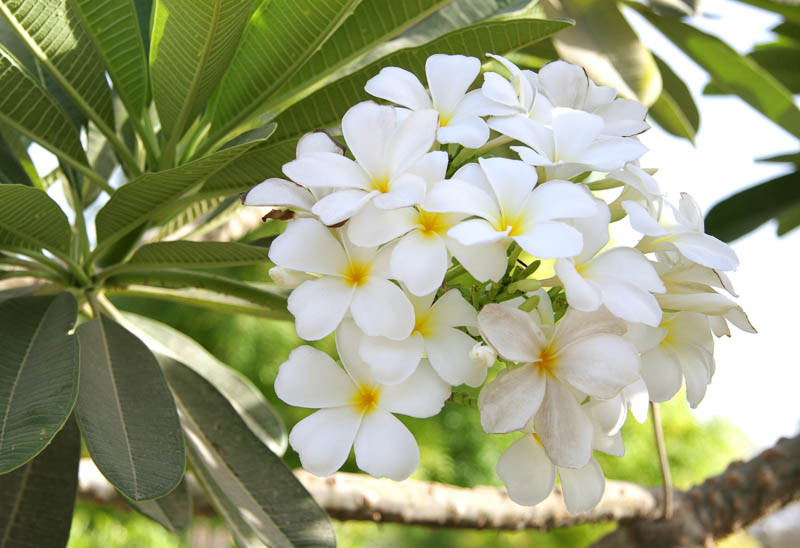
A sacred blossom of memory, purity, and peace along the Tano River
🔎 Scientific Name: Plumeria alba
Common names: Frangipani, Temple flower, “Asɔre Nkyene Dua” (Akan), “Araba W’awu” (Ghanaian folk name, “Araba is dead”), “Fleur des morts” (Fr.)
Family: Apocynaceae (dogbane family)
📍 Native Range and Habitat
Though originally native to the Caribbean and Central America, Plumeria alba has been naturalized across tropical West Africa for centuries and is now:
- Commonly planted in villages, cemeteries, and temple courtyards
- Grows well in well-drained soils near the lower and middle Tano River Basin
- Found in graveyards, shrines, and sometimes along sacred paths leading to riverbanks
It is a plant tied not to wild forests, but to human memory and ritual space near the river.
🌸 Botanical Description
- Flowers: Pure white petals with a yellow center, delicately fragrant
- Leaves: Long, narrow, and leathery
- Trunk: Smooth and light gray
- Height: 3–7 meters (small ornamental tree)
- Growth form: Open crown with thick, fleshy branches
Frangipani flowers often bloom throughout the year, especially during dry seasons.
🌍 Ecological Role
While mostly ornamental, it:
- Attracts pollinators like bees and moths
- Provides shade in ritual spaces
- Stabilizes soil around cemeteries or spiritual landmarks
Because it is often planted, it plays a cultural ecological role rather than a wild one.
🧙🏽♀️ Cultural and Spiritual Significance
Plumeria is one of the most symbolic flowers in coastal and forested regions of Ghana and Côte d’Ivoire:
- Associated with death, peace, and eternal rest
- Used in funeral offerings, ancestor shrines, and grave ornamentation
- Sometimes seen as a “messenger flower” — planted to honor a lost loved one
- Known in folklore as the “flower of farewell”
In Akan cosmology, it’s often linked to the spiritual journey of the soul, especially for women or children.
Its use in libation ceremonies at the river reflects a belief in purifying sorrow and guiding spirits toward peace.
🌿 Medicinal and Traditional Uses
- Sap sometimes used in traditional medicine for:
- Skin inflammation (in small, careful doses)
- Toothaches (applied with great caution – can be irritating)
- Dried flowers occasionally used in ritual baths for peace or spiritual renewal
Due to its mild toxicity, it’s more valued symbolically than medicinally.
⚠️ Notes on Preservation
- Though not endangered, Frangipani trees are declining in some urbanized areas where cemeteries are cleared
- Their cultural symbolism is fading with modernization
- Needs preservation as part of spiritual landscape heritage in riverine communities
🌱 Why It Matters for the Tano River
While not a wild native, Plumeria alba is deeply woven into the ritual ecology of the Tano River people:
- It beautifies spaces of memory and mourning
- It reminds us of the spiritual dimensions of the river
- It honors the link between life, death, and ancestral presence
🔗 Have you planted or photographed a Frangipani near the Tano River? Share your tribute at [TanoRiver.com/submit]


