



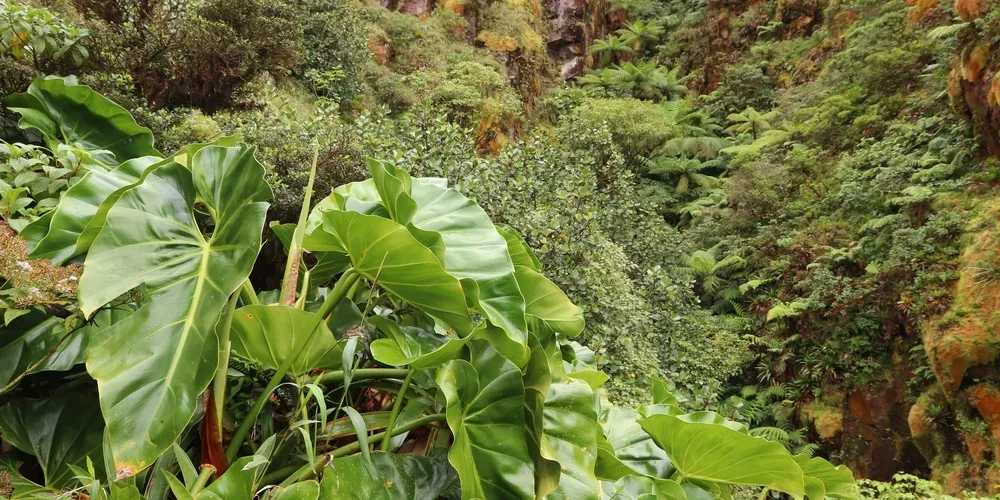
Forest spirits in leafy form, quietly climbing through the river’s green cathedral
🔎 Botanical Name: Philodendron (various species)
Common names: Philodendron, “Heartleaf climber,” “Cœur de forêt” (Fr.), “Aboabo nsuo dua” (in Akan: river bush plant)
Family: Araceae (arum family)
📍 Habitat and Distribution
Philodendron species are native to Central and South America, but many have become established in tropical Africa, especially in:
- Shaded rainforests, swamp forests, and riverine valleys
- Garden shrines, sacred groves, and moist forest understories
In the Tano River Basin, they thrive in:
- Wet forest zones near the Tanoé-Ehy wetlands
- Along stream banks and seasonal tributaries
- Occasionally cultivated in spiritual gardens or as ornamentals
Some native African aroids (such as Culcasia and Anchomanes) have similar climbing structures and are often grouped with Philodendrons in local knowledge.
🌿 Botanical Description
- Leaves: Large, glossy, heart-shaped or deeply lobed
- Some species have long aerial roots dangling from stems
- Growth habit: Climbing or trailing vine, attaching to trees or rocks
- Flowers: Hidden in a spathe-and-spadix structure, typical of arum plants
- Size: Some vines stretch over 10 meters in height with imposing foliage
They create lush vertical green walls in forest interiors and moist garden spaces.
🌱 Ecological Role
- Help retain moisture in the forest microclimate
- Provide shelter for insects, tree frogs, and small lizards
- Their aerial roots trap organic matter, feeding forest soils
- Climb trees, but do not harm them—making them ideal non-destructive climbers
They contribute to the complex vertical structure of tropical river forests.
🧙🏽♀️ Cultural and Symbolic Importance
In spiritual traditions across Ghana and Côte d’Ivoire:
- Philodendrons are linked to river deities and ancestral spirits
- Found near shrines, fetish groves, and river altars
- Some species are considered sacred guardians of forest paths
In folklore, their unfurling leaves symbolize:
- New life
- Healing
- The silent intelligence of plants
They are sometimes used in rituals to attract blessings, or planted near homes for protection.
🧪 Traditional Uses
Though not widely used medicinally due to toxicity, local knowledge may include:
- Using leaves for wrapping herbs or offerings
- Incorporating in ritual baths or protection bundles
- Using root fibers in small-scale weaving or crafting
Caution is advised: like many arum plants, Philodendron contains calcium oxalate, which can irritate skin or mouth if mishandled.
⚠️ Conservation Notes
- Not endangered, and often cultivated
- But wild forest populations may suffer from:
- Deforestation for mining or agriculture
- Fire clearing of sacred groves
- Loss of traditional knowledge about plant guardianship
Preserving Philodendron in the wild supports forest resilience and sacred ecological balance.
🌊 Why It Matters for the Tano River
Philodendron species represent:
- The quiet, green guardians of sacred water paths
- The connection between tree, soil, and spirit
- The kind of subtle flora often forgotten, but always felt
In the shaded sanctuaries along the Tano River, they grow unseen but never without meaning.
🔗 Do you have photos or stories of Philodendrons in sacred forests or riverside homes? Share them at [TanoRiver.com/submit]


