



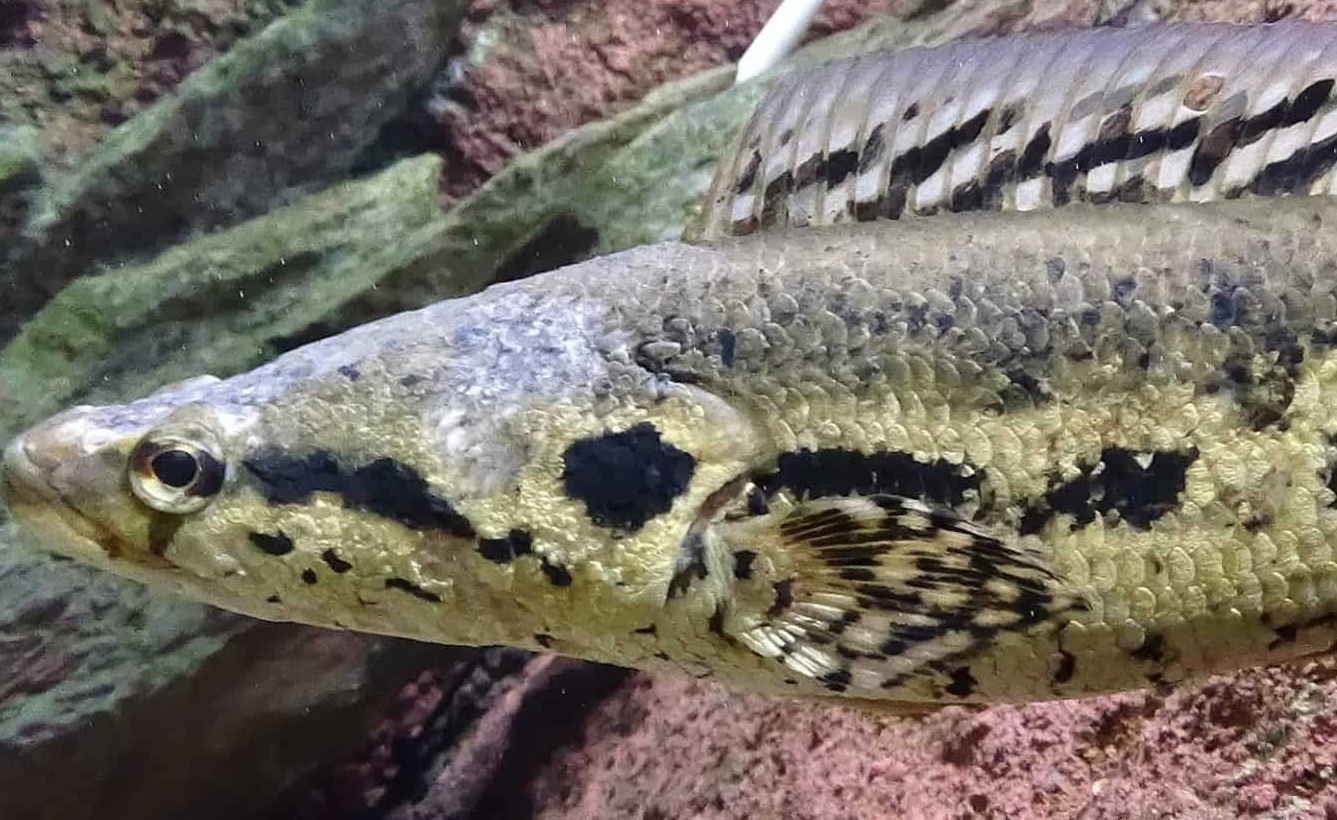
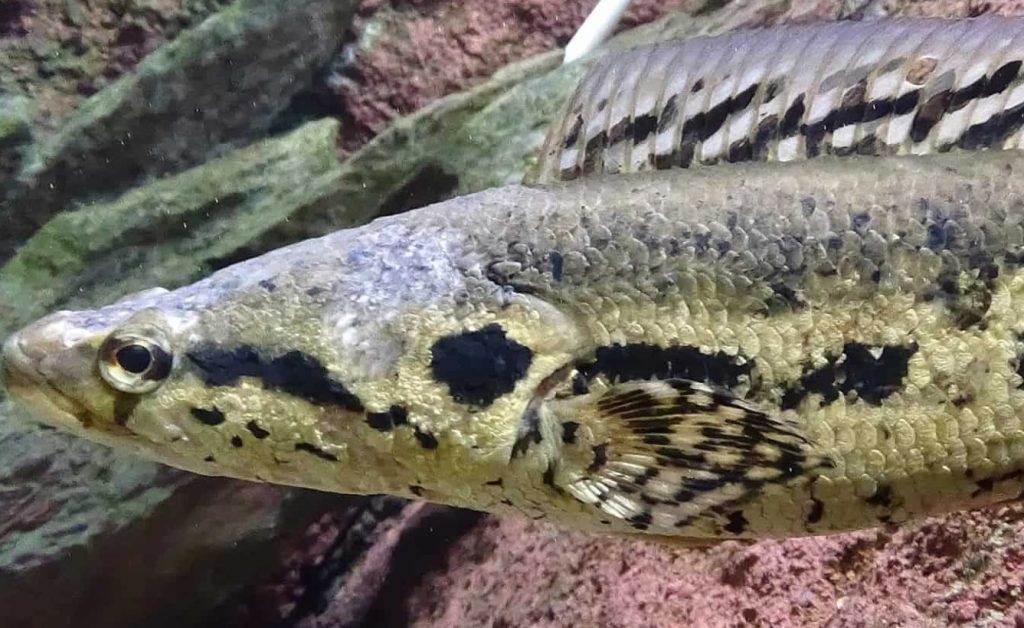
A stealthy predator of swamps and streams, breathing air and striking in silence
🔎 Scientific Name: Parachanna obscura
Common names: Obscure snakehead, African snakehead, “Snakehead fish”
Family: Channidae
🌍 Distribution and Habitat
This snakehead species is native to tropical West and Central Africa, found in:
- Ghana, Côte d’Ivoire, Nigeria, Mali, Guinea, Cameroon, and surrounding countries
🌊 In the Tano River system, it inhabits:
- Shallow, slow-moving waters, particularly:
- Swamps, floodplains, and stream margins
- Backwaters and marshes connected to the Tano River
- Areas with dense vegetation, muddy substrates, and low oxygen levels
Thanks to its accessory breathing organ, it can survive in stagnant or hypoxic conditions where other fish cannot.
🐟 Physical Description
- Size: Commonly 25–40 cm, but can reach up to 60 cm (2 feet)
- Body: Elongated, cylindrical, resembling a snake
- Coloration:
- Mottled brown and olive with irregular dark blotches
- Camouflages perfectly in muddy waters and leaf litter
- Head: Flattened and snake-like, with a wide mouth full of sharp teeth
- Fins: Long dorsal and anal fins; tail rounded
Its appearance is both ancient and predatory, befitting a top ambush predator.
🧬 Behavior and Ecology
- Diet: Carnivorous
- Feeds on small fish, amphibians, aquatic insects, crustaceans, and sometimes terrestrial prey
- Uses ambush tactics, remaining motionless before a sudden lunge
- Breathing:
- Possesses a suprabranchial (labyrinth-like) organ
- Can breathe atmospheric air and survive out of water for hours in moist conditions
- Reproduction:
- Spawns during rainy season in calm, vegetated waters
- Builds a nest of bubbles or floating vegetation
- Exhibits parental care, guarding eggs and fry aggressively
- Activity:
- Primarily nocturnal, hunting in low light
- May burrow into wet mud during dry seasons
🌱 Ecological and Cultural Importance
- Top predator in its niche: regulates populations of smaller fish and amphibians
- A resilient survivor that thrives in degraded or seasonal habitats
- Sometimes viewed in folklore as a mysterious or dangerous creature, due to its snake-like shape and aggressive defense of young
Its presence indicates swamp connectivity and wet-season flow cycles.
⚠️ Conservation and Human Interaction
- Not currently endangered, but affected by:
- Habitat destruction (drainage of wetlands, mining)
- Pollution and agricultural runoff
- Overharvesting for bushmeat or local consumption
- In some places, it is being introduced outside its native range, raising concerns about invasive behavior (though P. obscura is less aggressive than Asian snakeheads)
🎣 Fisheries and Local Use
- Commonly caught using:
- Traps, hand lines, and spears, especially at night
- Considered good eating: firm flesh, often smoked or grilled
- Sold fresh or dried in local markets
It is valued both for food and as a traditional medicinal ingredient in some cultures.
🌊 Why It Matters for the Tano River
Parachanna obscura is:
- A symbol of resilience, adaptability, and ecological dominance
- A key predator that helps maintain fish population balance
- A striking example of Africa’s unique evolutionary pathways
In the shadowy backwaters of the Tano, this ancient fish stalks its prey — a living relic of prehistoric waters.
🔗 Have you encountered the snakehead in your fishing trips? Share your stories or photos at [TanoRiver.com/submit]


