



Silent and swift, the forest’s most feared yet misunderstood serpent
🔎 Scientific Name: Naja melanoleuca
Common names: Forest Cobra, Black-and-white Cobra
Family: Elapidae
IUCN Status: Not Evaluated (locally monitored due to risk of habitat loss and conflict)
🌍 Habitat and Distribution
The Forest Cobra is one of the largest and most striking cobras in Africa. It is widely distributed across:
- Tropical West and Central Africa, including Ghana, Côte d’Ivoire, Nigeria, Cameroon, and parts of the Congo Basin
In the Tano River ecosystem, it inhabits:
- Primary and secondary rainforests
- Swampy riverbanks, riparian thickets, and even village outskirts
- Often found in or near the Tanoé-Ehy Forest, and sometimes near cocoa farms and fish ponds
It prefers humid environments with dense undergrowth and access to water.
🐍 Physical Description
- Size: Typically 1.4–2.2 meters long, but can reach up to 2.7 meters
- Coloration:
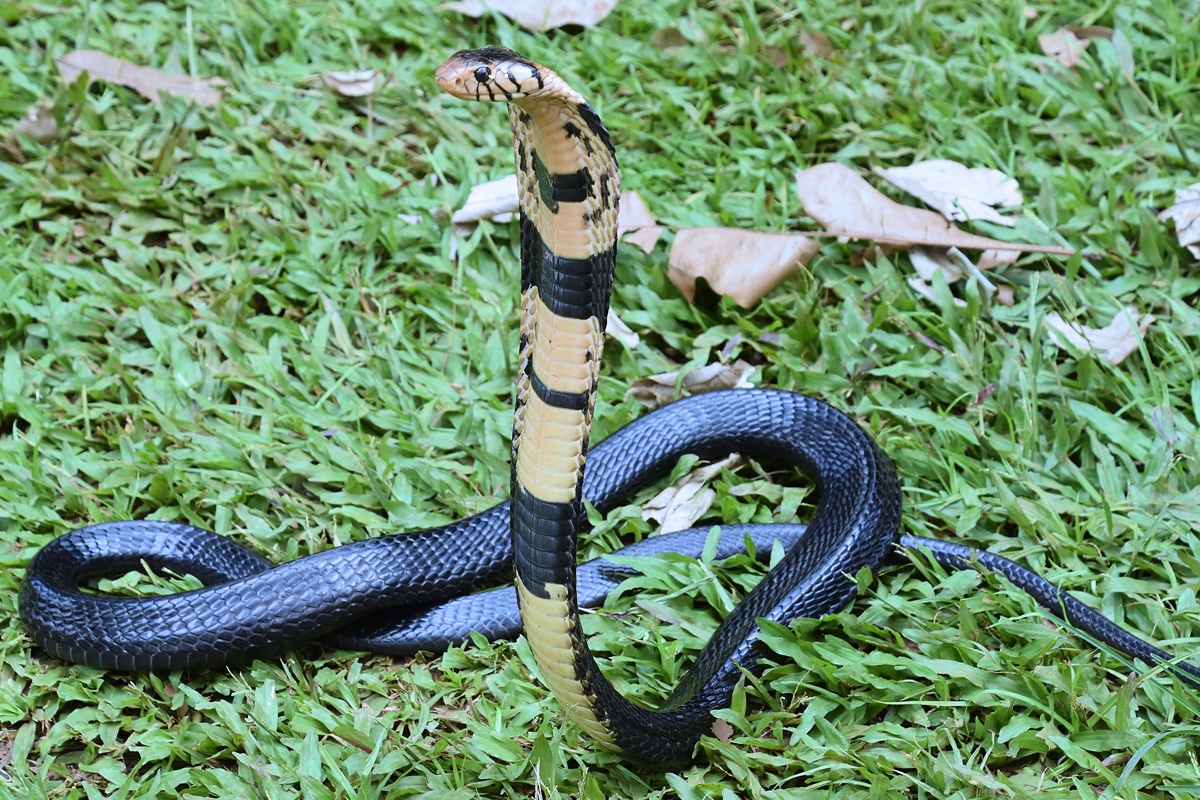
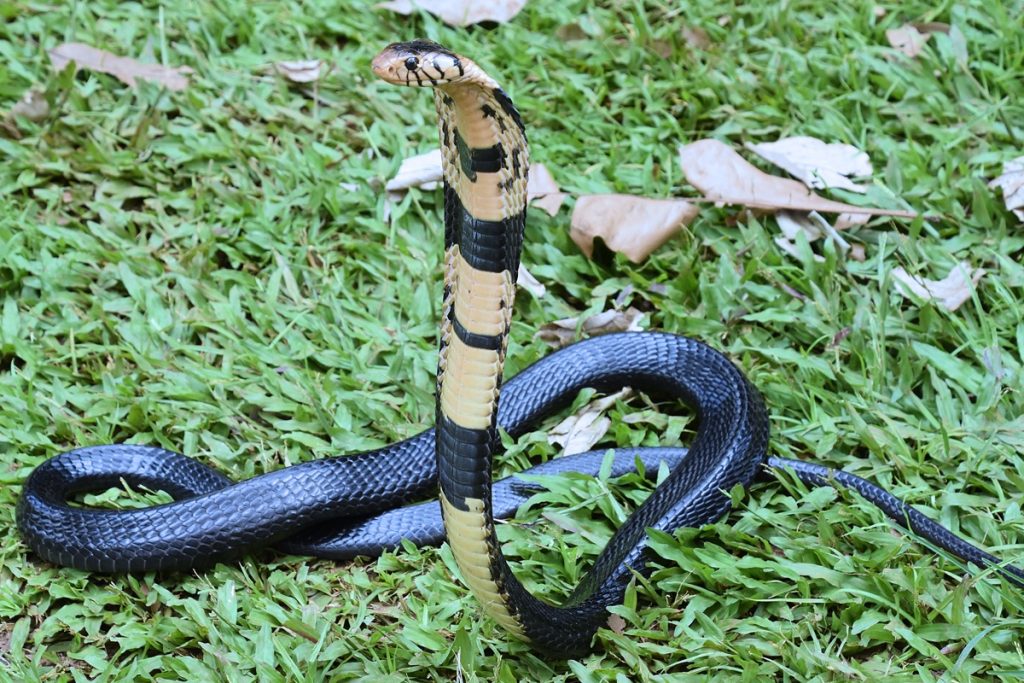
- Highly variable, but often black head and neck, with alternating black and white banding or mottled scales
- Belly usually pale or cream-colored
- Hood: Can raise a hood, like other cobras, when threatened
The forest cobra is both beautiful and imposing, with its high alert posture and confident movement.
🌿 Behavior and Ecology
- Diurnal: Active mostly during the day but may hunt at dusk or night
- Excellent swimmer and climber — can ascend trees and swim across rivers with ease
- Diet:
- Feeds on amphibians, birds, rodents, fish, and other reptiles (including smaller snakes)
- In wet zones, will hunt frogs, tilapia, and even bird eggs
- Uses stealth and speed, relying on keen vision and scent tracking
🧪 Venom
- Like all true cobras, the Forest Cobra has neurotoxic venom, which affects the nervous system
- Not a spitting cobra, but bites can be fatal if untreated
- Venom can cause:
- Muscle paralysis
- Respiratory failure
- Death in severe cases (though human fatalities are rare with prompt medical care)
Despite its power, the Forest Cobra is shy and reclusive, preferring to escape rather than attack when given the chance.
🧭 Cultural Significance
In Akan and Nzema traditions, large snakes such as the forest cobra are:
- Associated with sacred groves, river gods, and ancestral spirits
- Sometimes feared as omens or guardians of sacred land
- In some villages, cobras are taboo to kill, especially near shrines or forest reserves
- Believed to possess protective spiritual energy
Snakes are often respected rather than hated, and their appearance interpreted as messages from the spirit world.
⚠️ Threats
- Habitat loss from logging, mining, and agriculture
- Killing due to fear — villagers often kill cobras on sight
- Decline in prey base due to pesticide use and environmental degradation
- Road mortality near rural settlements
Because they depend on large, undisturbed forests, cobra populations are in decline in many parts of West Africa.
🛡️ Conservation and Coexistence
- Present in and around protected forests, including the Tanoé-Ehy Swamp Forest
- Conservation efforts include:
- Environmental education to reduce fear
- Snakebite treatment awareness
- Habitat preservation, especially riparian buffers
Learning to coexist peacefully with the forest cobra is essential to protecting both people and biodiversity.
🌊 Why It Matters for the Tano River
The Forest Cobra is:
- A top predator in the riverine food web
- A symbol of the untamed and sacred aspects of the forest
- A living reminder that the health of the Tano ecosystem depends on balance, not just beauty
Where the Tano flows in silence, the forest cobra glides — not to strike, but to remind us that the wild still rules its shadows.
🔗 Have you ever seen or heard of a forest cobra near your village or the Tano River? Share your respectful encounters or local stories at [TanoRiver.com/submit]


