



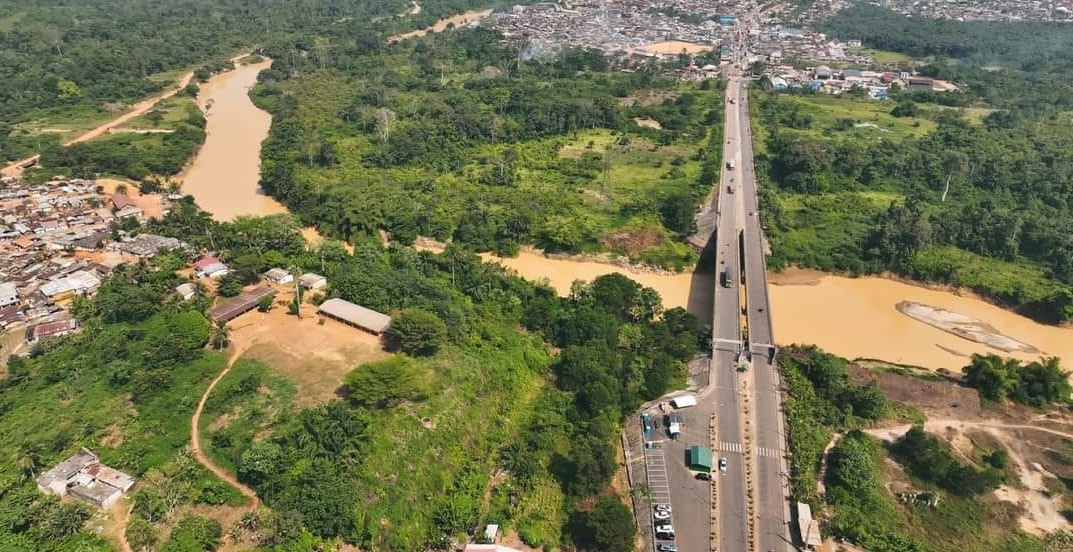
Introduction: The Tano River – A Living Tapestry of Lives and Legends
The Tano River, a vital transboundary watercourse shared by Ghana and Côte d’Ivoire, forms the lifeblood of a vast basin covering approximately 16,060 km², primarily within Ghana. Originating in the Boyem Mountain Ranges near Techiman, it flows southwest for an estimated 512 km, though some sources indicate 400 km, before discharging into the Ehy/Tano/Aby Lagoon complex on the border with Côte d’Ivoire and ultimately reaching the Atlantic Ocean. This extensive river system, encompassing nine major tributaries, is more than just a geographical feature; it is intrinsically woven into the fabric of life for nearly two million people residing within its basin.
The Tano Basin is a region of immense ecological and economic significance, sustaining diverse livelihoods through agriculture, forestry, mining, tourism, and fisheries. Approximately 54% of its population lives in urban centers like Techiman and Sunyani, while 46% reside in rural areas, where agriculture remains the primary occupation for nearly half of the population. However, the river and its surrounding ecosystems face growing threats from unsustainable land use practices, widespread pollution, illegal mining, and invasive species. This report delves into the personal narratives of the Tano’s riverine communities, exploring their deep connection to the water, the challenges they confront, and their enduring resilience in the face of environmental and socio-economic pressures.
The Tano’s Embrace: Geography, Culture, and Spirit
The River’s Course and Ecosystems: A Foundation for Life
The Tano River Basin spans six administrative regions and 29 districts within Ghana, with significant portions in the Western North, Ahafo, Ashanti, and Western regions. Its topography ranges from highlands in the upstream areas near the Boyem Mountain Ranges to flatter southern sections, creating a diverse range of terrestrial and aquatic ecosystems. These ecosystems provide essential services, including clean water, food, and energy, which are fundamental to the livelihoods of communities across the basin.
The basin’s landscape comprises semi-deciduous dense forests, dry dense forests, clear forests, farmlands, and degraded lands. Several forest reserves, such as Boin Tano and Tano Suraw, have been established to protect the river’s headwaters, recognizing their critical role in maintaining the basin’s ecological health. The river’s natural beauty, with its gentle currents and verdant backdrop, also holds potential for tourism, serving as a haven for birdwatchers and wildlife enthusiasts. However, this potential is increasingly undermined by environmental degradation, as local observations lament the river’s loss of its natural color and suitability for tourism due to pollution.
Sacred Waters: The Spiritual Connection to Ta Kora and Traditional Beliefs
For the Akan people of Ghana and eastern Ivory Coast, the Tano River is far more than a physical entity; it is a sacred being, deeply embedded in their spiritual and cultural practices. The river is personified as Ta Kora (also Tano Akora or Tano Kora), regarded as the highest and king of all Abosom (deities) in Akan mythology, and a child of the supreme creator god Nyame and Mother Earth, Asase Yaa. This profound spiritual connection means that the Tano River is not merely a resource but a co-creator of Bono society and culture, making its degradation an existential threat to their heritage.
Oral histories recount that the Bono people emerged from the Amowi cave, and the Tano deity chose to dwell among them, teaching them laws and rules that led to the founding of the Techiman nation. Shrines dedicated to Ta Kora exist in various places, including Tanoboase, where the Tano Shrine is kept and annually carried to the sacred grove at the river’s source. Traditional rituals, such as the ‘Beautiful Prayer’ and the bailing ceremony involving fish (believed to be messengers of the abosom), underscore the reverence for the river and its purity. The proverb, “From the river whose fish we do not eat, we do not [even] take a [gold] nugget,” illustrates the extreme respect for the Tano’s sanctity and the prohibition against exploiting its resources if its purity is compromised.
Historically, indigenous knowledge and spiritual beliefs served as a form of environmental protection. For instance, the Tano River was held as a sacred god, prohibiting fishing in certain areas. Traditional rules also dictated that lands bordering the river belonged to the chief, and violators were punished for unauthorized activities. This suggests that cultural values inherently promoted conservation. However, the current widespread pollution and the fact that residents of Tanoso no longer eat fish from the Tano River illustrate a profound cultural and moral crisis, where traditional values are being systematically violated by modern economic pressures and a breakdown in governance. The physical deterioration of the river directly impacts its metaphysical significance, leading to a loss of cultural practices and a weakening of the spiritual identity linked to the Tano. Despite these challenges, the worship of Tano and associated rituals remain a vital aspect of modern Akan culture, demonstrating a strong cultural resilience that could serve as a powerful foundation for conservation efforts.
Livelihoods Woven with the Tano
The Tano River Basin supports a diverse array of socio-economic activities, with the river serving as a fundamental resource for millions. The primary occupations include agriculture, fishing, and trade, each intrinsically linked to the river’s health and flow.
Fishermen’s Tales: Navigating the Changing Waters
Fishing practices in the Tano Basin remain largely traditional and limited in scale. While specific personal narratives from Tano River fishermen are not extensively documented in the provided material, the experiences of traditional fishermen in other parts of Ghana, such as Mr. Korsah from the coastal town of Apam, offer valuable insights into the broader challenges faced by artisanal fishing communities.
Mr. Korsah’s story reveals a life of hard work, long hours, and significant economic precarity. Starting fishing at 15, he, like many, could not complete his education, leaving limited alternative livelihood options. Fishermen often incur substantial debt due to high operational costs for equipment like nets, outboard motors, and petrol, especially during lean seasons. A poor catch means accumulating debt, a constant pressure on their families. The work is physically demanding and dangerous, with risks of storms and drownings, often without safety equipment, relying solely on experience. Traditional taboos, such as not fishing on Tuesdays, provide a day for mending equipment and community activities like funerals. The interdependence with women fishmongers is crucial; they provide financial assistance and buy the catch, their own livelihoods directly tied to the fishermen’s success.
These challenges are likely amplified for Tano River fishermen due to the severe environmental degradation impacting their waters. The widespread pollution from illegal mining has led to a situation where residents of Tanoso, a community in the Tano Basin, no longer eat fish from the river. This suggests a complete breakdown of a traditional food source and a severe blow to fishing as a viable livelihood, directly impacting food security and cultural practices. While the river was historically protected by indigenous knowledge that prohibited fishing in certain areas due to its sacred status , the current reality of inedible fish indicates that these traditional protections are no longer universally effective, or are being overwhelmed by modern pressures. The economic viability of traditional fishing is severely compromised, potentially exacerbating poverty and increasing the risk of exploitation for vulnerable communities, even if not outright child slavery as seen on Lake Volta, where similar underlying factors of poverty and desperate need for income drive such issues.
Farmers’ Fields: Cultivating the Riverine Landscape
Agriculture is the primary occupation for over 27% of the Tano Basin’s population, rising to 47% in rural areas. Both commercial and subsistence farming are practiced, with cocoa being the dominant cash crop, contributing 70–100% of income for cocoa farming households. Other major crops include oil palm, rubber, coffee, plantain, cassava, and coconut. In the Tano South District, the land is fertile, well-drained, and ideal for a wide variety of crops, supported by traditional land tenure systems like ‘Abunu’ and ‘Abusa’ where land is shared between farmers and landowners. The average farm size for a household is about 4 acres.
However, farmers along the Tano River face significant environmental challenges. Climate variability, characterized by declining rainfall and increasing temperatures, has negatively influenced maize yields in the Tano North District. Farmers in communities like Duayaw Nkwanta, Yamfo, and Tanoso have observed these changes, forcing them to adopt various coping and adaptation strategies. These include on-farm adjustments like applying agro-chemicals, diversifying crops, changing farm locations, and utilizing irrigation. Off-farm strategies include migration, engaging in trading, and rearing poultry and livestock. This highlights how climate change acts as a livelihood multiplier, exacerbating existing vulnerabilities and forcing shifts in traditional agricultural practices, sometimes leading to increased pressure on other sectors or out-migration.
Adding to the burden, the invasion of water hyacinth (Eichhornia crassipes), an invasive aquatic plant, poses a significant threat to smallholder farming, particularly in areas like the Jomoro District along the Tano River and Tano Lagoon. This invasive species blocks waterways, leading to economic and ecological problems. A substantial majority (92.7%) of smallholder farmers reported negative impacts on their activities, with 81.8% experiencing destruction of farm produce due to reduced access to their farms for weeding and spraying. Some farmers have even abandoned their farms across the Tano Lagoon due to these challenges, indicating potential displacement and loss of traditional land-based livelihoods. This forced adaptation, while demonstrating resilience, often comes at the cost of traditional skills and cultural ties to the land. The cumulative burden of climate variability, water hyacinth, and river pollution tests the adaptive capacity of these communities, and without external support, their resilience may be overwhelmed, leading to widespread livelihood collapse.
Traders and the River’s Flow: Economic Exchange and Community Life
While direct personal narratives from traders specifically linked to the Tano River are not detailed, the river’s role in facilitating economic exchange and shaping community life is evident. The Tano Basin supports diversified urban economies in large market towns like Techiman, Sunyani, Goaso, and Sefwi Wiawso, featuring trading, crafts, machine operation, and small-scale industries such as carpentry and metalwork. Historically, major trading hubs like Bono Manso, located in the Tano region, were key nodes in the Trans-Saharan trade, connecting goldfields with northern markets and dealing in goods like gold, kola nuts, and salt. This historical engagement in trade provides a backdrop for understanding contemporary commercial activities in the basin.
The river’s navigability, though increasingly challenged by water hyacinth blockades , would traditionally support the movement of goods and people, linking agricultural producers with markets and facilitating regional commerce. Women, in particular, play a crucial role in the economic ecosystem, often acting as fishmongers who provide vital financial assistance to fishermen and process and sell their catch in the market, ensuring cash flow for the fishing communities. Their livelihood is directly dependent on the success of the fishermen, highlighting an intricate web of economic interdependence within the riverine communities. The challenges faced by farmers and fishermen due to environmental degradation inevitably cascade to traders, affecting the availability and cost of local produce and fish, thereby impacting the broader local economy.
The following table summarizes the key livelihoods and their interdependence with the Tano River:
| Livelihood Sector | Primary Activities | Interdependence with Tano River | Current Status/Challenges |
| Agriculture | Cocoa, oil palm, rubber, coffee, plantain, cassava, maize, vegetables | River provides water for irrigation (though limited), fertile soils in basin. | Negative impacts from climate variability (declining rainfall, rising temperatures), water hyacinth invasion (farm abandonment, reduced income), bushfires. |
| Fisheries | Traditional fishing (limited scale) | Direct reliance on river’s aquatic life. | Severe water pollution from illegal mining (fish inedible), declining profitability due to high costs, dangerous conditions. |
| Trade | Buying, processing, selling agricultural produce and fish; crafts, small-scale industries. | River facilitates transportation of goods (historically), supply of local produce. | Blockades by water hyacinth, reduced availability of local fish/produce due to environmental degradation. |
| Forestry | Logging, timber processing, Non-Timber Forest Products (NTFPs) | Reliance on forest ecosystems within the basin. | Unsustainable land use practices, deforestation, threats to biodiversity. |
| Mining | Gold extraction (commercial & artisanal/illegal) | Direct extraction from river basin, reliance on water for processing. | Widespread illegal mining (galamsey) causing severe water pollution, land degradation, health hazards. |
| Tourism | Birdwatching, wildlife viewing, cultural heritage sites | River’s natural beauty, biodiversity, cultural/spiritual significance. | Pollution has severely degraded river’s aesthetic appeal, making it unsuitable for tourism. |
Export to Sheets
Note: Data compiled from.
Challenges and Resilience: Voices from the Frontlines
The communities along the Tano River face a complex web of environmental and socio-economic challenges, often compounded by governance issues. These difficulties are not abstract but are deeply felt and articulated in the personal accounts of those whose lives are intrinsically linked to the river.
The Shadow of Galamsey: Personal Costs of Illegal Mining and Pollution
Illegal small-scale gold mining, locally known as “galamsey,” has emerged as the most pervasive and devastating threat to the Tano River and its communities. This practice, involving rudimentary extraction methods, results in severe environmental degradation, including deforestation, habitat destruction, water pollution, and soil degradation. The river’s natural color has changed to brown, and its turbidity is high due to heavy metal pollution.
The human cost of galamsey is catastrophic. Toxic chemicals like mercury, cyanide, arsenic, and cadmium seep into water sources, leading to severe health consequences. A chilling statement from Cardinal Turkson highlights the intergenerational impact: “Mothers are now giving birth to babies with deformities” due to these toxins. This indicates widespread and severe heavy metal poisoning, affecting the very genetic future of the communities. Furthermore, approximately 70% of homes in galamsey-affected communities rely on surface water for drinking, often compounded by poor sanitation practices, creating direct pathways for disease and chemical exposure.
Community members express a profound sense of powerlessness against galamsey. Participants in studies lament the breakdown of traditional rules: “In the past, lands bordering the river about 20 to 50 yards wide belonged to the chief and no one was allowed to do anything within that area and violators were punished. But now people do whatever they like and go unpunished because they think they have a right”. There is a widely held belief that the expensive mining equipment is “owned by the big men (politicians),” leading to a perception that even when perpetrators are arrested, “they get bailed and go back to do it again”. This indicates a systemic failure of governance, where both traditional authority and formal legal processes are undermined, enabling environmental destruction.
Despite its devastating impacts, galamsey provides a livelihood for many Ghanaians in rural regions where formal employment opportunities are limited. Miners, like Mr. Agyekum Boateng from Akyem Bomaa (in Eastern Ghana, but reflecting similar conditions), share how mining has provided a steady income for education and healthcare, lifting families out of poverty. Former miners, now shopkeepers, attest to businesses thriving thanks to mining income. This creates a stark paradox: short-term economic survival is directly undermining long-term health, environmental sustainability, and community well-being, creating a cycle of poverty and illness. This internal conflict, where immediate economic needs often override long-term environmental and social sustainability, makes collective action against galamsey challenging.
Battling the Green Tide: Water Hyacinth’s Grip on Farms and Access
Beyond galamsey, Tano River communities face another significant environmental stressor: the invasion of water hyacinth (Eichhornia crassipes). This invasive species blocks waterways, leading to severe economic and ecological problems, particularly for smallholder farmers in areas like the Jomoro District along the Tano River and Tano Lagoon.
The impact on farming is direct and severe. A study found that 92.7% of smallholder farmers reported negative effects on their activities, with 81.8% experiencing destruction of farm produce due to reduced frequency of farm visits. The dense mats of water hyacinth increase travel time to farms, and in some cases, farmers have been forced to abandon their farms entirely, leading to reduced incomes and predictions of worse living conditions if the invasion persists. This signifies not just reduced income but potential displacement and a loss of traditional land-based livelihoods.
The social costs extend beyond economic productivity. Water hyacinth creates suitable breeding grounds for mosquitoes, leading to an association with malaria infestation in riparian communities. Furthermore, the blockade of waterways negatively affects education, as students are delayed or absent from school due to the difficulty of crossing invaded water bodies. This demonstrates that environmental degradation has a multifaceted social cost, impacting human capital and overall community well-being.
Adapting to a Changing Climate: Community Responses to Environmental Shifts
Climate variability, characterized by declining rainfall and increasing temperatures, is another critical challenge impacting livelihoods in the Tano Basin. Maize farmers in the Tano North District, for instance, have observed a significant negative influence on their yields over a 20-year period. This highlights how climate change acts as a livelihood multiplier, exacerbating existing vulnerabilities and forcing shifts in traditional practices.
Communities are actively employing various coping and adaptation strategies. On-farm adaptations include the application of agro-chemicals, crop diversification, changing farm locations, and utilizing irrigation. Off-farm strategies involve engaging in migration, trading, and rearing poultry and livestock. Financial resources often play a crucial role in enabling farmers to adapt during periods of low crop yield or failure.
However, the adaptive capacity of these communities is severely tested by the cumulative burden of multiple environmental stressors. Farmers must adapt to climate variability while simultaneously battling water hyacinth invasion and river pollution from galamsey. This suggests that without adequate external support or effective governance, their resilience may be overwhelmed, potentially leading to widespread livelihood collapse or forced displacement.
Governance and Community Dynamics: Traditional Authority vs. Modern Realities
The challenges facing the Tano River communities are deeply intertwined with complex governance issues and evolving community dynamics. The basin’s transboundary nature, spanning Ghana and Côte d’Ivoire, and its administrative division into six regions and 29 districts within Ghana, creates significant jurisdictional complexity. This multi-jurisdictional landscape makes coordinated resource management, pollution control, and enforcement of regulations inherently challenging, often hindering effective responses to environmental threats.
Community members frequently frame the problems of river degradation and pollution as “institutional/policy failures” and a “lack of respect for authority”. The perception that “big men (politicians)” are behind illegal mining activities and that perpetrators are released without prosecution fosters a deep sense of disillusionment and undermines confidence in both formal and traditional governance systems. This erosion of traditional authority is also evident in observations that chiefs and elders no longer consistently perform rituals to the river deities or enforce traditional rules, such as restricting swimming for young women during puberty. The youth are perceived to be trampling on local customs “all in the name of people saying they know their right”.
Gender dynamics further complicate environmental governance. Women are often more concerned about water availability for household use, while men tend to focus on agricultural or industrial uses. Personal accounts reveal that “Activities of men causes more problems to the river than those of women because men are mostly involved in the mining activities and cutting down of trees along the river”. Despite women’s valuable ideas and deep understanding of water issues, they are often excluded from decision-making or physical enforcement actions due to perceived lack of physical strength, shyness, fear of attack, or the overwhelming burden of domestic responsibilities. Some women unit committee members report missing meetings due to household chores, while men can be stubborn and not always incorporate women’s suggestions. This highlights that effective environmental management requires not only empowering women but also addressing underlying patriarchal structures and gendered divisions of labor that hinder their full participation and disproportionately burden them with the consequences of environmental degradation.
The following table summarizes the major environmental and socio-economic challenges faced by Tano River communities:
| Challenge Category | Specific Issues | Primary Impacts on Communities |
| Environmental Degradation | Illegal Mining (Galamsey) | Severe water pollution (heavy metals, turbidity), land degradation, deforestation, habitat destruction. |
| Water Hyacinth Invasion | Blocked waterways, destruction of farm produce, increased travel time, reduced incomes, farm abandonment. | |
| Climate Variability | Declining rainfall, increasing temperatures, negative impact on crop yields. | |
| Unsustainable Land Use | Bushfires (from slash and burn), logging, threat to forest reserves. | |
| Socio-Economic Impacts | Health Hazards | Exposure to toxic chemicals (mercury, cyanide, arsenic), kidney/respiratory problems, neonatal deformities, malaria infestation. |
| Livelihood Loss/Precarity | Inedible fish, reduced farm output, increased debt for fishermen, forced livelihood shifts, potential displacement. | |
| Food Insecurity | Destruction of farmlands, reduced yields, increased food prices. | |
| Educational Disruption | Blocked waterways delaying/preventing school access for children. | |
| Social Issues | Drug abuse, exploitation by gold dealers, increased school dropout rates, rising illiteracy. | |
| Governance & Authority | Breakdown of Rule of Law | Perpetrators of illegal mining released, perceived political involvement in galamsey. |
| Erosion of Traditional Authority | Disregard for traditional rules and customs, chiefs’ inability to enforce regulations. | |
| Governance Complexity | Multi-jurisdictional nature (transboundary, multiple regions/districts) hinders coordinated management. | |
| Gender Disparities | Exclusion of women from decision-making/enforcement, disproportionate burden of environmental impacts on women. |
Export to Sheets
Note: Data compiled from.
Pathways to a Sustainable Future: Community-Led Initiatives and Hope
Despite the formidable challenges, there are concerted efforts and promising pathways towards a more sustainable future for the Tano River and its communities. These initiatives often leverage local knowledge, foster community participation, and seek to diversify livelihoods while preserving the region’s rich natural and cultural heritage.
Conservation Efforts and Eco-Tourism Potential
Recognizing the ecological and cultural significance of the Tano River, various conservation efforts are underway. Projects aim to rebuild and maintain socio-ecological production landscapes for the protection of endangered species, such as the pygmy hippopotamus, and the enhancement of bio-cultural diversity. These initiatives focus on systematic data generation on species populations, exploring suitable habitats, and promoting sustainable land management. Crucially, these efforts are rooted in the Ghana Government’s vision to integrate poverty reduction strategies into protected area programs, acknowledging that environmental protection cannot succeed without addressing the economic needs of local communities.
An upstream restoration program, spanning a 50km stretch of the Tano River in the Bono East Region, highlights the direct human health link to river health, as it serves as the main source of drinking water for over 50,000 people across seven communities. This demonstrates the immediate, tangible benefits of conservation for human well-being, beyond just livelihoods.
The Tano Basin also holds significant potential for eco-cultural tourism. The Tano Sacred Grove, for instance, is a site of historical refuge, spiritual significance (as the dwelling of Ta Kora), and ongoing cultural practices like the Apoo festival. Its natural beauty, including diverse flora and fauna, coupled with opportunities to experience village life, traditional songs, and stories, offers a sustainable alternative livelihood pathway. This approach directly leverages the region’s rich cultural and natural heritage, providing an economic incentive for conservation that aligns with the communities’ deep spiritual connection to the river.
Diversifying Livelihoods and Building Resilience
Building economic resilience through livelihood diversification is a critical strategy for Tano River communities. General strategies for Ghana’s Western Region, which includes parts of the Tano Basin, suggest developing existing activities, improving generic skills (education, business development), and leveraging growing sectors like tourism and oil/gas. However, it is recognized that capital-intensive options like aquaculture may not be viable for most fishing communities due to their weak asset base, emphasizing the need for tailored, accessible solutions.
Promising models for diversification can be drawn from other regions in Ghana. For example, the “RESULT Project” in Northern Ghana focuses on increasing diversified agricultural production (crop, animal, and aquaculture, such as tilapia farming) and incomes for food-insecure households. Such aquaculture initiatives could offer a viable alternative to wild-catch fishing, which is severely impacted by river pollution. Community-led projects are also training unemployed youth in bamboo craft making, beehive farming, grasscutter farming, and plantain sucker multiplication, providing concrete pathways for alternative income generation.
A key aspect of building sustainable livelihoods involves strengthening local institutions through capacity building, technical assistance, and awareness dissemination. The enactment of community rules and by-laws, supporting indigenous knowledge for water resource management, is crucial for effective governance. The mixed success of Ghana’s Community Resource Management Area (CREMA) mechanism underscores that while community-led conservation has potential, its long-term sustainability hinges on establishing viable revenue-generating streams.
Furthermore, empowering women is a strategic imperative for effective community development and sustainable resource management. Projects that promote women’s participation and build their leadership through cooperatives can enhance overall household livelihoods. This approach acknowledges women’s crucial role in household resilience and their deep concern for water resources for domestic use, ensuring that their valuable ideas are integrated into problem-solving and decision-making processes.
Finally, the very environmental challenges themselves can be reframed as opportunities. While water hyacinth is a severe threat, its biomass offers substantial prospects if exploited, for example, through “green nudges” that incentivize rural communities to harvest and utilize the weed for economic gain. This transforms a major environmental problem into a potential resource, offering a creative and sustainable approach to both control the invasive species and create alternative livelihoods.
The following table outlines community-led adaptation and development initiatives:
| Initiative Type | Specific Examples/Strategies | Expected Outcomes/Benefits |
| Conservation & Management | Pygmy hippopotamus protection, bio-cultural diversity enhancement, upstream river restoration. | Biodiversity preservation, improved water quality (drinking water source for 50,000+ people), ecosystem health. |
| Enactment of community rules/by-laws, strengthening local institutions (PMCs, CREMAs). | Improved governance, effective enforcement of traditional and modern regulations, community ownership of resources. | |
| Livelihood Diversification | Bamboo craft making, beehive farming, grasscutter farming, plantain sucker multiplication. | New income streams, reduced reliance on traditional (and often declining) livelihoods, economic resilience. |
| Aquaculture (e.g., tilapia farming). | Alternative protein source, sustainable fishing practices, reduced pressure on wild fish stocks. | |
| Exploitation of water hyacinth biomass. | Turning an environmental problem into a resource, creating new economic opportunities, controlling invasive species. | |
| Capacity Building & Empowerment | Environmental education and awareness fora. | Increased community understanding of environmental issues and sustainable practices. |
| Training in new agricultural techniques, financial services for Income Generation Groups. | Improved farming productivity, access to resources, enhanced financial literacy. | |
| Promotion of women’s participation and leadership through cooperatives. | Greater gender equality, stronger household resilience, more inclusive decision-making in resource management. | |
| Eco-Cultural Tourism | Development of Tano Sacred Grove as a tourist site (historical, spiritual, natural beauty). | Sustainable economic alternative, preservation of cultural heritage, incentive for natural resource conservation. |
Export to Sheets
Note: Data compiled from.
Conclusion: The Enduring Spirit of the Tano’s People
The Tano River, a sacred and vital artery, is deeply intertwined with the lives, livelihoods, and cultural identity of the communities along its banks. From the historical roots of gold mining and trade to the profound spiritual reverence for Ta Kora, the river has shaped generations. However, this intrinsic link is now under immense strain from a confluence of environmental and socio-economic challenges.
The pervasive impact of illegal mining, or “galamsey,” has transformed the Tano from a life-giving source to a polluted waterway, rendering its fish inedible and posing catastrophic health risks, including birth deformities. This environmental crisis is compounded by the relentless spread of invasive water hyacinth, which devastates agricultural livelihoods, disrupts education, and exacerbates public health concerns like malaria. Furthermore, the effects of climate variability, manifested in erratic rainfall and rising temperatures, force farmers into difficult adaptations, pushing communities to the limits of their resilience.
These environmental pressures are exacerbated by complex governance failures, where traditional authority is undermined, and formal regulatory systems struggle to enforce laws against powerful interests. The internal conflict within communities, where immediate economic survival from destructive practices often overrides long-term sustainability, further complicates collective action. Gender disparities also play a critical role, as women, despite being disproportionately affected by water degradation and possessing valuable insights, are often marginalized from decision-making and enforcement.
Yet, amidst these profound challenges, the enduring spirit of the Tano’s people shines through. Their cultural resilience, evident in the continued worship of the Tano deity despite the river’s physical deterioration, offers a powerful foundation for conservation. Community-led initiatives demonstrate proactive efforts to build a sustainable future through integrated conservation and livelihood strategies. These include developing eco-cultural tourism, diversifying agricultural practices, promoting aquaculture, and even exploring economic opportunities from invasive species like water hyacinth. The emphasis on strengthening local institutions, empowering women, and integrating traditional knowledge with modern governance frameworks points towards a more holistic and effective approach to resource management.
The narratives from the Tano River communities underscore a critical truth: the health of the river is inextricably linked to the well-being of its people. Addressing the multifaceted crisis requires a comprehensive, multi-stakeholder approach that not only tackles immediate environmental threats but also strengthens governance, empowers local communities, fosters equitable livelihood diversification, and leverages the deep cultural connections that bind the people to their sacred river. Only through such integrated efforts can the Tano River regain its glory and continue to sustain its communities for generations to come.Sources used in the report


