



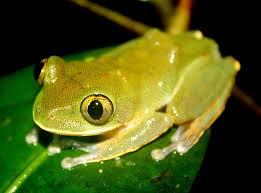
A rare voice of the rainforest canopy, echoing from the trees of the Tano basin
🔍 Quick Facts
- Common Name: Taï Forest Tree Frog
- Scientific Name: Leptopelis occidentalis
- Family: Arthroleptidae
- IUCN Status: Vulnerable
- Size: ~40–60 mm (adults)
- Activity: Nocturnal, arboreal
- Habitat: Lowland tropical rainforests and swamp forests
🌍 Distribution and Habitat
The Taï Forest Tree Frog is found in the Upper Guinean Forest zone of West Africa, including:
- Côte d’Ivoire, Liberia, Guinea, and Sierra Leone
In the Tano River region, it may inhabit:
- The Tanoé-Ehy Forest Reserve and surrounding swampy rainforest zones
- Riparian forests and temporary pools near the river’s lower basin
- Areas where dense canopy cover meets ephemeral wetlands
Its name honors the Taï National Park, but it may also occur near the Ghana-Côte d’Ivoire border, including parts of the Tano Basin.
🐸 Description
- Color: Green to olive-brown, with variable dark markings
- Body: Slender, with expanded toe pads for climbing
- Eyes: Prominent and adapted for low-light activity
- Sexual dimorphism: Males are slightly smaller and have a distinct call
Its coloration allows it to blend into leaves and branches, making it difficult to spot.
🌿 Behavior and Ecology
- Nocturnal and arboreal
- Comes down to lower vegetation or water edges during the rainy season
- Diet: Feeds on insects, spiders, and small invertebrates
- Known for its soft, whistling call, often heard at dusk or after rainfall
Breeding:
- Males call from leaves overhanging shallow pools
- Eggs are laid in moist ground, and tadpoles are washed into water bodies after hatching
- Tadpoles develop in temporary ponds or forest puddles
⚠️ Conservation Concerns
The Taï Forest Tree Frog is listed as Vulnerable due to:
- 🚫 Severe deforestation in lowland forests
- 🛢️ Pollution and mining runoff, especially in riverine zones
- 🐾 Habitat fragmentation, which isolates populations
- ❌ Lack of research, meaning many local populations may be disappearing unnoticed
Its survival depends on the preservation of intact rainforest ecosystems with temporary freshwater breeding sites.
🌊 Why It Matters for the Tano River
This species is:
- An indicator of forest and wetland health
- A rare forest-edge amphibian that speaks to the importance of seasonal flooding and canopy shade
- A reminder that conservation must include invisible, quiet lives, not just iconic megafauna
Its call is faint, but it echoes the state of the forest.
🔗 Do you recognize this frog’s call near your farm or village? Have you seen bright green frogs at night near the forest edge? Share your findings at [TanoRiver.com/submit]


