



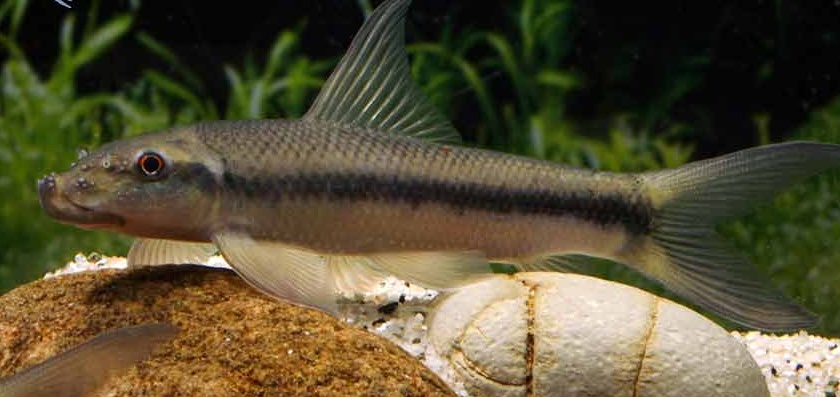
A bottom grazer of Africa’s rivers, quietly shaping the flow beneath the surface
🔎 Scientific Name: Labeo parvus
Common name: Small labeo
Family: Cyprinidae (carps and minnows)
🌍 Distribution and Habitat
Labeo parvus is a benthic (bottom-dwelling) freshwater fish native to West Africa, including:
- Ghana, Côte d’Ivoire, Nigeria, Togo, and Benin
🌊 In the Tano River system, it is found:
- In the middle and lower reaches of the river
- In slow to moderately flowing areas with muddy or sandy substrates
- Around boulders, submerged wood, and detritus-rich zones
It prefers clean, well-oxygenated waters but can tolerate some turbidity.
🐟 Physical Description
- Size: Typically small, around 10–12 cm, sometimes slightly more
- Body: Streamlined and laterally compressed, adapted for benthic life
- Coloration: Greyish to brown with a lighter underbelly
- Mouth: Subterminal (downward-facing), with thick lips adapted for scraping algae and biofilm from surfaces
It is often overlooked due to its cryptic coloration and bottom-dwelling habits.
🌿 Behavior and Ecology
- Feeding habits:
- Omnivorous grazer that feeds on:
- Algae, periphyton, biofilm, and fine detritus
- Occasionally small invertebrates and insect larvae
- Uses its suction-like mouth to scrape rocks and submerged surfaces
- Omnivorous grazer that feeds on:
- Activity:
- Diurnal but often inactive during bright midday hours
- Schools in small groups, especially near feeding grounds
- Spawning:
- Believed to breed during flood season, migrating into smaller tributaries
- Lays adhesive eggs over gravel or aquatic vegetation
🧬 Ecological Importance
- Plays a key role as a primary consumer in the aquatic food chain
- Helps maintain clean surfaces on rocks and wood by consuming algae and detritus
- Aerates sediment and recycles nutrients through benthic foraging
It is a natural cleaner of the riverbed, promoting healthy microhabitats for other species.
⚠️ Conservation Notes
Labeo parvus is not currently listed as threatened, but like many bottom feeders, it is sensitive to:
- Siltation from deforestation and mining
- Pesticide and chemical runoff from agriculture
- Habitat fragmentation due to water diversion and damming
Preserving natural sediment flow, riparian vegetation, and spawning corridors is essential for its long-term survival.
🎣 Local Knowledge and Human Use
- Not a major target for fisheries due to its small size
- Occasionally caught in subsistence nets or traps
- Recognized by some riverine communities as a “cleaner fish” that keeps rocks free of slime
Its presence is a sign of natural bottom dynamics and minimal disturbance.
🌊 Why It Matters for the Tano River
Labeo parvus is:
- A silent architect of the benthic world
- A fish that cleans, cycles, and stabilizes the lower layers of the river
- A symbol of how small species play outsized roles in ecosystem health
Beneath the visible ripples, this humble grazer is writing the story of sediment, algae, and balance.
🔗 Have you noticed this small fish near rocks or shallow zones in the Tano? Share your stories at [TanoRiver.com/submit]


