



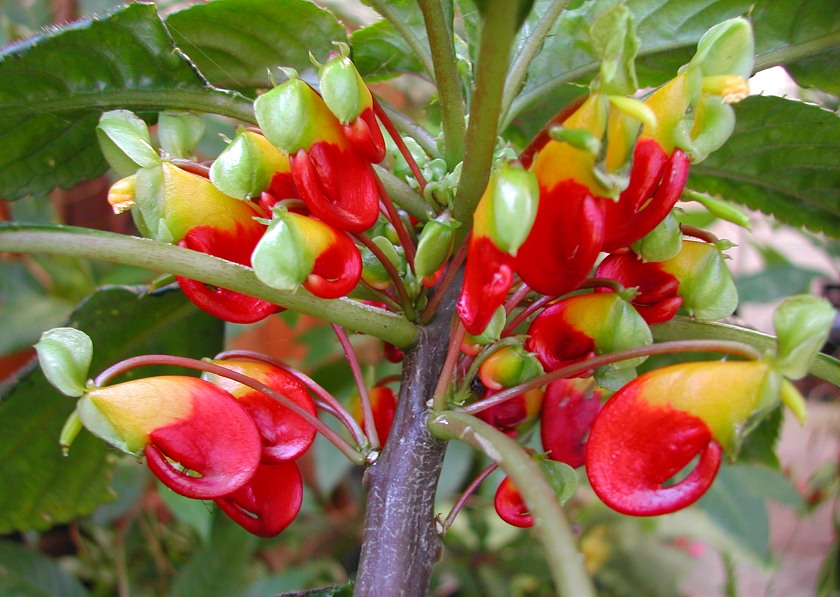
A tropical bloom as vibrant and curious as the birds it resembles
🔎 Scientific Name: Impatiens niamniamensis
Common names: Congo cockatoo, Parrot plant, Parrot balsam, “Fleur perroquet” (Fr.)
Family: Balsaminaceae (balsam family)
📍 Habitat and Distribution
Though originally named after the Niam-Niam (Azande) region of Central Africa, Impatiens niamniamensis grows across humid tropical zones of Africa.
In the Tano River Basin, this flower:
- Is found in moist forest understory, especially in shade and along streams
- Occasionally cultivated in village gardens near Ghana’s Western and Ahafo Regions
- Prefers damp, shaded environments with rich organic soil
It may be found near sacred groves or forest patches close to the river.
🌺 Botanical Description
- Flowers: Curved, tubular, and brightly colored—red, yellow, orange, or bicolored
- Resemble the beak of a cockatoo or parrot, hence the name
- Leaves: Lance-shaped, dark green, with serrated edges
- Growth habit: Shrubby or sprawling herb up to 1 meter tall
- Bloom cycle: Extended — flowers repeatedly throughout the rainy season
This plant is strikingly ornamental and often surprises passersby with its bird-like blossoms.
🌿 Ecological Role
- Attracts sunbirds, butterflies, and bees
- Provides cover and moisture retention in forest understory
- Part of the diverse herbaceous layer in riparian and upland forest habitats
- May be visited by tiny hoverflies and pollinators active in shaded zones
🧙🏾♀️ Cultural and Folk Associations
Though not widely used in medicine or ritual, the appearance of the flower has made it a subject of oral stories and folk names, such as:
- “Little bird of the forest”
- “Laughing parrot” or “God’s brush”
In some Ghanaian rural schools, it is grown as a children’s science plant because of its vivid and curious form.
Its rarity in the wild gives it an aura of playfulness and mystery.
🌿 Medicinal and Garden Uses
While not prominent in traditional medicine, its family (Impatiens) includes:
- Plants used for soothing skin conditions
- Some believed to have anti-inflammatory properties
- Occasionally, decoctions are made from related balsams for mild fevers
As an ornamental, it is planted in:
- Community herbal gardens
- Shaded school gardens and village borders
⚠️ Threats and Rarity
- Not globally endangered, but:
- Becoming rare in the wild due to habitat clearing
- Sensitive to light and moisture changes, making it vulnerable to forest degradation
Its showy presence in the forest is an indicator of healthy, shaded, moist ecosystems.
🌱 Why It Matters for the Tano River
Impatiens niamniamensis is:
- A botanical curiosity that sparks wonder
- A pollinator magnet in quiet forest corners
- A symbol of the artistry of nature along riverine forests
Though small, it adds a splash of color and playfulness to the sacred and wild green spaces of the Tano Basin.
🔗 Have you seen the “parrot flower” near the Tano River? Tell us about it or share a photo at [TanoRiver.com/submit]


