



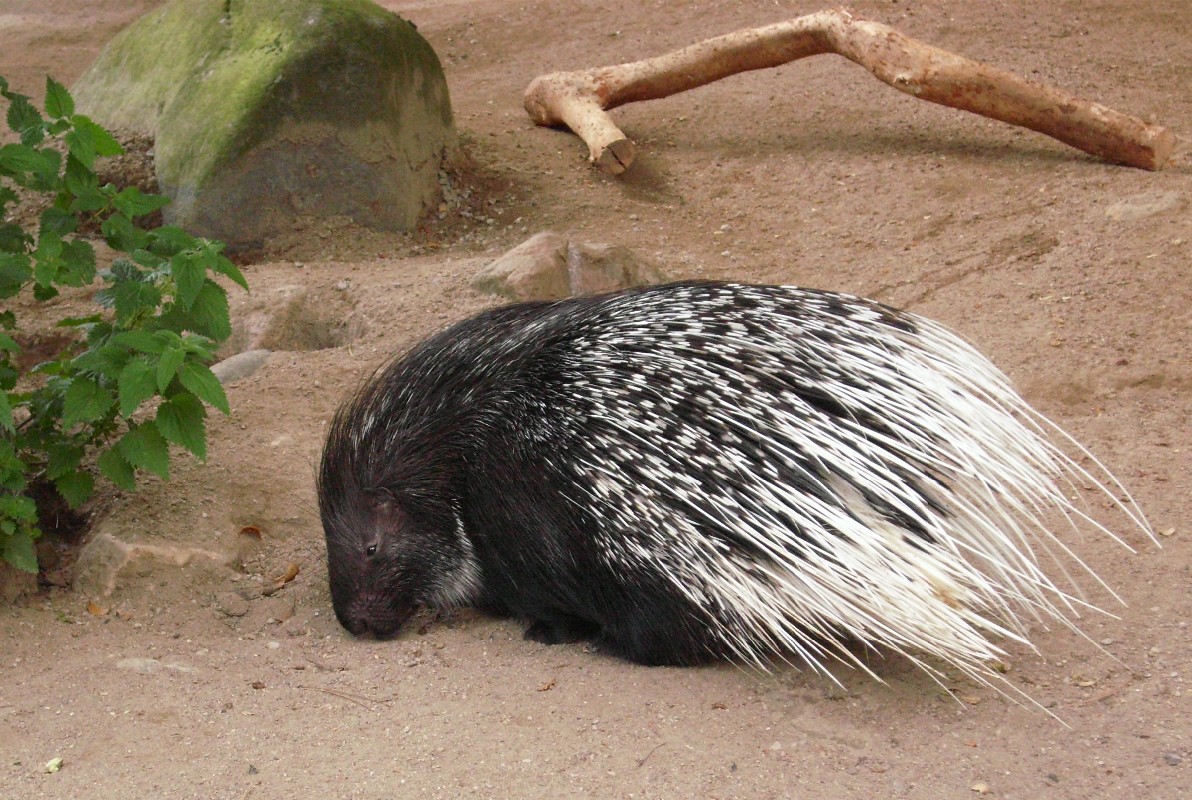
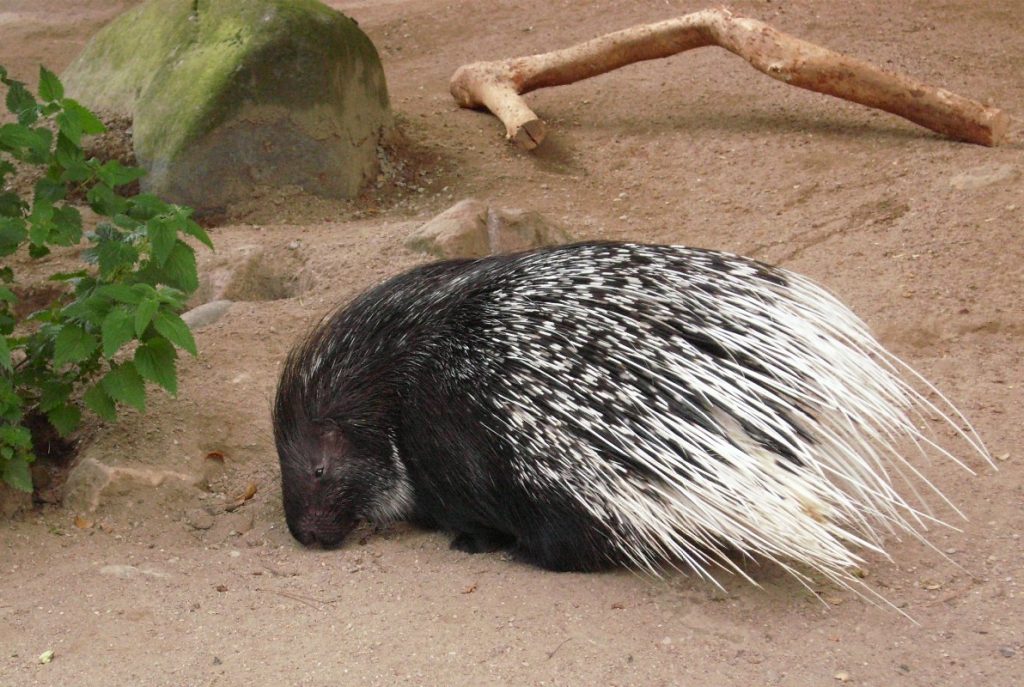
A nocturnal guardian of the forest floor, spiny and bold beneath the shadows of the Tano
🔍 Quick Facts
- Common Name: Crested Porcupine
- Scientific Name: Hystrix cristata
- Family: Hystricidae
- IUCN Status: Least Concern
- Size: 60–80 cm body length; 13–27 kg
- Activity: Nocturnal
- Habitat: Forest edges, savannas, rocky outcrops, and riverine woodlands
🌍 Distribution and Habitat
The Crested Porcupine is native to Africa, particularly:
- North and Sub-Saharan Africa, including parts of Côte d’Ivoire and Ghana
In the Tano River region, it is:
- Occasionally encountered in woodland margins or dry river valleys
- Likely present in the Tanoé-Ehy Forest edge zones and agricultural fringes
- Roaming at night, foraging through farmland and forest clearings
It uses burrows, rock crevices, or old termite mounds for daytime shelter.
🦔 Appearance
- Color: Dark brown to black body with white-striped quills
- Quills: Long, stiff, and hollow — used for rattling or defensive stabbing
- Crest: Long erectile quills on the neck and back form a dramatic “mane”
- Tail: Short with hollow quills that produce a rattling warning sound
A striking figure of the forest, its armor is both a signal and shield.
🌿 Behavior and Diet
- Nocturnal: Emerges after dusk to feed
- Diet: Herbivorous
- Roots, tubers, bark, fallen fruit
- Known to gnaw bones and antlers for calcium
- May raid farms and gardens, targeting cassava, maize, or yam
Leaves behind trails of disturbed soil, quills, or gnawed roots.
🐣 Reproduction
- Monogamous or pairs with strong bonds
- Gestation: ~3 months
- Litter size: 1–3 young, born with soft quills that harden after birth
- Young are weaned in 2–3 months but stay with family groups
They are highly protective parents, and even young porcupines rattle or stomp when threatened.
🧭 Ecological Role
The crested porcupine contributes to the ecosystem by:
- Soil aeration through digging
- Seed dispersal and plant trimming
- Providing prey remains (bones, shells) that contribute to forest calcium cycles
Its burrows are often reused by other animals like mongooses and snakes.
⚠️ Conservation Concerns
Though listed as Least Concern, local threats include:
- 🧱 Hunting for bushmeat and quills (used for jewelry and decoration)
- 🚧 Roadkills, as it moves across paths at night
- ⚠️ Retaliation killings by farmers due to crop damage
- 🔇 Misidentification — some people confuse them with pest species
They are mostly non-aggressive, only defending when cornered.
🌊 Why It Matters for the Tano River
The Crested Porcupine is:
- A symbol of silent strength, thriving beneath the forest canopy
- Part of a nocturnal world rarely seen but deeply woven into river ecology
- A reminder that defense can be peaceful, and that balance matters
Their rattling quills echo through the night like a forest drum — warning, not waging war.
🔗 Have you found porcupine quills, tracks, or stories from elders about spiny forest creatures? Share your encounters at [TanoRiver.com/submit]


