



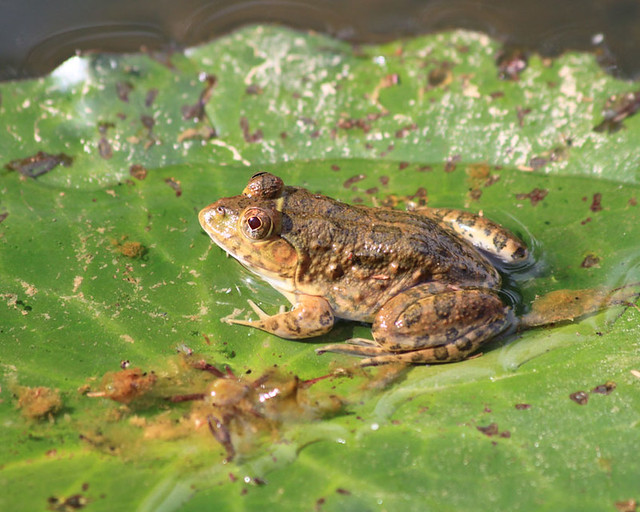
A powerful predator of puddles and ponds, known for its deep croak and crown-like ridges
🔍 Quick Facts
- Common Name: Crowned Bullfrog
- Scientific Name: Hoplobatrachus occipitalis
- Family: Dicroglossidae
- IUCN Status: Least Concern, but impacted by wetland degradation
- Size: Up to 140 mm (5.5 inches)
- Activity: Nocturnal and semi-aquatic
- Habitat: Swamps, ponds, rice fields, flooded grasslands, and river margins
🌍 Distribution and Habitat
The Crowned Bullfrog is widespread across sub-Saharan Africa, including:
- Côte d’Ivoire, Ghana, Togo, Benin, Nigeria, and beyond
In the Tano River Basin, it can be found in:
- Slow-moving pools, temporary ponds, and rice paddies
- Floodplains and swampy patches along tributaries
- Disturbed wetland edges, where it may dig burrows during the dry season
🐸 Appearance
- Color: Olive green to brown with darker mottling
- Size: One of the largest frogs in the region
- Crown: Distinct raised bony ridges on the back of the head, forming a crown-like appearance
- Skin: Smooth to slightly rough
- Limbs: Strong hind limbs for leaping and swimming
Its size and crown-shaped ridges make it easily recognizable.
🌿 Behavior and Diet
- A voracious predator, known for its aggressive hunting style
- Diet:
- Insects, spiders, worms
- Tadpoles, smaller frogs, fish, and even small rodents or birds
- Active at night, especially during and after heavy rains
It uses a sit-and-pounce strategy, often lurking at water’s edge.
🐣 Reproduction
- Breeds explosively during the rainy season
- Males call from water with deep, resonant croaks
- Females lay thousands of eggs in shallow water
- Tadpoles are large and fast-growing, often cannibalistic
Its breeding strategy depends on temporary water availability, making it highly seasonal.
🧭 Ecological Role
The Crowned Bullfrog plays several key roles:
- Regulates insect and small vertebrate populations
- Serves as prey for snakes, birds, and mammals
- Acts as a wetland bioindicator, sensitive to pollution and hydrological changes
Its loud call is a familiar sound in tropical wetlands across West Africa.
⚠️ Conservation Concerns
While H. occipitalis is not globally threatened, it faces regional risks:
- 🛢 Pollution from pesticides and mining waste
- 🌾 Loss of wetlands from agriculture and land conversion
- 🔥 Burning and drainage of seasonal floodplains
- 🧱 Overharvesting for local consumption or bushmeat in some areas
In the Tano River region, its survival depends on seasonal pools and clean, undisturbed wetlands.
🌊 Why It Matters for the Tano River
The Crowned Bullfrog is:
- A symbol of wetland resilience and seasonal cycles
- A keystone predator, maintaining balance in aquatic food chains
- A charismatic species whose voice echoes the health of the forest edges and floodplains
To hear its call is to know the rains have come, and life is surging again beneath the mud.
🔗 Have you heard deep croaking near ponds or seen large frogs leaping in floodplains? Report your sightings at [TanoRiver.com/submit]


