



📍 Habitat
This species lives in humid lowland forests, especially in leaf-litter-rich understorey, near streams, swamps, and riverbanks — zones très présentes dans la forêt de Boin Tano, le bassin du fleuve Tano, et les forêts marécageuses de la zone Tanoé-Ehy à la frontière ivoiro-ghanéenne.
Contents
⚠️ Conservation Status
- IUCN Red List: Critically Endangered
- Main Threats:
- Habitat destruction (deforestation, gold mining, agriculture)
- Illegal capture for bushmeat and traditional medicine
- Pet trade
- Loss of forest floor microhabitats due to drying and forest clearing
🧬 Description
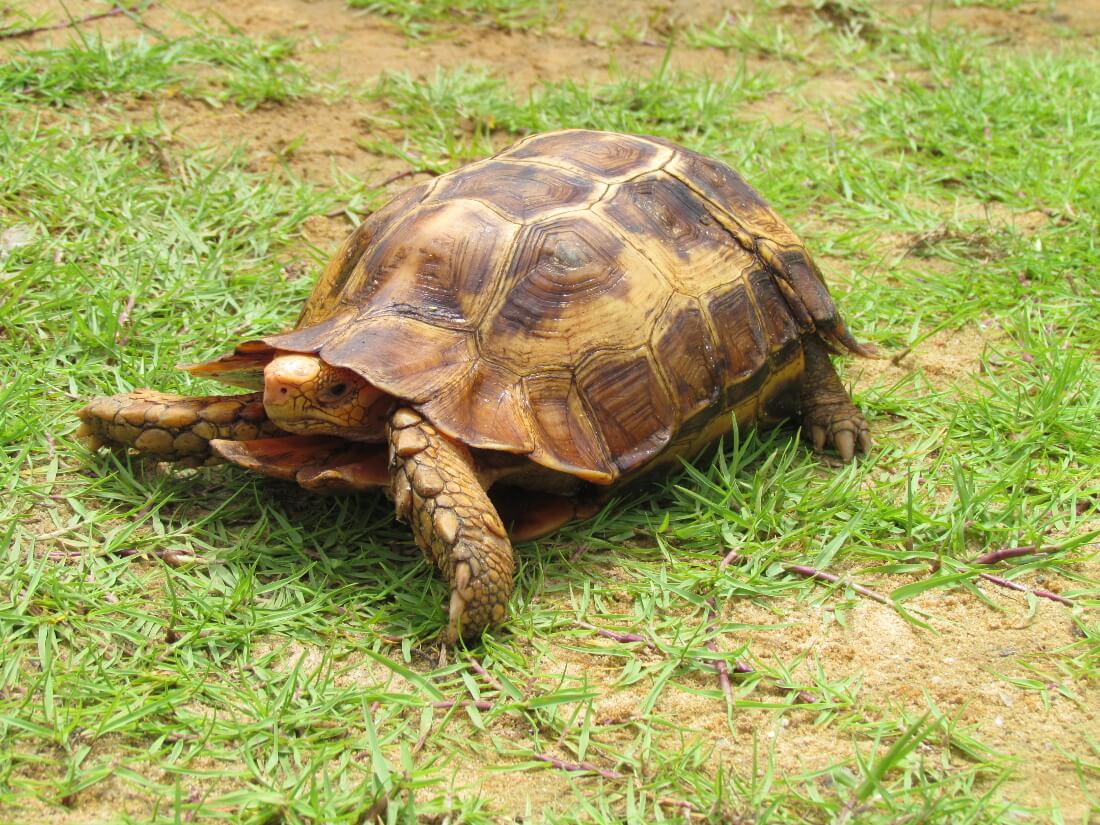
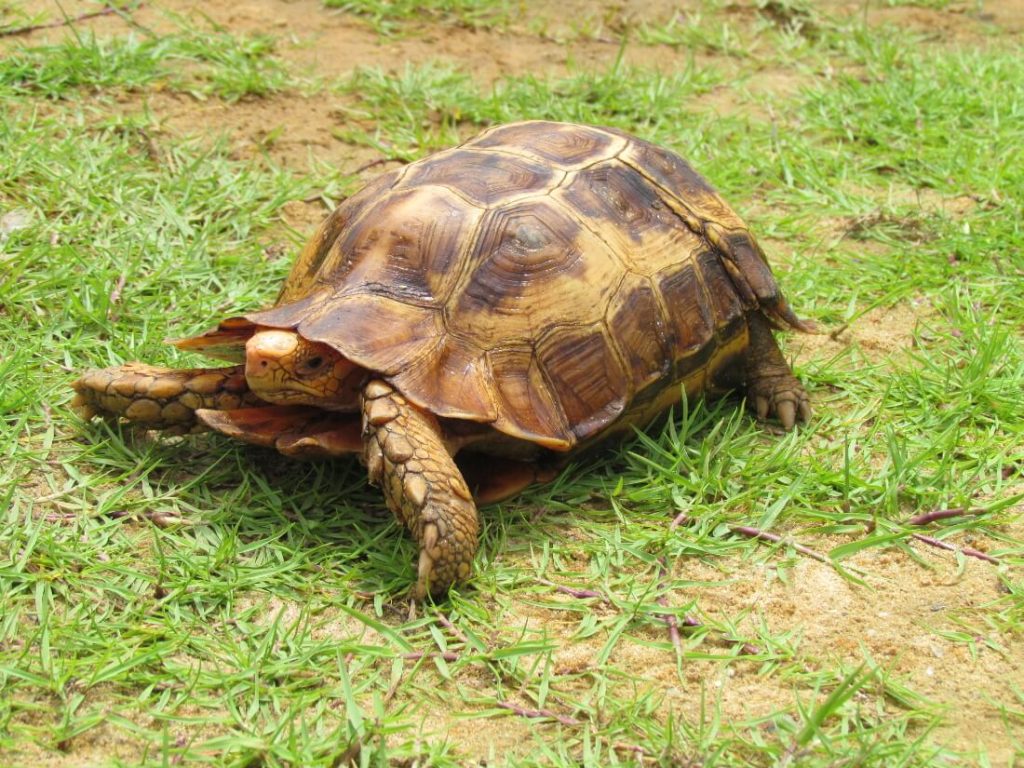
- Small tortoise (shell length: 15–25 cm) with a distinctive hinged shell at the back
- Brown to olive shell, often domed with irregular patterning
- Can close the rear of its shell to protect its tail and hind limbs — unique among tortoises
- Long neck and sharp eyes adapted to forest life
🧠 Behavior
- Terrestrial and secretive, active mostly during wet, cool periods
- Omnivorous: eats fallen fruits, fungi, leaves, insects, and worms
- Lives under logs, leaves, and root systems
- Extremely sensitive to changes in humidity and forest cover
✨ Cultural & Spiritual Significance
In many West African societies, tortoises symbolize wisdom, patience, endurance, and ancestral presence.
Among the Akan peoples, turtles and tortoises are sometimes seen as guardians of hidden knowledge, protectors of sacred groves, or messengers of the earth.
Their ability to close themselves completely is viewed as a form of divine self-protection — a reminder that strength often lies in stillness.
🌱 Ecological Role
- Helps clean forest floors by feeding on fungi and decaying fruit
- May contribute to seed dispersal
- Serves as prey for forest carnivores and birds of prey
- Its decline indicates severe ecosystem disturbance
🔥 Conservation Actions Needed
- Urgent protection of undisturbed forest floor habitats
- Ban hunting and trade of wild tortoises in protected areas
- Educate local communities on the symbolic and ecological value of the species
- Include in forest biodiversity monitoring programs


