



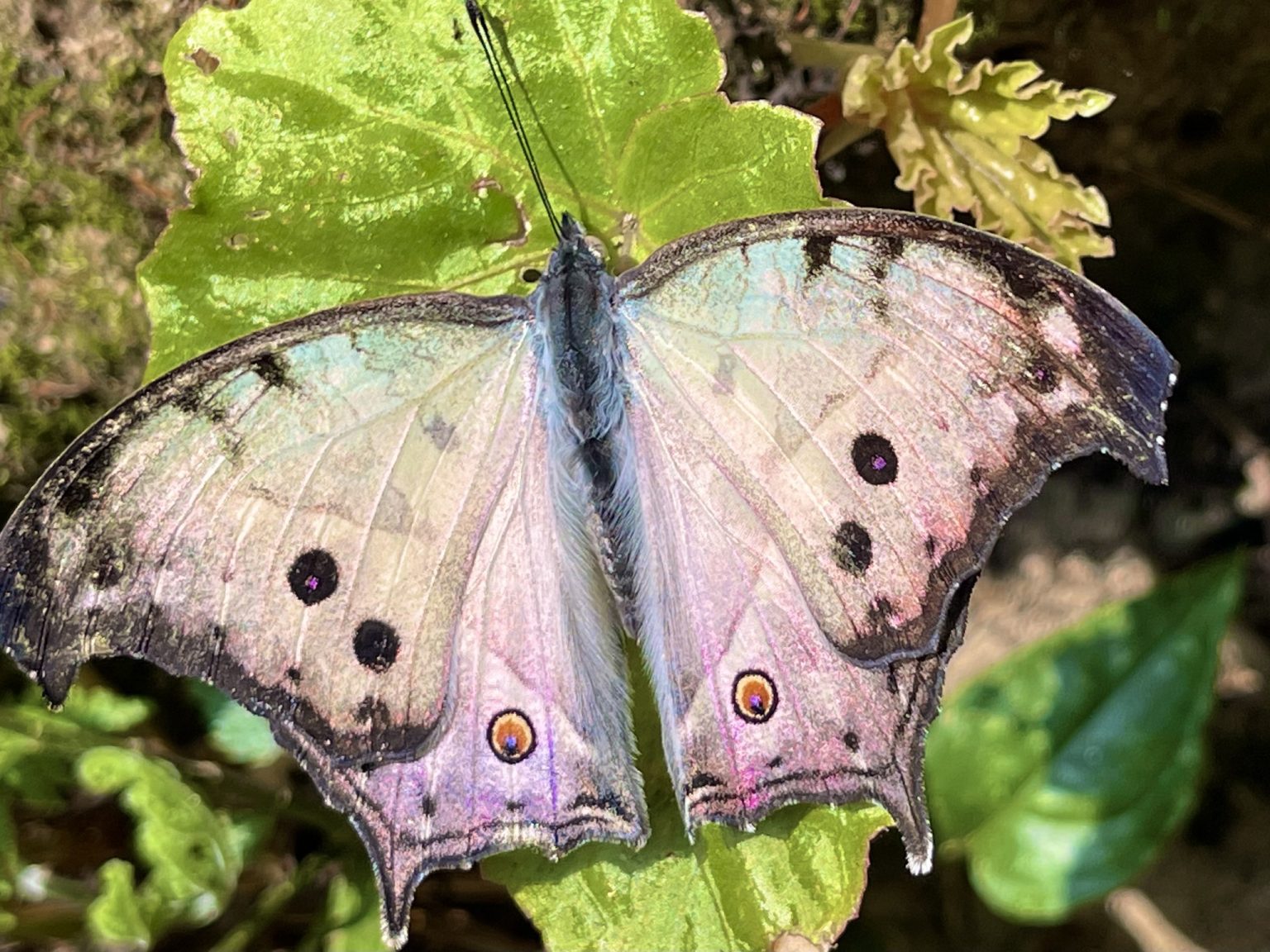
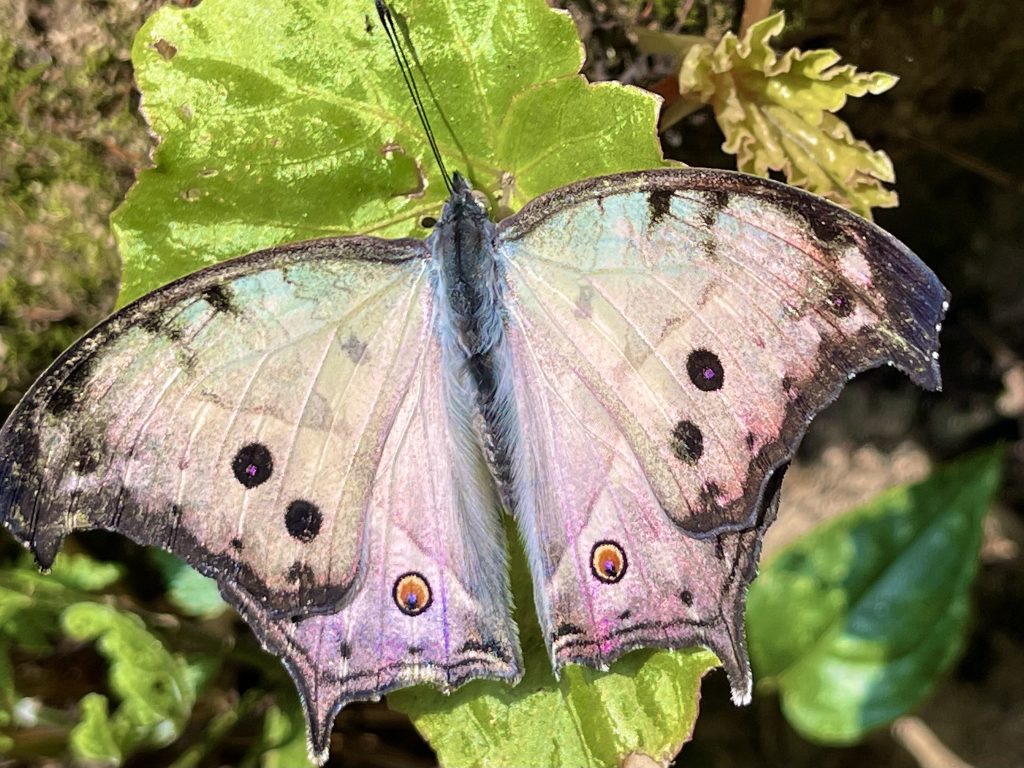
Also known as: Green Commodore, Pearl Emperor
📍 Habitat
This butterfly is commonly found in moist semi-deciduous forests, riparian woodlands, and forest clearings throughout West Africa. In the Tano River region, it thrives in undisturbed forest reserves like Boin Tano and Tanoé-Ehy, and is frequently observed near forest paths, riverbanks, and flowering shrubs.
It depends on both host plants for caterpillars and nectar-rich flowers for adults.
⚠️ Conservation Status
- IUCN Red List: Not formally evaluated, but declining in areas under deforestation pressure
- Local threats:
- Loss of forest habitat due to logging and agriculture
- Insecticide use and climate shifts affecting flowering cycles
- Mining and habitat fragmentation along the Tano River corridor
🧬 Description
- Large butterfly with a wingspan of up to 10 cm (4 inches)
- Upperside: pale green or iridescent white with subtle black and lilac markings
- Underside: beautifully patterned in earth tones, resembling dead leaves — excellent camouflage
- Males often bask with wings open, while females stay more hidden
🧠 Behavior
- Active during the heat of the day, fluttering low near the ground
- Adults feed on nectar, rotting fruit, and tree sap
- Larvae feed on plants from the Acanthaceae and Solanaceae families
- Known for its gliding flight and sudden bursts of speed
🌿 Ecological Role
- Acts as a pollinator for a variety of forest plants
- Caterpillars are food for birds, reptiles, and small mammals
- Indicator of intact, functioning forest ecosystems
- Helps maintain plant reproduction cycles in understory environments
✨ Cultural Significance
In Akan and other West African cultures, butterflies are seen as spirits of transformation, resurrection, and beauty.
Their appearances during key life events — funerals, births, or river ceremonies — are interpreted as signs of ancestral presence, blessings, or renewal.
Butterflies like the Mother-of-Pearl, with their shimmering wings and silent flight, are believed to carry messages from the spirit realm, linking the forest to the unseen world.
🔥 Conservation Needs
- Protect forest corridors and flowering plant diversity
- Limit chemical use in agricultural zones near reserves
- Promote community butterfly gardens and conservation awareness
- Include butterflies in environmental education and ecotourism


