



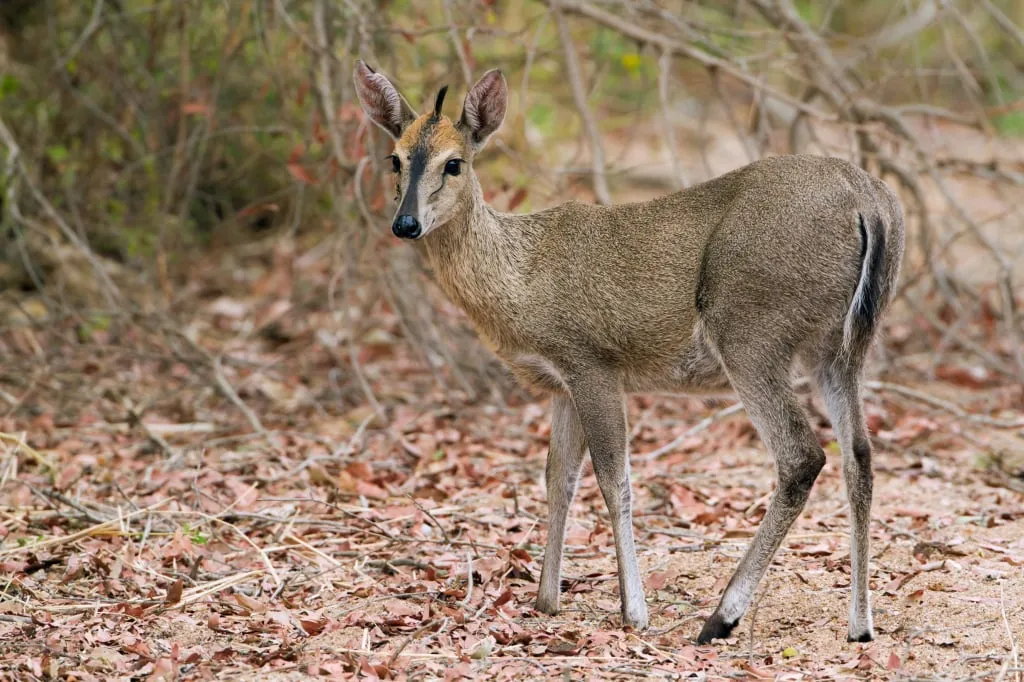
Shy forest dwellers, silent steps beneath the canopy
🔎 What Are Duikers?
Duikers are a group of small to medium-sized antelopes belonging to the subfamily Cephalophinae, native to sub-Saharan Africa. The name “duiker” comes from the Afrikaans word for “diver,” referring to their tendency to dive into dense vegetation when startled.
🌍 Duikers in the Tano River Region
In the forests and wetlands surrounding the Tano River, especially the Tanoé-Ehy Forest Reserve and adjoining protected zones in Ghana and Côte d’Ivoire, the following duiker species have been observed or reported:
1. 🟤 Bay Duiker (Cephalophus dorsalis)
- Reddish-brown coat with darker dorsal stripe
- Prefers dense, swampy rainforest
- Active mainly at night
- Eats fruits, leaves, fungi, and bark
2. ⚫ Black Duiker (Cephalophus niger)
- Shiny black or very dark brown coat
- Smaller and more secretive than the bay duiker
- Found in lowland evergreen forest
- Often solitary and difficult to observe
3. 🟡 Yellow-backed Duiker (Cephalophus silvicultor)
- Largest duiker species
- Characterized by a yellowish “saddle patch” on the back
- Listed as Endangered
- Roams in deep forest, but can travel far for food
- Plays an important role in seed dispersal
These three represent the rich diversity of forest antelopes in the Tano Basin.
🌿 Behavior and Ecology
- Diet: Omnivorous — eat a mix of fruit, seeds, leaves, shoots, fungi, and even small animals
- Habitat: Prefer dense understory, often near streams or wetlands
- Activity: Mostly nocturnal or crepuscular (active at dawn and dusk)
- Social life: Solitary or in pairs; maintain territories using scent glands
Their cryptic coloration and cautious behavior make them hard to detect, even in protected forests.
🧭 Cultural and Local Knowledge
- Known to local people by various names:
- Baoulé: “Kpè” or “Gbla”
- Akan (Twi): “Akyea” or “Akɔmfɛm” (sometimes used more broadly for forest antelopes)
- Featured in folktales and hunting lore, where duikers symbolize:
- Stealth, alertness, and the spirit of the underbrush
They are often hunted for bushmeat, but some communities observe taboos or seasonal hunting restrictions.
⚠️ Threats to Duikers in the Tano Region
- ❌ Habitat loss from logging, gold mining, and agriculture
- ❌ Hunting pressure for meat in both rural and urban markets
- ❌ Forest fragmentation, cutting them off from safe corridors
Duikers are particularly vulnerable because they breed slowly and rely on continuous canopy cover.
🛡️ Conservation Actions
- Presence confirmed in the Tanoé-Ehy Forest, one of the last coastal swamp forests in West Africa
- Conservation efforts include:
- Community-led forest protection
- Eco-guard patrols and camera trapping
- Public awareness about their ecological role
Protection of primary forest and buffer zones along the Tano is essential to prevent their extinction.
🌊 Why Duikers Matter for the Tano River
Duikers are:
- Natural seed spreaders, helping regenerate trees and maintain biodiversity
- Indicators of intact, undisturbed forests
- Living symbols of quiet resilience and forest mystery
In the stillness of the Tano’s forest floor, duikers walk unseen — yet their presence tells us the forest still breathes.
🔗 Have you seen or heard duikers near the Tano River? Share your story or forest experience at [TanoRiver.com/submit]


