




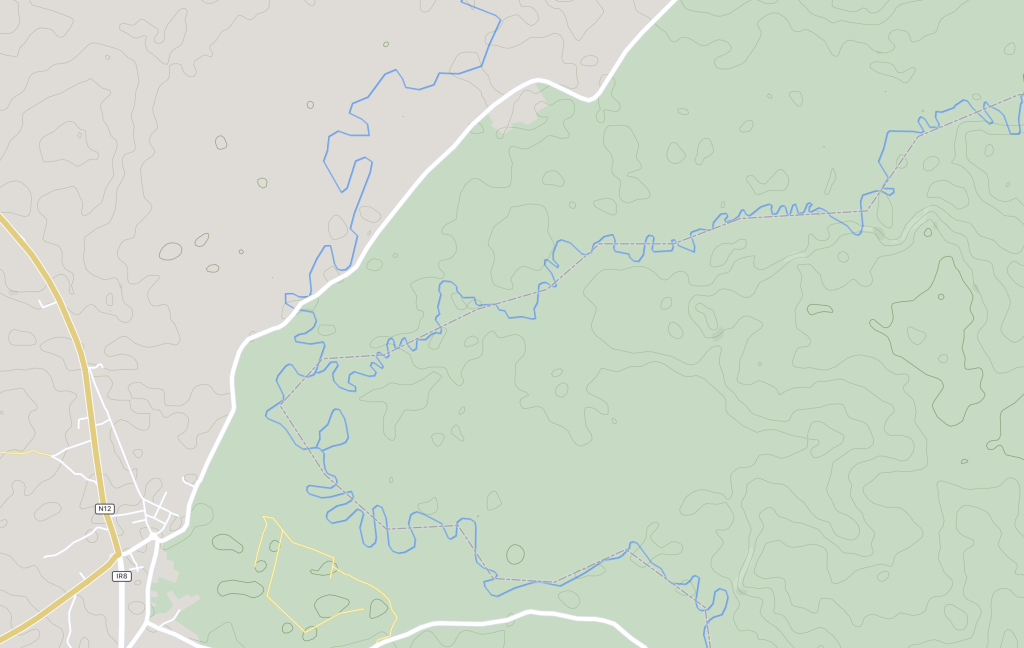
In the quiet heartlands of Ghana’s Western North Region, another river flows with ancient purpose. Known as the Desiri River, it courses through the forests and villages of Aowin and Sefwi lands—not in competition with the Tano River, but in sacred alliance. In Akan mythology, Desiri is more than a waterway; she is the spiritual sister and consort of the River Tano, and together they represent a divine duality of justice and fertility, purity and protection.
As ecological threats mount across the Tano River Basin, the Desiri River—once revered, now vulnerable—calls us to remember the sacred relationships between people, rivers, and forests.
📍 Location and Hydrological Context
- Country: Ghana
- Region: Western North Region
- Districts: Flows through parts of Aowin, Bia West, and into the Tano Basin
- Source: Highland forest zones near the Tano Nimiri and Tano Anwia reserves
- Flow: Converges into the Tano River system; contributes to the middle course
- Ecological Zone: Upper Guinean rainforest / moist semi-deciduous forest
The Desiri River is a significant tributary of the Tano River, contributing both surface flow and groundwater recharge. Its waters feed into nearby wetlands and riverine forests, many of which are still unexplored by researchers.
🌿 Ecological Significance
The Desiri River sustains a critical freshwater corridor that supports rich biodiversity in the region’s remaining forest reserves. Though comprehensive surveys are lacking, observations and local knowledge point to a thriving ecological network.
Flora
- Dominant tree species: Antiaris africana, Celtis zenkeri, Khaya ivorensis, Terminalia spp.
- Riverbanks are lined with raffia palms, ferns, and water-loving herbs
- Many plants are used in traditional medicine and healing rites
Fauna
- Amphibians: Tree frogs, reed frogs, and other moisture-dependent species
- Reptiles: Snakes, lizards, forest crocodiles, and turtles
- Mammals: Otters, civets, duikers, and possibly pangolins or monkeys in adjacent forests
- Fish: Tilapia, catfish, mudfish, and freshwater shrimp
Birds
- Kingfishers, herons, and weaver birds nest along the river
- Seasonal visitors include Palearctic migratory species
- Culturally symbolic birds like the hornbill are often seen near sacred pools
🧭 Cultural and Mythological Significance
In traditional Akan cosmology, Desiri is not simply a river—she is a spiritual entity, a goddess in her own right. Oral traditions passed down in Aowin, Sefwi, and Ahanta communities affirm that:
- Desiri is the sacred consort or sister-spirit of the Tano River deity (Tano Kɔkɔrɛ)
- The two rivers are said to “meet” spiritually, even if they do not physically join at the surface
- Desiri represents nurturing, fertility, and purity, while Tano represents strength, judgment, and truth
- Libations, offerings, and taboos still exist in some villages along Desiri’s banks, especially during planting and harvest seasons
- Forest groves near the river are believed to be the abode of water spirits, guarded by sacred trees and rocks
The Desiri-Tano spiritual pairing is part of a broader Akan worldview that recognizes nature as animated, moral, and relational. Rivers are not resources to exploit but living beings to honor.
⛔ Current Threats
Despite its sacred status, the Desiri River is increasingly under threat—largely from human activity driven by economic pressures and weak enforcement.
1. Illegal Mining (Galamsey)
- Artisanal gold mining near the Desiri and its tributaries has polluted waters with mercury, silt, and waste oil
- Forest cover is being lost, leading to erosion and turbidity
- Aquatic life is dwindling due to reduced oxygen and chemical runoff
2. Deforestation
- Logging—both legal and illegal—is fragmenting the forest belt along the river’s edge
- Sacred groves and water sources are being cleared for cocoa farming
- Soil runoff into the river is increasing during rainy seasons
3. Cultural Disconnection
- Younger generations are less familiar with the river’s spiritual significance
- Taboos and sacred rituals are fading, weakening traditional conservation mechanisms
💚 A River for the Future: Desiri and the Tano River Collective Project
The Desiri River, as a spiritual and ecological sister to the Tano, deserves special protection under the Tano River Collective Project. Including Desiri in the network of conservation actions is essential for the long-term sustainability of the entire basin.
Strategic Actions:
- Document sacred sites and oral histories along the Desiri River
- Launch biodiversity assessments to confirm the presence of endangered species
- Create buffer zones through reforestation and agroforestry
- Support cultural revival programs that reconnect communities to the river’s spiritual value
- Advocate for water quality monitoring, including mercury and sediment testing
- Engage youth in river guardian initiatives—linking ancestral wisdom with modern conservation
📢 Conclusion: Listening to the River’s Voice
The Desiri River does not need to be vast to be powerful. Its influence flows through soil, memory, and spirit. As one of the sacred rivers of the Akan world and a vital lifeline of the Tano watershed, Desiri reminds us that true power lies in silent continuity—in the unseen roots that hold the forest, the underground streams that feed a nation, and the elders’ voices that still echo beside the water.
We ignore Desiri at our peril. But if we listen, she may yet guide us to balance.
🌍 www.TanoRiver.com
Desiri: The Sacred Sister. The Forgotten Lifeline.
Join the Tano River Collective Project. Protect What the Ancestors Protected.


