



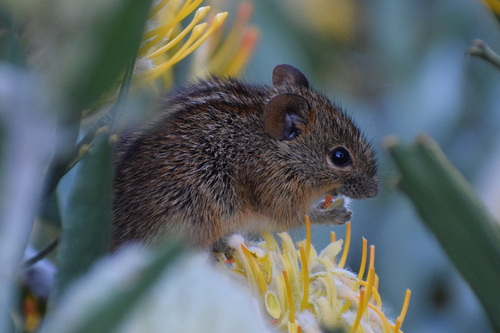
A quiet resident of swampy margins and grassy riverbanks, cloaked in dense, water-resistant fur
🔍 Quick Facts
- Common Name: West African Shaggy Rat
- Scientific Name: Dasymys rufulus
- Family: Muridae
- IUCN Status: Least Concern, but habitat-specific
- Size: Head-body ~13–17 cm; tail ~10–15 cm
- Weight: ~80–150 grams
- Activity: Nocturnal
- Habitat: Swamps, floodplains, river edges, and wet grasslands
🌍 Distribution and Habitat
Native to the humid zones of West Africa, this species is found in:
- Côte d’Ivoire, Ghana, Liberia, Nigeria, Sierra Leone, and neighboring countries
In the Tano River Basin, it likely inhabits:
- Swampy fringes of the Tanoé-Ehy Forest
- Flooded grasslands and edges of marshy lagoons
- Shaded wet spots along small tributaries and forest puddles
Its survival depends on moist environments with dense ground vegetation.
🐭 Appearance
- Fur: Long, dense, and shaggy — grayish to reddish-brown
- Tail: Thick, short, and furred at the base
- Ears: Small and hidden under fur
- Body: Stocky and low to the ground
Its water-resistant coat helps it thrive in wet conditions.
🌿 Behavior and Diet
- Primarily nocturnal, active after dusk
- Diet:
- Grasses, reeds, seeds, aquatic plants
- Insects, worms, and small invertebrates
- Excellent swimmer and burrower
- Often forages in tunnels made through tall grasses
It may nest in ground burrows, reed beds, or abandoned animal tunnels.
🐣 Reproduction
- Breeds year-round in stable moist conditions
- Gestation: ~3 weeks
- Litter size: 2–6 pups
- Young are born in well-hidden nests lined with plant material and fur
Multiple litters per year are common when food is abundant.
🧭 Ecological Role
The West African Shaggy Rat is vital for:
- Vegetation control in wetland zones
- Serving as prey for owls, snakes, mongooses, and civets
- Acting as a bioindicator of wetland health
- Dispersing plant seeds through foraging activity
Its presence supports richer aquatic and semi-aquatic food webs.
⚠️ Conservation Concerns
Though not globally threatened, it is vulnerable to:
- 🛢 Pollution from mining and agriculture
- 🏞 Wetland destruction due to draining or land conversion
- 🔥 Fires in dry seasons, which eliminate grass cover
- 🧱 Lack of research, leaving many populations unmonitored
In the Tano River Basin, protecting swamp and floodplain habitats is essential for its survival.
🌊 Why It Matters for the Tano River
The West African Shaggy Rat is:
- A quiet sentinel of the swampy fringe
- A small mammal with a big role in maintaining wetland biodiversity
- A reminder that not all river life swims or flies — some burrow, rustle, and run
To conserve it is to protect the soft, wet edges of the Tano, where life pulses just below the surface.
🔗 Have you spotted movement in wet grasses at dusk or found small tunnels through swampy reeds? Report your observations at [TanoRiver.com/submit]


