



A secretive climber and ambush predator of West Africa’s shadowy streams
🔎 Scientific Name: Ctenopoma kingsleyae
Common names: Tailspot Ctenopoma, Kingsley’s climbing perch
Family: Anabantidae (Climbing gouramis)
🌍 Distribution and Habitat
Ctenopoma kingsleyae is native to the freshwater systems of West and Central Africa, found in:
- Ghana, Côte d’Ivoire, Nigeria, Cameroon, Gabon, and the Congo Basin
🌊 In the Tano River region, it likely inhabits:
- Still or slow-moving waters with heavy vegetation
- Swamps, backwaters, and flooded forest zones
- Shallow areas with leaf litter, submerged roots, and low light
It thrives in low-oxygen waters, thanks to its labyrinth organ which allows it to breathe air directly.
🐟 Physical Description
- Size: Typically 10–15 cm (4–6 inches), with some growing larger
- Coloration:
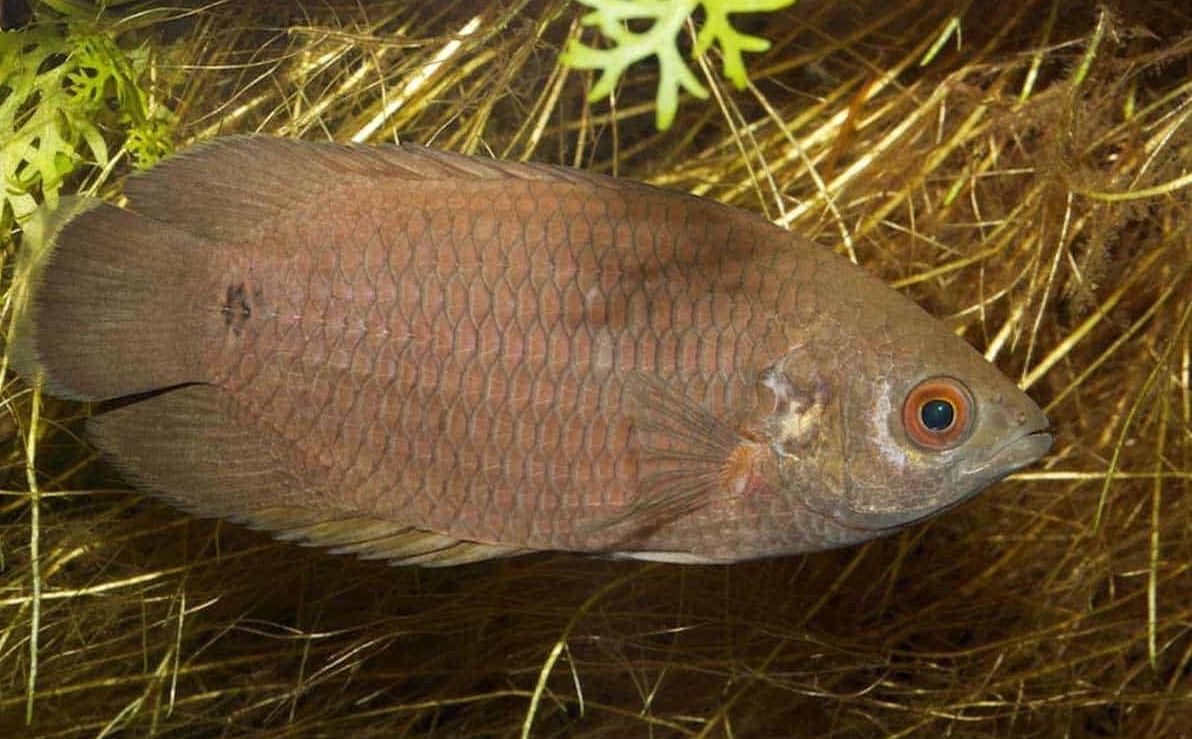
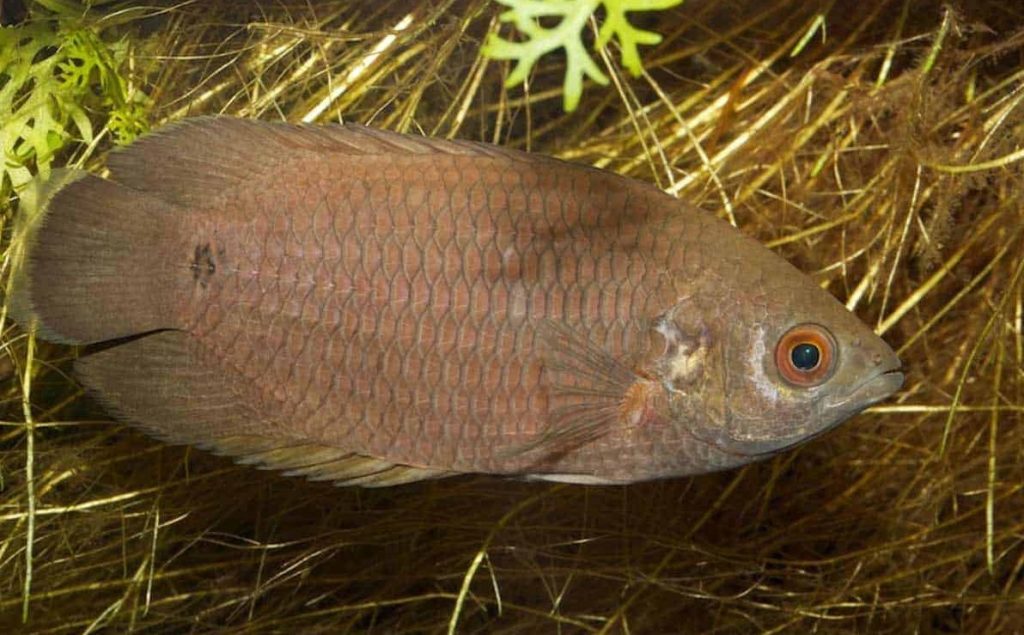
- Dark brown or olive body with subtle mottled patterns
- A distinctive black spot at the base of the tail fin (the “tailspot”)
- Body: Deep, oval shape with rounded fins
- Fins: Dorsal and anal fins are often spiny and elongated
- Eyes: Large, adapted for dimly lit waters
Its camouflaged appearance helps it blend into leafy riverbeds and swamp margins.
🌿 Behavior and Ecology
- Feeding: Carnivorous
- Ambush predator that feeds on:
- Insects, small fish, crustaceans, and larvae
- Worms and aquatic invertebrates
- Ambush predator that feeds on:
- Hunting style:
- Moves slowly and stealthily, then strikes rapidly at prey
- Often active at dawn, dusk, or night
- Breathing:
- Uses a labyrinth organ to gulp air at the surface
- Can survive in oxygen-depleted water
- Behavior:
- Solitary or in small, scattered groups
- Highly territorial and secretive
🐣 Reproduction
- Little is known about its breeding in the wild
- In captivity, spawning involves:
- Bubble nest building (unlike some other Ctenopoma species)
- Eggs float and hatch in a few days
- Parental care is limited after spawning
Its reproductive behavior in the Tano River remains a mystery waiting to be studied.
🧬 Ecological Importance
- Helps control insect and small fish populations
- Acts as a mesopredator in the aquatic food web
- Plays a role in nutrient cycling, especially in swamp habitats
Because of its air-breathing ability, it helps colonize stagnant or disturbed habitats where few fish can survive.
⚠️ Conservation and Threats
Ctenopoma kingsleyae is not currently threatened, but sensitive to:
- Swamp drainage and deforestation
- Mining pollution and siltation
- Pesticide runoff in wetland farming zones
- Overharvesting for the aquarium trade in some regions
It relies on intact wetland systems, making it vulnerable to wetland degradation along the Tano.
🌊 Why It Matters for the Tano River
Ctenopoma kingsleyae is:
- A symbol of adaptation, stealth, and survival
- A guardian of quiet swamp waters and forgotten corners of the river
- A representative of the often-overlooked biodiversity of forested African wetlands
Where the water slows and shadows deepen, the Tailspot Ctenopoma waits — a predator in stillness.
🔗 Have you spotted this elusive fish in your region? Share your photos or stories at [TanoRiver.com/submit]


