



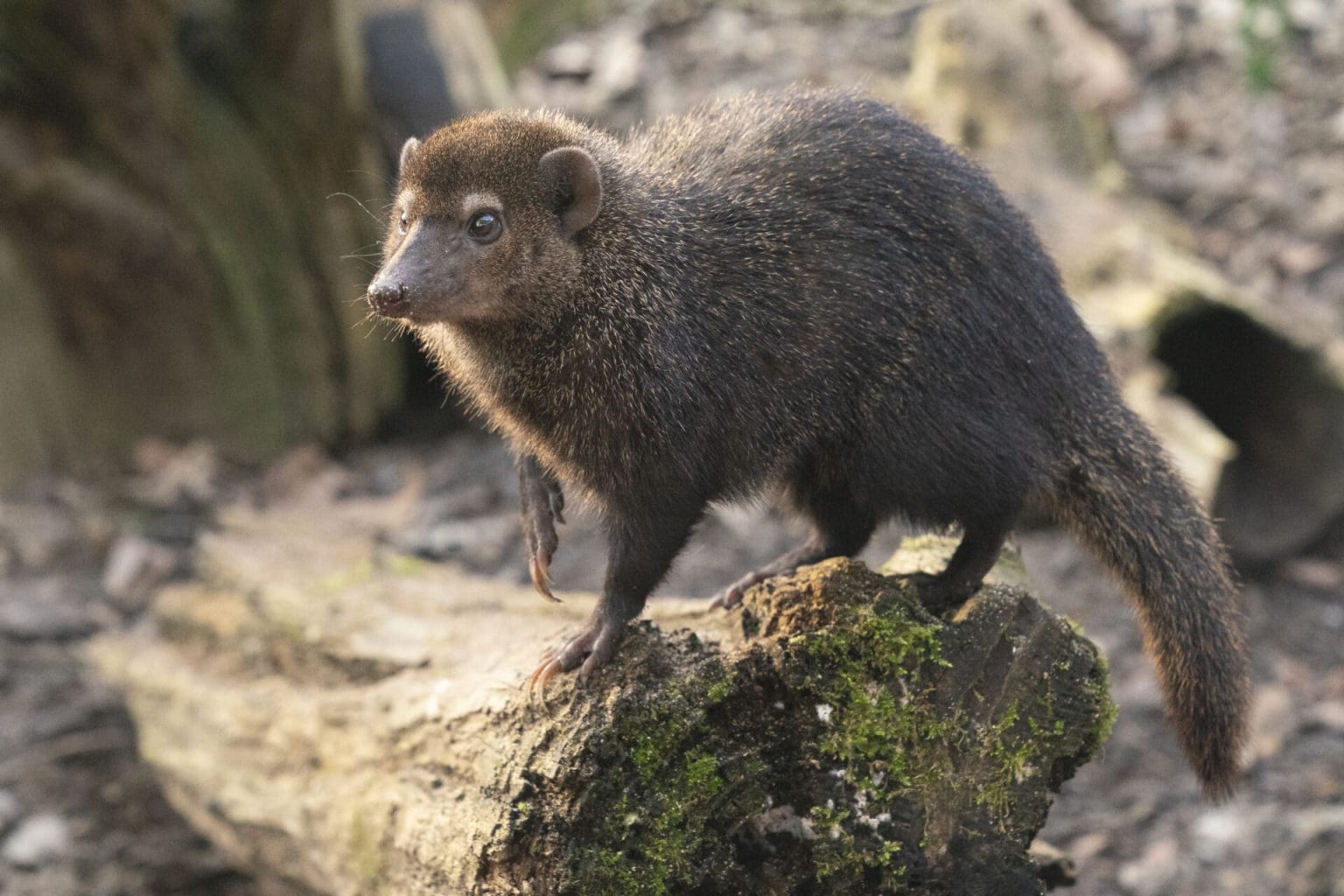
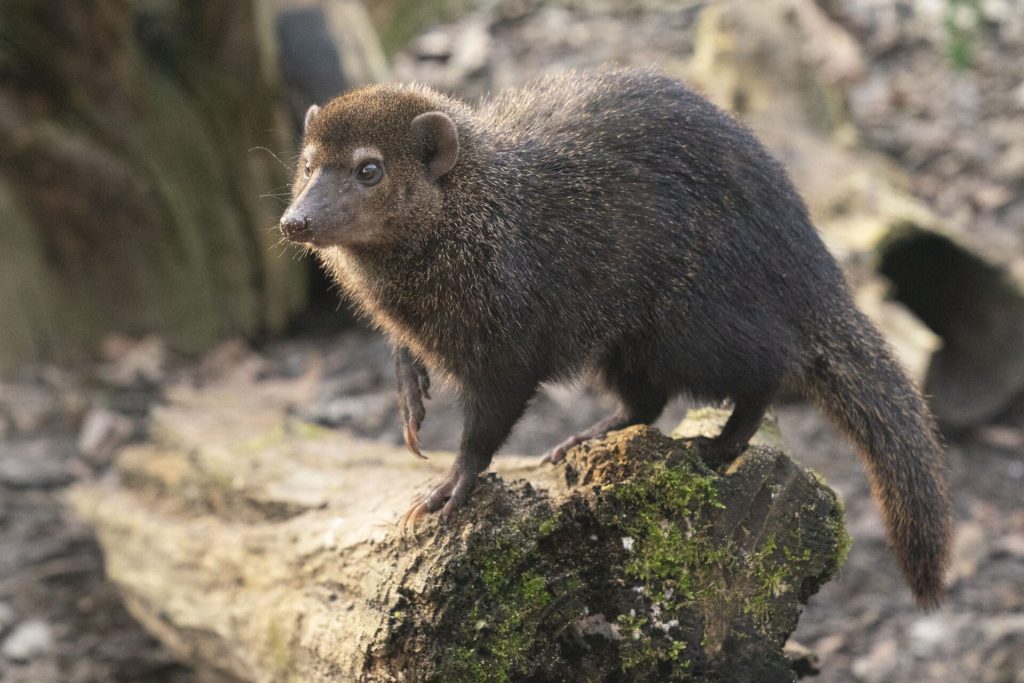
A bold and curious forager, darting through the leaf litter of the Tano forests in restless search of life
🔍 Quick Facts
- Common Name: Common Kusimanse
- Scientific Name: Crossarchus obscurus
- Family: Herpestidae (mongoose family)
- IUCN Status: Least Concern
- Size: 33–45 cm (body); 0.5–1.4 kg
- Tail: Short and bushy (~15–25 cm)
- Activity: Diurnal (day-active)
- Habitat: Dense forests, swamps, riverbanks, and farmlands
🌍 Distribution and Habitat
The Common Kusimanse is native to West Africa, specifically:
- Côte d’Ivoire, Ghana, Sierra Leone, Liberia, and Guinea
In the Tano River basin, it is:
- Frequently seen in the Tanoé-Ehy Forest, near riverbanks, dense undergrowth, and even farm edges
- Often leaves tunnel-like foraging paths through leaf litter
- Very adaptable to secondary forests and even disturbed habitats
🐾 Appearance
- Fur: Coarse, dark brown to black
- Face: Short, pointed snout with small round ears and bright eyes
- Tail: Thick at base, tapering toward the end
- Build: Compact and muscular, with short legs and long claws for digging
Often mistaken for rodents, kusimanses are true mongooses, known for intelligence and energy.
🌿 Behavior and Diet
- Lives in social groups (up to 20 individuals)
- Forages constantly, digging and sniffing for hidden food
- Diet: Insectivorous and opportunistic
- Insects, snails, worms
- Small rodents, lizards, fruit, and carrion
- Uses vocal calls, tail postures, and scent to communicate
They rarely sit still, and are often seen darting across trails or rooting through forest debris.
🐣 Reproduction
- Year-round breeders, especially during wet seasons
- Litters of 2–4 young
- All group members help raise and protect the pups
- Young begin foraging with the group within weeks
This cooperative behavior makes them highly resilient in the wild.
🧭 Ecological Importance
The Common Kusimanse plays a vital ecological role:
- Controls populations of invertebrates and small vertebrates
- Recycles carrion, cleaning the forest floor
- Loosens soil and promotes nutrient cycling through digging
As omnivorous generalists, they help balance the small-animal ecosystem.
⚠️ Conservation Concerns
Though still common, kusimanses face threats from:
- 🧱 Habitat fragmentation due to agriculture and illegal mining
- 🚷 Human persecution, especially when raiding chicken coops or gardens
- 🧬 Pet trade, where their tameness sometimes leads to capture
- 🏞 Loss of forest corridors, which limits group movement
🌊 Why It Matters for the Tano River
The Common Kusimanse is:
- A forest sentinel, always present where cover and food are rich
- A sign of healthy ground-layer biodiversity
- A reminder that intelligence and curiosity live not just in apes — but in the low, fast-moving shadows of the forest floor
Its footprints and snuffles mark a path of discovery and renewal, step by step.
🔗 Have you seen small mammals dart across trails, or found holes dug in soft forest soil? Share your observations of kusimanses or similar species at [TanoRiver.com/submit]


