



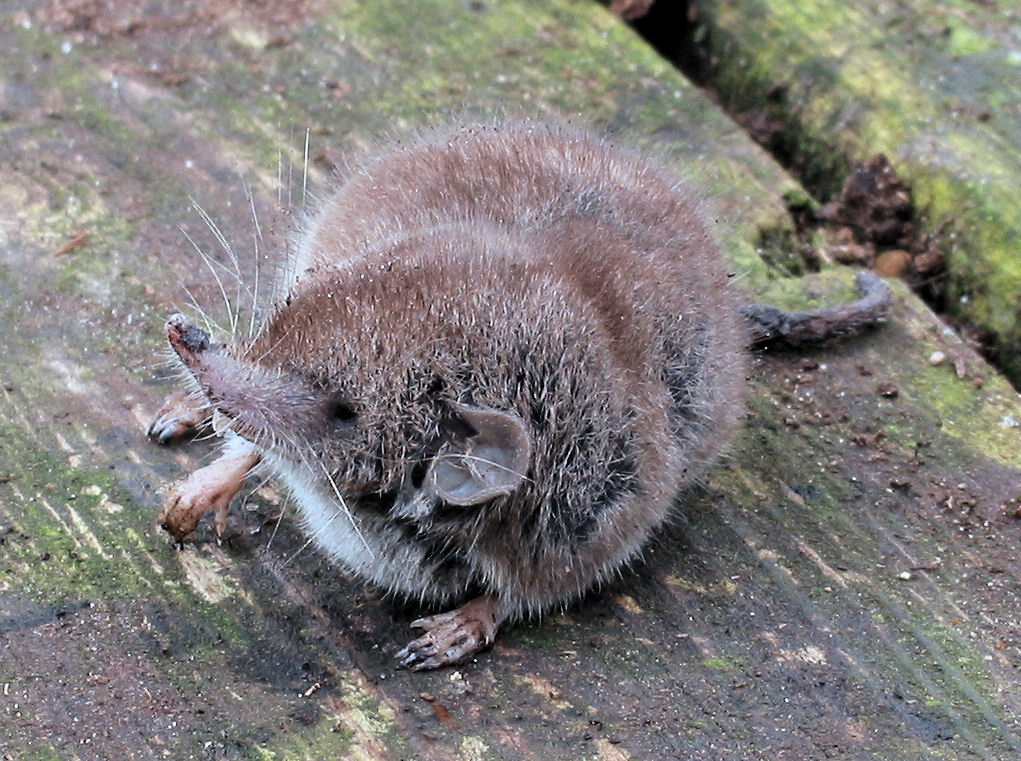
A secretive insect-eater of West Africa’s undergrowth, small in size but vital to soil and ecosystem health
🔍 Quick Facts
- Common Name: Thérèse’s Shrew
- Scientific Name: Crocidura theresae
- Family: Soricidae (Shrews)
- IUCN Status: Least Concern
- Size: ~6–8 cm body length; ~3–5 grams
- Activity: Mostly nocturnal or crepuscular
- Habitat: Moist lowland forests, secondary growth, savanna-forest transitions
🌍 Distribution and Habitat
Thérèse’s Shrew is found in West and Central Africa, including:
- Côte d’Ivoire, Ghana, Nigeria, Benin, Cameroon, and the Central African Republic
In the Tano River Basin, it likely lives:
- Beneath leaf litter, fallen logs, and thick underbrush in moist forest areas
- Along the edges of seasonal wetlands, swampy zones, and agroforestry plots
- In secondary growth forests, where it can remain hidden from predators
Despite being widespread, it is rarely seen due to its tiny size and cryptic habits.
🐾 Appearance
- Fur: Uniform gray or brownish-gray, fine and velvety
- Tail: Short and hairy
- Ears: Small and rounded, barely visible in the fur
- Snout: Long and pointed with highly sensitive whiskers
Its appearance is typical of small Crocidura shrews, adapted to a life close to the soil surface.
🌿 Behavior and Diet
- Diet:
- Insects, worms, spiders, larvae, and other small invertebrates
- Foraging:
- Uses scent and touch to detect prey in leaf litter and loose soil
- Metabolism: Extremely high—must feed frequently to survive
- Moves quickly and erratically, often covering a wide area at night
A single Thérèse’s shrew can consume nearly its body weight in food each day.
🐣 Reproduction
- Breeding is thought to occur throughout the year, especially in warm, moist conditions
- Litter size: 2–6 pups
- Nests in hidden chambers beneath roots or dense vegetation
- Young are born blind and furless, maturing in a matter of weeks
Little is known about its detailed reproductive cycle due to its elusive nature.
🧭 Ecological Role
Thérèse’s Shrew plays an essential role by:
- Controlling insect populations, including soil-dwelling pests
- Contributing to decomposition and nutrient cycling
- Serving as prey for snakes, owls, and small carnivores
- Maintaining micro-level balance in the forest floor ecosystem
It is a key species for soil health and invertebrate regulation.
⚠️ Conservation Concerns
Although listed as Least Concern, threats include:
- 🌳 Deforestation and clearing of undergrowth
- 🧱 Habitat fragmentation, reducing cover and food sources
- 🧪 Chemical exposure, including pesticides in farming zones
- 🔍 Lack of monitoring, due to its small size and cryptic habits
Maintaining leaf litter and ground cover is critical for its survival.
🌊 Why It Matters for the Tano River
Thérèse’s Shrew is:
- A microscopic engineer of the forest floor
- A symbol of biodiversity often hidden beneath our feet
- A tiny but essential player in the health of the Tano’s forest underlayers
To protect this shrew is to protect the foundation of forest life.
🔗 Have you noticed rustling in the leaves or found small burrows in soft soil? Report your sightings at [TanoRiver.com/submit]


