

The Tano River
  • Home
  • 🌊The River
    • The Tano River
    • Cultural Significance
    • Spiritual and Historical Importance
    • Taakora — The Deity of the Tano River
    • Comprehensive Analysis of the Tano River and Its Basin
  • 🌿Environment
    • Flora and Fauna
    • Environmental Challenges
    • Conservation Efforts
    • The Tano River Basin
    • The Galamsey Crisis
    • Animals of the Tano
    • Trees and Plants of the Tano
    • Parks and Forest
    • Lagoons
    • Tributaries of the Tano River
  • History
    • Stories and Oral Traditions
    • Historical Events
    • Ancient Trade and Conflicts
    • The Legend of Tano and Bia
    • Deities and Spirits
    • God Tano, Afua Krankra, and Asase Ya/Afua in Akan Mythology
  • 🎉Culture
    • Ethnic Groups Along the Tano River
    • Fishing, Agriculture, and Rituals
    • Festivals and River Ceremonies
    • The Natural Border Between Ghana and Ivory Coast
  • 🛶 Tourism
    • Natural Sites to Visit
    • Cultural Experiences
    • Local Guides & Eco-Tourism
    • Creating a Touristic Ecosystem
  • 🌍News
  • Global Initiative
  • 🌍About
    • 📖The Project / Get Involved
    • 🧾 About me
    • ✉️ Contact us
    • 🤝 Partnerships / Collaborate
    • 💛 Donate
    • 🌿 A Tribute to My Father and Grandfather
    • 🧾All Our articles
    • 🧾Search Our Articles
    • 📖Glossary of the Tano River Ecosystem
Donate
Font ResizerAa
The Tano RiverThe Tano River
Search

Popular Posts

The Rivers, Lakes & Lagoons Collective

The rivers in Ghana

About the River

🪷 Cultural Significance of the Tano River

About the River

✨ Spiritual and Historical Importance of the Tano River

Welcome to Tanoriver.com

Join the Tano River Collective Project and be part of a growing movement dedicated to preserving the life, culture, and ecosystems of the Tano River. Together, we can make a lasting impact.
Join Us
Follow US
TanoRiver.com
The Tano River > All our Articles > Environment & Biodiversity > Species of the Tano River > Mammals > 🐾 Climbing Shrew (Scutisorex spp. or related genera)
Mammals

🐾 Climbing Shrew (Scutisorex spp. or related genera)

By
Alexandre Tano Kan Koffi
Last updated: January 4, 2026
4 Min Read
Share

A tiny acrobat of the undergrowth and low branches — always in motion, always hunting

Contents
🔍 Quick Facts🌍 Distribution and HabitatIn the Tano River basin, they are likely to be found:🐾 Appearance🌿 Behavior and Ecology🪺 Reproduction🧭 Ecological Role⚠️ Conservation Concerns🌊 Why It Matters for the Tano River

🔍 Quick Facts

  • Common Name: Climbing Shrew
  • Scientific Group: Family Soricidae
  • Likely Species in Region: Sylvisorex johnstoni, Sylvisorex ollula, or other forest shrews with arboreal tendencies
  • IUCN Status: Varies by species – some are Least Concern, others Data Deficient
  • Size: ~6–12 cm body; tail often equal or longer
  • Activity: Nocturnal or crepuscular
  • Habitat: Moist lowland forests, especially with fallen logs and undergrowth

🌍 Distribution and Habitat

Climbing shrews occur in dense tropical forests of Central and West Africa, including:

  • Côte d’Ivoire, Ghana, Liberia, and parts of Nigeria

In the Tano River basin, they are likely to be found:

  • In the Tanoé-Ehy Forest Reserve, within leaf litter, fallen trunks, and vines
  • Along humid riverbanks and swamp edges, especially in untouched forest
  • Occasionally ascending low shrubs or tree trunks in search of prey

Their presence is rarely seen but detected through quick rustling or sharp chirps.


🐾 Appearance

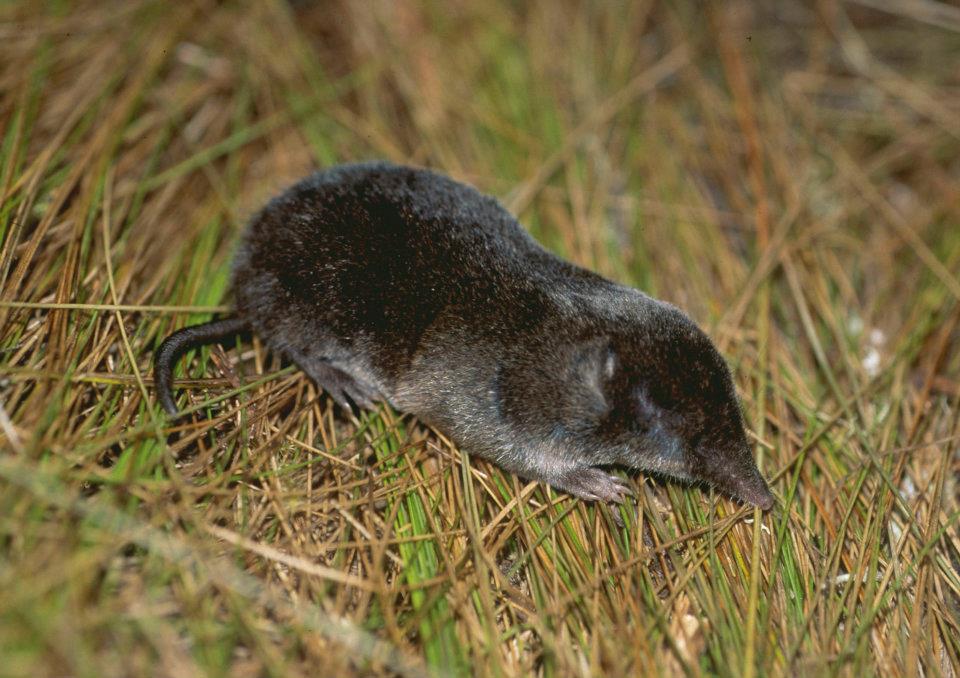
  • Color: Usually dark brown or blackish-gray with lighter underparts
  • Tail: Long and semi-prehensile for balance
  • Feet: Equipped with claws and gripping pads for climbing
  • Snout: Long and pointed, with sensitive whiskers
  • Eyes and Ears: Tiny, but functional — relies mostly on touch and smell

Lightweight and hyperactive, the climbing shrew is always on the move.


🌿 Behavior and Ecology

  • Extremely active hunters, consuming up to twice their body weight daily
  • Diet:
    • Insects, spiders, worms, larvae
    • Occasionally small amphibians or carrion
  • Uses dense vines, moss, bark, and logs as highways for movement
  • Likely solitary, maintaining overlapping territories

They use high-pitched chirps and scent marking to navigate and communicate.


🪺 Reproduction

  • Breeds multiple times a year
  • Gestation: ~20–25 days
  • Litters of 2–6 young born in nest chambers made from leaves or bark
  • Young are born blind and hairless, developing rapidly

Due to their small size and fast metabolism, they need constant feeding and shelter.


🧭 Ecological Role

Climbing shrews are:

  • Essential insect controllers, consuming pest populations
  • Prey for owls, snakes, civets, and cats
  • Indicators of forest health, especially in undisturbed microhabitats

Their ecological footprint may be small, but their biological role is enormous.


⚠️ Conservation Concerns

While some species are common, others may be severely undercounted due to:

  • 🏞 Habitat loss from deforestation and mining
  • 🧬 Poor research, especially in swamp forests
  • 🧱 Fragmentation of microhabitats like fallen logs and moist thickets
  • ❌ Pesticide use affecting insect availability

In the Tano River basin, their survival depends on leaf litter integrity and forest floor continuity.


🌊 Why It Matters for the Tano River

Climbing shrews are:

  • Masters of the hidden forest floor
  • Biodiversity barometers, reflecting subtle changes in the forest micro-ecosystem
  • Among the least-known but most hard-working insectivores in the forest

To protect them is to preserve the intricate food webs beneath the trees and along the streams of the Tano.


🔗 Have you noticed tiny rustlings in forest leaves or heard high-pitched squeaks at night? Report signs of shrews at [TanoRiver.com/submit]


Sign Up For Daily Newsletter

Be keep up! Get the latest breaking news delivered straight to your inbox.
By signing up, you agree to our Terms of Use and acknowledge the data practices in our Privacy Policy. You may unsubscribe at any time.
Share This Article
Facebook Email Copy Link Print
ByAlexandre Tano Kan Koffi
Follow:

✍️ About the Author

Alexandre Tano Kan Koffi is the founder of TanoRiver.com and a passionate advocate for Africa’s environmental and cultural heritage. Named after the Tano River, he honors his legacy through storytelling and conservation.
📧 Contact: alex [@] alexandrekoffi.com

Leave a Comment Leave a Comment

Leave a Reply Cancel reply

Your email address will not be published. Required fields are marked *

Receive latest news from all areas of Wildlife Animals

Our selection of the week's biggest research news and features sent directly to your inbox. Enter your email address, confirm you're happy to receive our emails.

HOT NEWS

The Rivers, Lakes & Lagoons Collective

The rivers in Ghana

April 10, 2026

🪷 Cultural Significance of the Tano River

May 5, 2026

✨ Spiritual and Historical Importance of the Tano River

February 13, 2026

📖 Indigenous Stories and Oral Traditions of the Tano River

May 9, 2026

Follow US: 

About us

  • 🌍 The Project / Get Involved
  • ✉️ Contact us
  • 💛 Donate
  • 🤝 Partnerships / Collaborate

TanoRiver.com

  • Terms and Conditions
  • Privacy Policy
  • Cookie Policy

Cookies Notice

We use our own and third-party cookies to improve our services, personalise your advertising and remember your preferences.
Welcome Back!

Sign in to your account

Username or Email Address
Password

Lost your password?
