



This report provides a comprehensive examination of Christian faith within the Tano River basin, tracing its historical development, exploring its intricate relationship with indigenous beliefs, and analyzing its multifaceted impact on the region’s social, economic, and environmental landscapes. Christianity in Ghana possesses deep historical roots, evolving from initial, often challenging, European missionary endeavors to its current pervasive and diverse presence, particularly evident within the Tano River basin. A significant aspect of this evolution is the complex, often syncretic, relationship between Christian faith and indigenous Akan traditional beliefs. This interaction has profoundly shaped the local religious landscape, demonstrating that religious change in this context is frequently additive and integrative rather than purely substitutive.
The extensive involvement of Christian organizations in education, healthcare, and community development has positioned Christianity as a significant non-state actor in Ghana’s socio-economic advancement. This goes beyond spiritual conversion, effectively making the Church a key partner in nation-building, particularly in areas where state services may be limited. Furthermore, the report highlights an emerging and increasingly formalized focus on environmental stewardship within Ghanaian Christianity. This shift represents a critical adaptation of faith to contemporary challenges, re-engaging with concepts of the sacredness of water bodies previously championed by traditional religions. This offers a new, powerful moral and institutional framework for conservation in the Tano River basin, where environmental degradation is particularly severe. While Christian communities face ongoing challenges, including the persistence of traditional spiritual insecurities and internal debates surrounding practices like the prosperity gospel, significant opportunities exist for continued community engagement, partnerships, and leadership in addressing pressing social and environmental issues.
Introduction: The Tano River Basin Context
The Tano River, or Tanoé River (French: Rivière Tano), is a prominent hydrological feature in West Africa. It flows for approximately 400 kilometers (250 miles) from its source in Traa, a suburb of Techiman, the capital of Ghana’s Bono East Region. The river’s journey takes it southward through a substantial portion of southwestern Ghana, forming the final few kilometers of the international land boundary with Ivory Coast before ultimately emptying into the Atlantic Ocean via a complex system of lagoons, including Ehy, Tendo, and Aby Lagoons, all located in Ivory Coast.
The Tano Basin is an expansive geographical area, covering approximately 15,000 to 16,060 square kilometers. The vast majority of this drainage area, about 92.6% or 93%, lies within Ghana, with the remaining 7% or 7.4% extending into Côte d’Ivoire. Within Ghana, the basin traverses six administrative regions: the Western North Region (covering 40% of the basin), Ahafo Region (25%), Ashanti Region (15%), Western Region (10%), Bono Region (8%), and Bono East Region (2%).
The climate of the Tano Basin is characterized by wet semi-equatorial and south-western equatorial zones, experiencing two distinct rainfall maxima annually. The socio-economic fabric of the basin is heavily reliant on agriculture, which occupies the largest percentage of landmass. Commercial farming of cocoa, plantain, oil palm, rubber, coffee, and other food crops is prevalent, providing the primary occupation for over 27% of the population, rising to 47% in rural areas. Beyond agriculture, the basin is rich in mineral resources, particularly gold, leading to extensive mining activities in areas such as Kenyase, Bibiani, and Sefwi-Surano. However, illegal mining, locally known as “Galamsey,” is widespread and contributes significantly to water pollution. Logging and timber processing also constitute major industries in the forested areas. The Tano River system is a critical source of domestic water supply for communities throughout the basin. Despite its importance, the river faces severe environmental challenges, including industrial contamination (such as a sulfuric acid spill in 2020) and the proliferation of water weeds. The basin also encompasses significant forest cover, including protected areas, and hosts diverse wildlife, such as forest elephants, which are increasingly threatened by human activities.
Ghana is a profoundly religious nation, and the Tano River basin reflects this diversity. Christianity is the largest religion in Ghana, accounting for 71.3% of the population in 2021, followed by Islam (19.9%) and traditional faiths (3.2%). Indigenous beliefs are deeply rooted in the region, particularly among the Akan and Ashanti peoples. The Bono people, for instance, hold a belief that Taakora, considered their highest god on Earth, resides at the very source of the Tano River. The Tano River itself is not merely a geographical feature but is personified and worshipped as a sacred being, playing a central role in Akan mythology and symbolizing the vital connection between humans, nature, and the life-giving force of water.
A critical tension exists between this traditional reverence for the Tano River as a sacred deity and the severe environmental degradation it currently experiences due to human activities like illegal mining and logging. Historically, traditional religious frameworks, through spiritual injunctions and taboos, provided a form of environmental stewardship. However, the observed environmental damage suggests that these traditional mechanisms have either lost some of their efficacy or are being overridden by modern economic pressures. This situation highlights a critical need for a new moral authority or framework for environmental protection. The growing engagement of the dominant Christian faith in environmental ethics and initiatives is increasingly addressing this void, suggesting that Christianity is stepping into a role of environmental advocacy and action, potentially reinterpreting traditional reverence through a Christian lens of “creation care.”
Historical Trajectory of Christianity in Ghana and the Tano River Region
The presence of Christian faith in Ghana, historically known as the Gold Coast, dates back to the 15th century with the arrival of European explorers. The earliest documented Christian presence is attributed to Portuguese Roman Catholic chaplains who accompanied traders. These initial endeavors, however, were largely focused on trade and serving the spiritual needs of the European forces, resulting in limited conversions among the local populace. Historical accounts indicate that by the early 18th century, there was “hardly any trace of Christianity” left in the Gold Coast. When the Dutch took over Portuguese interests in 1642, Roman Catholics remained a small minority.
Sustained and impactful missionary work began in the 19th century. The Swiss-based Basel Mission commenced its activities in 1828, followed by the Wesleyan/Methodist missionaries in 1835. These missions laid the foundational groundwork for the Christian church in Ghana, concentrating their initial conversions in coastal areas and among specific ethnic groups like the Akwapim and Fante. A pivotal strategy employed by these missionaries was the establishment of schools, often referred to as “nurseries of the church.” These institutions aimed to train an educated African class, a legacy that continues to shape Ghana’s educational system today, with many prominent secondary schools remaining mission- or church-related institutions. Early missionaries faced numerous challenges, including high mortality rates from tropical diseases like Malaria, strong resistance to practices such as polygamy and human sacrifice, and misunderstandings surrounding policies like the creation of “Salems” (segregated Christian communities).
The Roman Catholic Church made a more effective re-entry into Ghana in 1880 , contributing to the growing diversity of Christian denominations. The 20th century witnessed significant expansion and diversification, most notably with the rise of Pentecostal and Charismatic movements. These movements have become the fastest-growing and largest Christian affiliations in Ghana, representing 31.6% of the population in 2010 and 44% in 2021, compared to 13.1% Catholic and 17.4% other Protestant denominations in 2010. Other prominent denominations include Anglican, Lutheran, Seventh-day Adventists (SDA), Baptist, and Latter-day Saints (LDS), alongside various African indigenous churches. The Ghana Christian Council, founded in 1929, serves as a unifying organization for many of these denominations.
Several historical periods and events significantly influenced Christian growth in the broader Ghanaian context and specifically within the Tano River basin. The British conquest of Ashanti in 1896, for instance, may have initially intensified opposition to Christianity in that region. However, the expulsion of Continental European missionaries during World War I inadvertently led to a crucial development: an increase in church membership under local African leadership, a significant step towards the indigenization of Christianity. This transition from early European-led missionary endeavors to significant local leadership and church planting was a pivotal factor in the widespread adoption and indigenization of Christianity in Ghana, including the Tano River basin. This shift allowed for greater cultural adaptation and responsiveness to local needs, contrasting sharply with earlier, less successful attempts that often demanded a “complete denigration of one’s past”. The ability of Christianity to be adopted, adapted, and led by Ghanaians, rather than merely imposed by Europeans, was fundamental to its widespread and enduring presence. This demonstrates that religious movements often thrive when they can integrate with, rather than simply replace, local cultural and social structures.
Specific examples within the Tano River basin illustrate this trajectory. The New Apostolic Church was established in Techiman, the capital of Bono East Region, in 1969. This establishment was notably facilitated by a local Ghanaian, Stephen Ameyaw, and attracted early members who transitioned from traditional fetish religion, exemplifying the direct interaction and bridging of traditional and Christian belief systems at the local level. Furthermore, Kristo Buase Monastery, a Benedictine monastery, was founded in Tanoboase, near Techiman, in 1989, at the request of the Catholic Bishop of Sunyani. This highlights the continued institutional development and presence of the Catholic Church in the Tano River basin. The Suaman District, which is part of the Tano Basin, reported Christianity as the dominant religion for 77.1% of its population in 2012 , indicating significant Christian penetration in this area.
The following table summarizes key Christian missionary arrivals and denominational presence in Ghana, with particular relevance to the Tano River basin:
| Denomination | Approximate Arrival/Founding Year in Gold Coast/Ghana | Key Missionary/Founding Figure (if prominent) | Geographical Focus (Initial/Key Areas, Tano Basin regions noted) | Key Contribution/Note | Relevant Snippet IDs |
| Roman Catholic | 15th Century (initial), 1880 (re-entry) | Fathers Euguste Moreau, Augustus Murat (SMA) | Coastal areas (Elmina), Central Region, Ashanti Region, Techiman (Kristo Buase Monastery) | Earliest presence, later re-established; established schools, monasteries | |
| Basel/Presbyterian | 1828 | Karl Salbach, Gottlieb Holzwath, Johannes Henke, Gottlieb Schmidt | Coastal areas, Akwapim, Ashanti Region | Laid foundation for church, established schools (“nurseries of the church”) | |
| Wesleyan/Methodist | 1835 | Joseph Rhodes Dunwell | Coastal areas (Cape Coast), Fante, Ashanti Region | Laid foundation for church, established schools; significant presence in Ghana | |
| New Apostolic Church | 1968 (Ghana), 1969 (Techiman) | Priest Essel, Stephen Ameyaw | Abura-Cape Coast, Techiman | Local Ghanaian leadership, attracted members from traditional fetishism | |
| The Church of Jesus Christ of Latter-day Saints (LDS) | 1978 | Ghana-wide, Accra (Temple), Kumasi (announced Temple) | Rapid growth, humanitarian efforts, adapted worship styles | ||
| Seventh-day Adventist (SDA) | 1888 | Ghana-wide, Ashanti Region (60% members) | Significant presence, operates schools, hospitals, clinics | ||
| Pentecostal/Charismatic | Early 20th Century (rise) | Ghana-wide, cross-denominational | Fastest growing, “truly Christian and truly African” faith, entrepreneurial aspects |
The Tano River Deity and Akan Traditional Religion
The Tano River holds profound spiritual and cultural significance within the traditional practices of the Akan and Ashanti peoples. Tano, known by various names such as Taakora, Ta Kora, Tano Kwesi, Tano Nyame, and Tano Akora, is revered as a powerful water spirit and deity. Indigenous beliefs of the Bono people, residing near the river’s source, assert that Taakora is the highest of their gods on Earth. The river itself is personified and worshipped, symbolizing the vital connection between humanity, the natural world, and the life-giving force of water, playing a central role in the Akan understanding of nature and spirituality. Tano is recognized as a nature god, a war god, and is associated with healing and protection. The deep, clear waters of the Tano River are often symbolized by the color blue in ceremonies, representing purity and life, mirroring Tano’s essence.
Tano’s influence extends to various aspects of daily life and community well-being. He is intimately linked to agriculture, fertility, and the sustenance of life, with people frequently seeking his blessings for prosperity and successful harvests. Rituals are specifically performed to secure blessings for crops and livestock, which are crucial for community survival. During times of military conflict, Tano is invoked as a war god, and many Traditional Asante War songs are dedicated to him. Interestingly, Tano is also depicted as merciful; folklore suggests he can forgive witches if they confess and vow to change. A significant myth recounts Tano cheating his elder brother, Bia (also a river god), to acquire the more fertile lands west of Ghana, thereby associating the Tano River with agricultural abundance. Another legend describes a competition between Tano and Death, leading to the belief that Tano is responsible for individuals surviving illness or injury.
Traditional rituals, shrines, festivals, and taboos are integral to the veneration of the Tano River and its deity. Numerous shrines are dedicated to Tano, including the largest Atano shrine located at the Tano River itself, and others at Tanoboase (a village named after him), Saaman (The Tano Kwadwo shrine), Tomade, and Tano Abenamu. The Tano shrine at Tanoboase is considered the paramount head of all other Atano shrines. Ceremonies at the river involve offerings, libations, sacrifices, and prayers to invoke Tano’s favor and goodwill. Traditional festivals celebrate the river’s vital role in agriculture and community well-being. Strict taboos are observed, such as the prohibition of women undergoing menstruation from approaching Tano’s shrine. Eating, killing, or harming animals associated with Tano, including baboons (his guards), crocodiles (his messengers), mudfish, and antelopes, is considered an unforgivable offense leading to severe punishment. Wednesday is regarded as a taboo day for Ta Kora, during which his temple is closed. The appearance of crocodiles on land is interpreted as a message from Ta Kora, indicating impending bad news for the community. A unique “fishing” bailing ceremony involves priests bailing the river to expose live fish for worship, with extreme care taken to prevent the fish from touching the ground, which would offend Ta Kora.
Akan religion is fundamentally monotheistic, centered on a supreme God (Nyame, Nyankopon, Brekyirihunuade, Odomankoma, Ɔbɔadeɛ, Anansi Kokuroko) who created the universe but is distant and does not directly interact with humans. Instead, Nyame sends messengers and lesser spirits. Asase Yaa (Mother Earth) holds a secondary position to the Creator. Together, Nyame and Asase Yaa bore children, including Bia, Epo, Bosomtwe, and Tano. Abosom, a general term for deities, derive their power from the Creator God and are intrinsically linked to the natural world. They are categorized into Atano (gods from water bodies, led by Tano), Ewim (sky gods), and Abo (mountain gods). Traditional priests (akomfo) serve individual abosom and act as mediators between the deities and humankind, often experiencing spirit possession.
The deep reverence for Tano and the associated taboos represent a sophisticated, traditional form of environmental conservation rooted in spiritual beliefs. The documented decline of adherence to these traditional norms correlates with increased environmental degradation in the Tano River basin. This indicates that the historical introduction and spread of Christianity, while not solely responsible, may have inadvertently weakened traditional ecological governance mechanisms by shifting spiritual authority or by failing to immediately integrate similar, robust conservation ethics. The initial zeal of Christian missions to convert and often to “denigrate” traditional practices may have unintentionally dismantled a functional system of environmental management. This created a vacuum that modern environmental ethics, including those now emerging within Christianity, are attempting to fill. This highlights a complex, unintended consequence of religious conversion and the need for a more holistic understanding of the impact of religious change on societal structures, including ecological ones.
Interaction and Syncretism: Christianity and Indigenous Beliefs
The Tano River basin, like much of Ghana, exhibits a vibrant religious pluralism where Christianity, Islam, and various African Traditional Religions coexist. This coexistence extends to Ivory Coast, where the Tano River also flows, with Christianity and Islam being the largest religions alongside a notable percentage of the population adhering to traditional faiths. Notably, Ghanaian Muslims and Christians have maintained historically good relations, fostering an environment conducive to interfaith coexistence, even amidst the spread of Islamic fundamentalism in other regions.
A widespread phenomenon observed among the Akan people is “dual religious adherence,” where individuals, despite identifying as Christians, continue to practice elements of Akan religion or engage in syncretic practices. Studies indicate that some Asante Christians pragmatically resort to elements of Asante Traditional Religion during crises, often attributing problems to witchcraft or evil spirits. This demonstrates a persistent engagement with traditional spiritual frameworks even after conversion, indicating an ongoing spiritual insecurity and a struggle to fully reconcile Christian doctrines with deeply rooted traditional worldviews. The underlying worldview often remains consistent: modern-day Asante, regardless of their literacy or religious affiliation, frequently view the world in a similar manner to their ancestors. The Akan concept of Nyame, the Supreme Being, was often easily assimilated with the Judeo-Christian God due to perceived similarities in their attributes. A profound local theological perspective, articulated by a Tano priest, suggests that traditional deities (abosom) are believed to “believe in God,” thus seeing no inherent conflict in worshipping both the abosom and attending Christian church services. This perspective actively facilitates syncretism.
This widespread syncretism and phenomenon of “dual religious adherence” are not merely indicators of incomplete conversion but represent a dynamic and ongoing process of theological and cultural adaptation. For many Ghanaians, Christianity is not perceived as an exclusive replacement for traditional beliefs but rather as an additional, complementary layer of spiritual engagement that addresses different aspects of life or offers alternative solutions to specific problems, such as protection from witchcraft. This functional adaptation allows individuals to navigate their complex spiritual world and address diverse life challenges by drawing from multiple traditions, challenging a Western-centric view of religious conversion as a complete break from the past.
Historically, early Christian missionaries often advocated for a “complete denigration of one’s past” and a substitution of the Akan worldview with a European one, urging converts to abandon traditional gods for the “all-sufficient One God”. This approach sometimes led to conscious opposition between Wesleyan Christian congregations and the ancestral way of life, creating cultural friction. However, the rise of Pentecostal and Charismatic movements has ushered in a “new face of Christianity” in Ghana, one that is described as “truly Christian and truly African,” and effectively responds to the “existential needs of the African”. This indicates a more enculturated and adaptive approach to evangelism. Research on Asante Christians recommends a dialogue with Asante Traditional Religion and the integration of the gospel to help adherents become “truly Asante and truly Christian” , suggesting a path towards deeper, more harmonious religious identity.
Examples of syncretic practices and mutual influences between Christian and traditional worship are evident. Some Apostolic or Pentecostal churches incorporate traditional elements such as drum societies and singing groups, reflecting the “eclectic nature of traditional cultures” within Christian worship. Early Latter-day Saints in Ghana, prior to the arrival of official missionaries, spontaneously incorporated drums, dancing, and other aspects of traditional African worship into their services , illustrating organic syncretism at the grassroots level. The founding of the New Apostolic Church in Techiman, where an early female member transitioned from traditional fetishism and found ease with the new church, bringing many others who had never attended church, exemplifies how Christian movements can bridge traditional and new spiritual paths.
Christian Community Life and Presence in the Tano River Basin
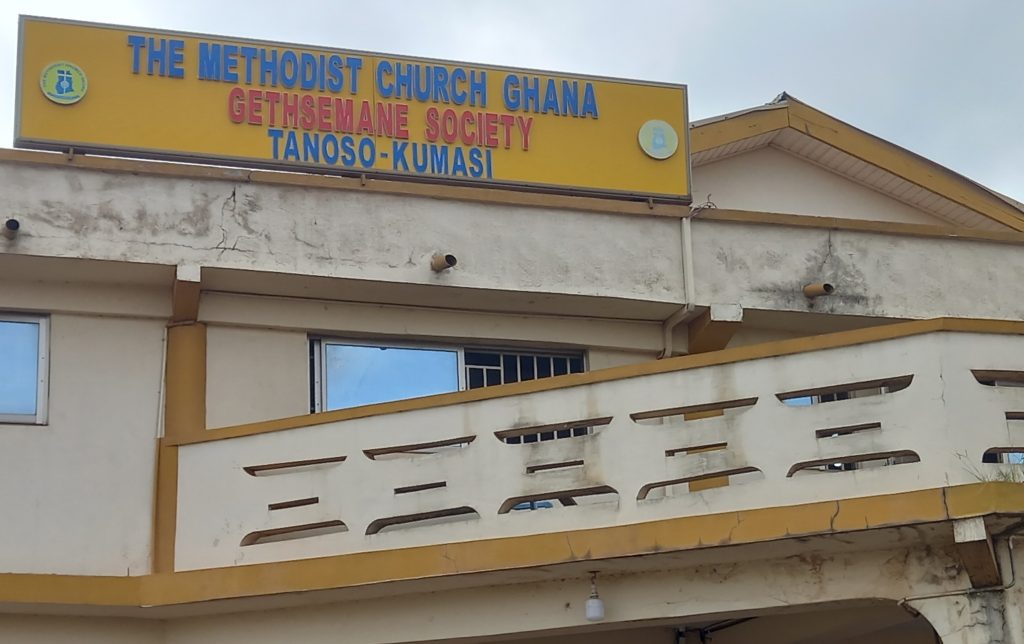
Christianity is the predominant religion in the Bono East and Bono regions, coexisting with Bono ancestral worship and spirituality. Techiman, the capital of Bono East, serves as a significant hub for Christian activity. The Ashanti Region is a major center for various Christian denominations, including Catholicism, Methodism, Presbyterianism, and Pentecostalism, and was also a starting point for Adventism in Ghana. Kumasi, in the Ashanti Region, is a prominent commercial and religious center. The Western Region and the Western North Region, which covers 40% of the Tano Basin, also exhibit a strong Christian presence with diverse denominations. Enchi, located in the Aowin District (Western North Region), specifically lists numerous Christian denominations, including Catholic, Methodist, Presbyterian, Anglican, Seventh Day Adventist, Church of Pentecost, Assemblies of God, New Covenant Family Church, Higher Grounds Chapel, Apostolic Church of Ghana, and The Makarios Church. The Suaman District, also within the Western North Region and part of the Tano Basin, reported Christianity as the dominant religion for 77.1% of its population in 2012. The Jomoro District, in the Western Region and part of the Tano Basin, also has a history of missionary work.
The widespread establishment of diverse Christian institutions, from traditional churches to monasteries and numerous denominational schools, signifies a mature and deeply rooted Christian landscape in the Tano River basin. This institutionalization allows for sustained community engagement beyond mere evangelism, extending into social services and development, and providing stable points of religious identity and practice amidst a complex spiritual environment. The systematic development of formalized Christian structures, including established churches of various denominations, educational institutions, and specialized religious communities, indicates that Christianity has moved beyond a transient missionary presence to become an integral, permanent part of the social fabric. These institutions provide the infrastructure for sustained influence in areas like education, healthcare, and community development, making Christianity a robust and active player in the region’s overall human development.
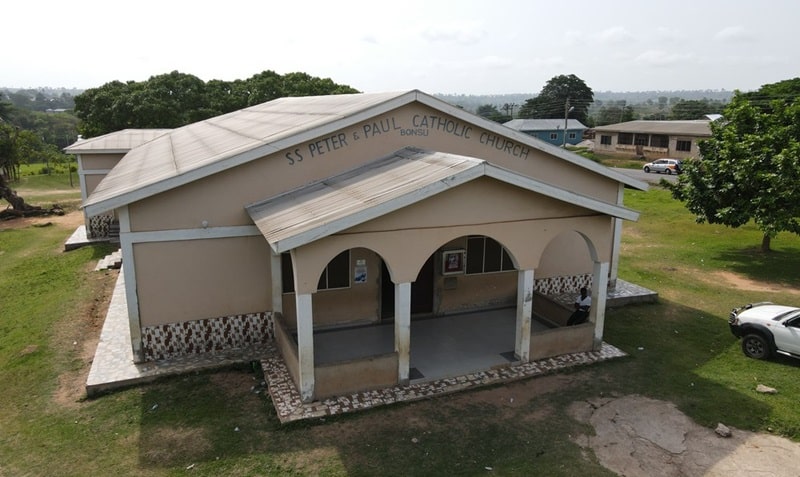
Notable Christian institutions in the Tano River basin include Kristo Buase Monastery, a Benedictine monastery situated between Tuobodom and Tanoboase in the Techiman North District of the Bono East Region. Founded in 1989, it serves as a significant spiritual center for prayer, retreats, and spiritual renewal, welcoming visitors globally. The Catholic Diocese of Techiman, which oversees this monastery, aims for a harmonious society and spiritual growth. In Techiman, the New Apostolic Church was established in 1969, joining an already diverse religious landscape that included Catholic, Presbyterian, Methodist, Muslim, and other Pentecostal churches. Enchi hosts several basic schools notable for their denominational affiliations, such as Roman Catholic Basic School, Anglican Basic School, SDA Basic School, Methodist Basic School, and Presbyterian Basic School.
Christian community life in Ghana is often described as “outwardly expressive, inwardly liberating,” and highly responsive to the “existential needs of the African”. Pentecostal and Charismatic churches, in particular, are known for their dynamic and vibrant worship styles, which may incorporate elements like drums and dancing. Christian teachings increasingly emphasize respect for creation and social responsibility, influencing daily practices related to environmental ethics. Daily life for Christians in the Tano River region involves adherence to church discipline and participation in congregational activities. However, it also frequently includes an ongoing negotiation with traditional beliefs, particularly concerning issues like witchcraft or unexplained circumstances, where individuals may seek solutions from both Christian and traditional sources.
| Region/District | Dominant/Notable Denominations | Key Institutions/Churches | Approximate Prevalence (if available) |
| Bono East Region (Techiman, Techiman North District) | Pentecostal/Charismatic, Catholic, Presbyterian, Methodist, New Apostolic Church | Kristo Buase Monastery (Tanoboase), New Apostolic Church Techiman | Predominant religion alongside ancestral worship |
| Bono Region | Pentecostal/Charismatic, Catholic, Presbyterian, Methodist | Predominant religion alongside ancestral worship | |
| Ashanti Region (Kumasi, Ejisu-Juaben Municipality) | Pentecostal/Charismatic, Catholic, Methodist, Presbyterian, Seventh-day Adventist, Assemblies of God | Wesley Methodist Cathedral (Kumasi), SDA Church (Kumasi), Roman Catholic, Methodist, Pentecostal churches (Ejisu-Juaben) | Significant presence, heart of Adventism |
| Western North Region (Aowin District – Enchi, Suaman District) | Catholic, Methodist, Presbyterian, Anglican, Seventh Day Adventist, Church of Pentecost, Assemblies of God, New Covenant Family Church, Higher Grounds Chapel, Apostolic Church of Ghana, The Makarios Church | Roman Catholic Basic School (Enchi), Anglican Basic School (Enchi), SDA Basic School (Enchi), Methodist Basic School (Enchi), Presbyterian Basic School (Enchi) | 77.1% Christian in Suaman District , diverse denominations in Enchi |
| Western Region (Jomoro District, Ellembelle District) | Catholic, Methodist, Anglican, Protestant, Charismatic | Strong Christian presence |
Social, Economic, and Environmental Impact of Christianity
Christianity has exerted a profound and multifaceted influence on the social, economic, and environmental fabric of the Tano River basin and Ghana as a whole.
Education
Christian missions have historically played a foundational role in Ghana’s educational landscape, establishing schools as “nurseries of the church” to train an educated African class. This legacy endures, with many of Ghana’s major secondary schools, including prominent single-sex institutions, remaining mission- or church-related. Major denominations such as the Presbyterian Church of Ghana, The Methodist Church Ghana, and the Roman Catholic Church have established extensive networks of educational institutions across all levels, from nursery to vocational training. Beyond infrastructure, Christianity has influenced the curriculum and values taught within these institutions, shaping the moral and intellectual development of students. For instance, The Church of Jesus Christ of Latter-day Saints operates 916 schools in Ghana.
Healthcare
Christian missionaries were instrumental in providing healthcare services, caring for the sick, and establishing hospitals and clinics throughout the country. The Church of Jesus Christ of Latter-day Saints, for example, operates 13 hospitals and 12 clinics in Ghana. Organizations like the Ghana Christian Mission (GCM) engage in significant medical outreach, reporting over 700,000 patients treated since 1987. GCM also partners with organizations like FAME to provide community-health education. The Church of Pentecost actively contributes to healthcare infrastructure, including the construction and commissioning of ultramodern Children’s Wards in government hospitals. Cross Catholic Outreach, in partnership with local dioceses (such as the Diocese of Wa, representing broader Catholic efforts), funds and constructs vital health facilities and sanitation blocks. Similarly, Methodist Development Relief Services and Pure Home Water, with the aid of missionary engineers, focus on bringing safe drinking water to rural poor communities.
Community Development
Christian organizations are deeply involved in diverse community development initiatives aimed at strengthening and improving livelihoods. The Ghana Christian Mission (GCM) supports projects such as drilling wells (over 50 wells drilled), establishing goat and fish farms, and providing microfinance support through its strategic partner, Mission Resource Ghana, which has assisted hundreds of individuals. GCM also collaborates with partners like Feed My Starving Children to provide meals to schoolchildren (over 1,000) and with IDES for clean drinking water in northern communities. The Church of Pentecost spearheads a wide range of grassroots development projects, including the construction of boreholes, bus stop shelters, drainage systems, and information centers across various districts. Cross Catholic Outreach, through its partnerships, works to alleviate poverty by funding clean water wells, sanitation blocks, and safe schools in struggling communities.
The extensive and diverse involvement of Christian organizations in education, healthcare, and community development positions Christianity as a significant non-state actor in Ghana’s socio-economic development. This goes beyond spiritual conversion, effectively making the Church a key partner in nation-building, particularly in areas where state services may be limited or insufficient. The sheer volume and variety of developmental activities undertaken by Christian bodies, encompassing the establishment and operation of schools and hospitals, well drilling, microfinance provision, and contributions to physical infrastructure, highlight a comprehensive societal engagement. This active role in development also enhances the legitimacy, influence, and continued appeal of Christian faith among the populace.
Governance and Ethics
Christian organizations, notably the Conference of Catholic Bishops and the Ghana Christian Council, have historically acted as influential moral voices in Ghana. They have occasionally criticized government policies and called for constitutional rule, demonstrating their role beyond purely spiritual affairs. The Christian values of love, compassion, and integrity have permeated Ghana’s political landscape, contributing to the establishment of ethical standards and accountability mechanisms among public officials. Christian leaders have played significant roles in shaping policies and contributing to national governance.
Environmental Stewardship
Christian teachings emphasize respect for creation and social responsibility, providing a strong biblical and theological basis for environmental actions. Given that the majority of Ghana’s population is Christian, their large numbers and well-established institutions provide significant capacity to influence environmental awareness and action. Christian environmental ethics are increasingly being applied in practice, with churches undertaking initiatives such as tree-planting exercises around water bodies and contributing to river dredging efforts. International declarations, such as the Faith Declarations on Nature (Assisi, 1986), reinforce the Christian moral obligation to protect the environment and view human “dominion” as stewardship.
The emerging and increasingly formalized focus on environmental stewardship within Ghanaian Christianity represents a critical adaptation of faith to contemporary challenges. This shift can be interpreted as a modern re-engagement with the concept of the “sacredness of water bodies” previously championed by traditional religions, potentially offering a new, powerful moral and institutional framework for conservation in the Tano River basin, where environmental degradation is particularly severe. This is a direct and necessary response to Ghana’s “urgent environmental crisis,” particularly the “massive depletion of the forest, pollution of water bodies” , which impacts the Tano River. This demonstrates a dynamic evolution of religious roles in society, where faith communities adapt their mission to address pressing societal and ecological needs, potentially offering a renewed moral authority for environmental protection. A significant development in this regard is the launch of a National Creation Care Framework, a collaborative effort involving World Vision Ghana and The Church of Pentecost, among others. This framework aims to guide and equip churches to respond biblically and practically to environmental sustainability issues, integrating creation care into their ministry and advocating for climate action.
Economic Activities
The rise of Pentecostalism in Ghana demonstrates a unique economic dimension, with Pentecostal agents “skillfully manipulat[ing] religious capital” for business interests and goals. This includes phenomena such as “Itinerant Pentecostalism as a Private business” and pastors operating as businessmen/women, reflecting a perception of wealth within Ghanaian Pentecostalism. This characterization of Pentecostalism as a “business practice” signifies a unique economic dimension of Christian faith in Ghana, moving beyond traditional charitable activities to direct wealth creation and entrepreneurial endeavors within the religious sphere. This could have both positive implications, such as economic empowerment, job creation, and microfinance initiatives , and potential negative implications, such as ethical concerns related to the prosperity gospel and the potential for exploitation, as hinted at in discussions surrounding the prosperity gospel. This highlights a complex interplay between faith and capitalism in this context.
Challenges and Opportunities for Christian Communities
Christian communities in the Tano River basin and broader Ghana navigate a landscape marked by both significant challenges and promising opportunities for growth and impact.
Challenges
Historically, early missionaries faced significant resistance when preaching against deeply ingrained traditional practices like polygamy and human sacrifice, leading to sharp disputes with traditional chiefs. Policies such as building segregated “Salems” (Christian communities) were often misconstrued as attempts to undermine the authority of parents and traditional rulers. The initial demand for converts to undergo a “complete denigration of one’s past” often created internal conflict and a sense of alienation for new believers. The British conquest of Ashanti in 1896 may have initially stiffened opposition to Christianity , and the conscious opposition of some Wesleyan Christian congregations to the ancestral way of life created historical and ongoing divisions within communities.
Despite widespread conversion, a persistent fear of witchcraft, curses, and evil forces remains among some Asante Christians, leading them to pragmatically resort to traditional religion in times of crisis. This indicates an ongoing spiritual insecurity and a struggle to fully reconcile Christian doctrines with deeply rooted traditional worldviews. Internally, the prominence of the prosperity gospel in Ghana has generated significant debate regarding its ethical implications. Critics argue that it promotes a self-centered interpretation of Christianity and carries the potential for exploitation , posing an internal challenge to the integrity and mission of the Christian community.
From an environmental perspective, while Christian communities are increasingly involved in environmental efforts, some respondents admit that church members themselves have been part of the “anthropogenic causes of water pollution”. This highlights the challenge of effectively internalizing and acting upon environmental ethics within the broader congregation, especially in the context of pervasive illegal mining (“Galamsey”) in the Tano basin. Logistically, poor transportation networks historically hindered missionary efforts to penetrate inland regions, restricting their work primarily to coastal areas. While improved, infrastructure can still pose challenges for outreach and community development in remote areas.
Opportunities
Despite these challenges, significant opportunities exist for Christian communities to expand their influence and impact. Church planting and disciple-making remain primary strategies for expansion. Organizations like the Ghana Christian Mission (GCM) are actively engaged in enriching and multiplying life through disciple-making and church planting. Church planting is recognized as a key strategy for expanding the kingdom of God and handling new converts.
Community partnerships offer a powerful avenue for impact. GCM actively partners with like-minded organizations for outreach, disaster response, life-changing food initiatives, and clean water projects in northern communities. These collaborations leverage collective resources and expertise for greater effectiveness. Mission teams and internships provide further opportunities for engagement, welcoming individuals studying nursing, education, business, or preparing for ministry to serve in Ghana. Short-term and long-term missions allow for direct involvement in spreading the Gospel and supporting community needs.
Christian communities also have significant potential to address environmental issues and social challenges through their established networks and moral authority. Given their large numbers and well-established institutions, Christian communities are uniquely positioned to lead environmental protection efforts. The recently launched National Creation Care Framework, a collaborative effort involving major Christian organizations, aims to guide churches in responding biblically and practically to environmental sustainability and climate change. This initiative provides a structured approach for integrating creation care into ministry and advocacy. Furthermore, the historically good relations with Muslim communities present opportunities for interfaith collaboration on shared concerns, such as environmental stewardship. Christian organizations are also actively addressing critical social issues like human trafficking, providing safe housing, schooling, and restoration counseling for rescued children, and offering preventative education and job training in local communities.
Conclusion
The Christian faith around the Tano River represents a dynamic and deeply embedded force within the socio-cultural and environmental landscape of Ghana and parts of Ivory Coast. Its historical trajectory, marked by initial European missionary efforts and subsequent profound indigenization, has led to a pervasive presence of diverse denominations. This evolution has fostered a complex interplay with indigenous Akan traditional beliefs, resulting in widespread syncretism where Christian faith often complements rather than entirely replaces traditional spiritual frameworks. This adaptive approach has allowed Christianity to resonate with the “existential needs” of the African populace, contributing to its enduring strength and appeal.
The report highlights Christianity’s role as a significant non-state actor in the region’s development. Through extensive networks of schools, healthcare facilities, and community development initiatives, Christian organizations actively contribute to education, health, and poverty alleviation, often filling critical gaps in public services. A noteworthy development is the growing emphasis on environmental stewardship within Ghanaian Christianity. This represents a crucial adaptation of faith to contemporary ecological crises, offering a new moral and institutional framework for conservation. This re-engagement with the “sacredness of water bodies,” previously central to traditional beliefs, positions Christian communities as vital partners in addressing the severe environmental degradation observed in the Tano River basin.
While challenges persist, including the ongoing negotiation with traditional spiritual insecurities and internal ethical debates, the opportunities for Christian communities are substantial. Their established infrastructure, large congregational base, and moral authority enable them to lead in church planting, foster community partnerships, and drive impactful environmental and social initiatives. The continued integration of faith with practical action, particularly in areas like environmental protection and human development, will be paramount for Christian communities around the Tano River to fulfill their mission and contribute to the holistic well-being of the region.


