



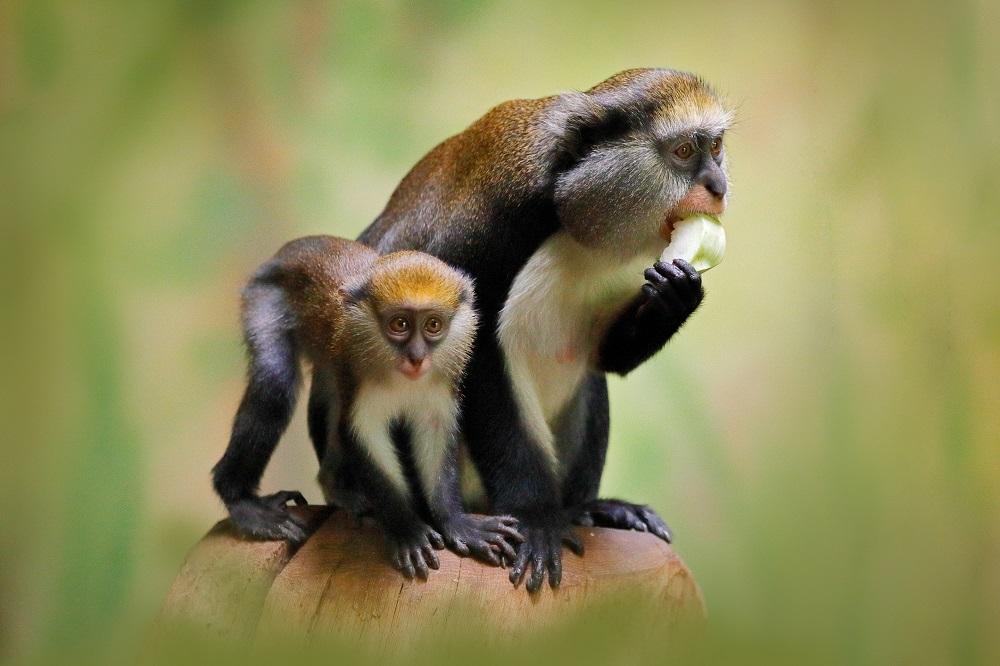
A social acrobat of the canopy, calling from the treetops of the Tano River forest
🔍 Quick Facts
- Common Name: Campbell’s Mona Monkey
- Scientific Name: Cercopithecus campbelli
- Family: Cercopithecidae (Old World monkeys)
- IUCN Status: Near Threatened
- Size: ~40–55 cm (body); tail up to 75 cm
- Weight: 3–5 kg
- Activity: Diurnal and arboreal
- Habitat: Moist lowland forests, swamp forests, and forest edges
🌍 Distribution and Habitat
Campbell’s Mona Monkey is native to West Africa, with populations in:
- Côte d’Ivoire, Ghana, Liberia, Sierra Leone, Togo, and Benin
In the Tano River basin, it is likely found:
- In riparian forests, swamp woodlands, and the Tanoé-Ehy Forest Reserve
- Along canopy corridors close to the river
- Near human settlements, sometimes seen raiding farms
🐵 Appearance
- Fur: Grizzled brown or grey upper parts with creamy white underparts
- Face: Pale face with a distinctive dark brow line and white cheek whiskers
- Tail: Long and used for balance, not prehensile
- Eyes: Alert and expressive, with social gaze signaling
They are elegant climbers, known for quick jumps and graceful movement.
🌿 Behavior and Ecology
- Lives in groups of 10–30 individuals, led by a dominant male
- Highly vocal, using alarm calls, contact calls, and social chatter
- Diet: Omnivorous
- Fruits, leaves, flowers
- Insects, eggs, and small animals
May descend to the ground occasionally to forage but stays primarily in the mid to upper canopy.
🐣 Reproduction
- Breeds year-round in suitable conditions
- Females give birth to a single infant after ~5–6 months gestation
- Infants cling to their mother’s belly and are cared for by group members
Mothers are attentive, and infants stay close to family for protection.
🧭 Cultural and Ecological Significance
In many West African cultures:
- Monkeys like Campbell’s Mona are seen as tricksters, messengers, or totems
- Their mimicry and expressive faces lead to folktales and proverbs
- Sometimes hunted for bushmeat or captured for pets
Ecologically, they play key roles:
- Dispersing seeds across forest floors and riverbanks
- Helping regenerate fruiting tree species
- Supporting predators like eagles, leopards, and pythons
⚠️ Conservation Concerns
Though not yet endangered, Cercopithecus campbelli faces mounting pressure in the Tano River region:
- 🌳 Deforestation for agriculture and illegal mining
- 🔫 Hunting for bushmeat
- 🧱 Fragmentation, which disrupts group movement and social structure
- 🧬 Hybridization risk with other mona monkey species in disturbed zones
🌊 Why It Matters for the Tano River
Campbell’s Mona Monkey is:
- A forest ambassador, bringing sound and motion to the canopy
- A sentinel species — its presence reflects forest health
- A critical actor in seed dispersal and food web stability
To hear its call is to know the forest still breathes and speaks.
🔗 Have you heard monkey calls from the canopy or seen groups moving in fruit trees near the river? Help us map their range by contributing to [TanoRiver.com/submit]


