



A high-flying nocturnal insect-hunter rarely seen but vital to the health of West Africa’s forest skies
🔍 Quick Facts
- Common Name: Trevor’s Free-tailed Bat
- Scientific Name: Mops trevori
- Family: Molossidae (Free-tailed bats)
- IUCN Status: Data Deficient (due to limited population data)
- Wingspan: Estimated ~30–35 cm
- Activity: Nocturnal
- Habitat: Moist lowland forests, forest edges, and possibly dry savanna-forest mosaics
🌍 Distribution and Habitat
Trevor’s Free-tailed Bat is known from scattered records across West and Central Africa, including:
- Côte d’Ivoire, Ghana, Cameroon, Democratic Republic of Congo, and Central African Republic
In the Tano River Basin, it may occur in:
- The Tanoé-Ehy Forest Reserve and adjacent riparian zones
- Forest clearings, where it hunts insects in open flight
- Roosts possibly in hollow trees, rock crevices, or high forest canopies
It is believed to be rare and difficult to observe, with most data coming from isolated captures.
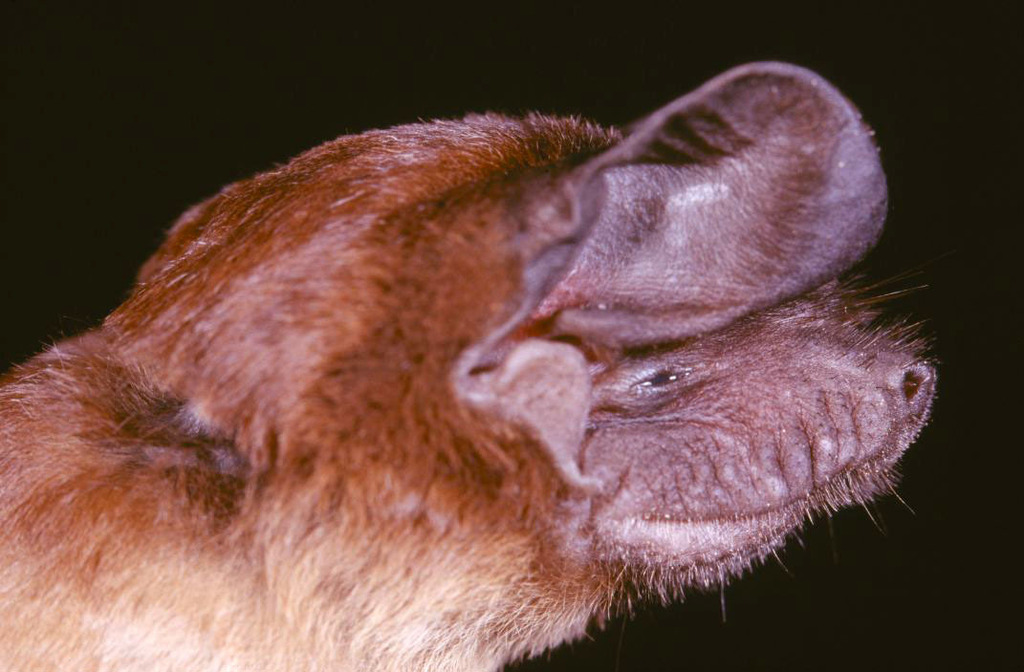
🦇 Appearance
- Fur: Dark brown to gray, short and velvety
- Ears: Large, rounded, and slightly connected—typical of Mops genus
- Tail: Extends beyond the tail membrane (“free-tailed”)
- Face: Flattened with prominent nostrils and wide mouth
These features make it adapted for high-speed flight and insect hunting at dusk.
🌿 Behavior and Diet
- Aerial insectivore, catching prey in midair during fast, acrobatic flights
- Likely feeds on:
- Moths, beetles, flying ants, and night-active mosquitoes
- Forages in forest clearings, over rivers, and around tree canopies
- Uses echolocation to navigate and locate prey
Its presence can go unnoticed without ultrasonic detection equipment.
🐣 Reproduction
Very little is known about its reproductive behavior, but like other free-tailed bats:
- It likely breeds once or twice per year
- Gives birth to a single pup, which clings to the mother or is left in the roost
- Young develop quickly and are weaned in a few weeks
Its roosting behavior remains poorly studied in the wild.
🧭 Ecological Importance
Trevor’s Free-tailed Bat plays a vital role in:
- Controlling insect populations, including agricultural pests and disease vectors
- Supporting food chains for owls and nocturnal predators
- Acting as an indicator species for forest and canopy health
As a fast-flying forager, it helps keep insect communities in balance.
⚠️ Conservation Concerns
Trevor’s Free-tailed Bat is listed as Data Deficient, but likely faces threats such as:
- 🌳 Deforestation, especially of tall roost trees
- 🧱 Disturbance of roost sites, including logging and mining
- 🔥 Habitat degradation, affecting insect availability
- 📉 Lack of monitoring, making population trends invisible
More research is urgently needed to confirm its ecological range and roosting habits.
🌊 Why It Matters for the Tano River
Trevor’s Free-tailed Bat is:
- A hidden guardian of the night skies, silently managing insect populations
- A symbol of how much we still don’t know about life above the canopy
- A sign that the Tano River’s ecosystem includes both visible and unseen allies
To protect it is to protect the invisible balance of nocturnal life.
🔗 Have you recorded bat calls or noticed high-flying silhouettes at dusk? Help researchers track Trevor’s Free-tailed Bat at [TanoRiver.com/submit]


