

The Tano River
  • Home
  • 🌊The River
    • The Tano River
    • Cultural Significance
    • Spiritual and Historical Importance
    • Taakora — The Deity of the Tano River
    • Comprehensive Analysis of the Tano River and Its Basin
  • 🌿Environment
    • Flora and Fauna
    • Environmental Challenges
    • Conservation Efforts
    • The Tano River Basin
    • The Galamsey Crisis
    • Animals of the Tano
    • Trees and Plants of the Tano
    • Parks and Forest
    • Lagoons
    • Tributaries of the Tano River
  • History
    • Stories and Oral Traditions
    • Historical Events
    • Ancient Trade and Conflicts
    • The Legend of Tano and Bia
    • Deities and Spirits
    • God Tano, Afua Krankra, and Asase Ya/Afua in Akan Mythology
  • 🎉Culture
    • Ethnic Groups Along the Tano River
    • Fishing, Agriculture, and Rituals
    • Festivals and River Ceremonies
    • The Natural Border Between Ghana and Ivory Coast
  • 🛶 Tourism
    • Natural Sites to Visit
    • Cultural Experiences
    • Local Guides & Eco-Tourism
    • Creating a Touristic Ecosystem
  • 🌍News
  • Global Initiative
  • 🌍About
    • 📖The Project / Get Involved
    • 🧾 About me
    • ✉️ Contact us
    • 🤝 Partnerships / Collaborate
    • 💛 Donate
    • 🌿 A Tribute to My Father and Grandfather
    • 🧾All Our articles
    • 🧾Search Our Articles
    • 📖Glossary of the Tano River Ecosystem
Donate
Font ResizerAa
The Tano RiverThe Tano River
Search

Popular Posts

The Rivers, Lakes & Lagoons Collective

The rivers in Ghana

About the River

🪷 Cultural Significance of the Tano River

About the River

✨ Spiritual and Historical Importance of the Tano River

Welcome to Tanoriver.com

Join the Tano River Collective Project and be part of a growing movement dedicated to preserving the life, culture, and ecosystems of the Tano River. Together, we can make a lasting impact.
Join Us
Follow US
TanoRiver.com
The Tano River > All our Articles > Environment & Biodiversity > Species of the Tano River > Mammals > 🦍 Pan troglodytes – Chimpanzee
Mammals

🦍 Pan troglodytes – Chimpanzee

By
Alexandre Tano Kan Koffi
Last updated: May 25, 2026
4 Min Read
Share

A thinking forest dweller, kin to humans and guardian of the Tano’s ancient trees

Contents
🔍 Quick Facts🌍 Distribution and HabitatIn the Tano River region, chimpanzees are:🦍 Appearance and Behavior🌿 Diet🐣 Reproduction🧭 Ecological and Cultural Significance⚠️ Conservation Concerns🌊 Why It Matters for the Tano River

🔍 Quick Facts

  • Common Name: Chimpanzee
  • Scientific Name: Pan troglodytes
  • Family: Hominidae
  • IUCN Status: Endangered
  • Size: 1.0–1.7 meters tall; 30–70 kg
  • Activity: Diurnal (day-active), arboreal and terrestrial
  • Lifespan: Up to 50 years in the wild
  • Habitat: Tropical rainforests, gallery forests, and wooded savannas

🌍 Distribution and Habitat

Chimpanzees are found across Equatorial Africa, including remnant populations in:

  • Côte d’Ivoire (especially in Taï National Park and Tanoé-Ehy Forest)
  • Ghana, Liberia, Sierra Leone, and beyond

In the Tano River region, chimpanzees are:

  • Reported in the Tanoé-Ehy Swamp Forest, one of West Africa’s last strongholds of undisturbed primate habitat
  • Living in dense canopies, using elevated pathways to move and forage
  • At risk from habitat destruction and isolation, but still present and culturally revered

🦍 Appearance and Behavior

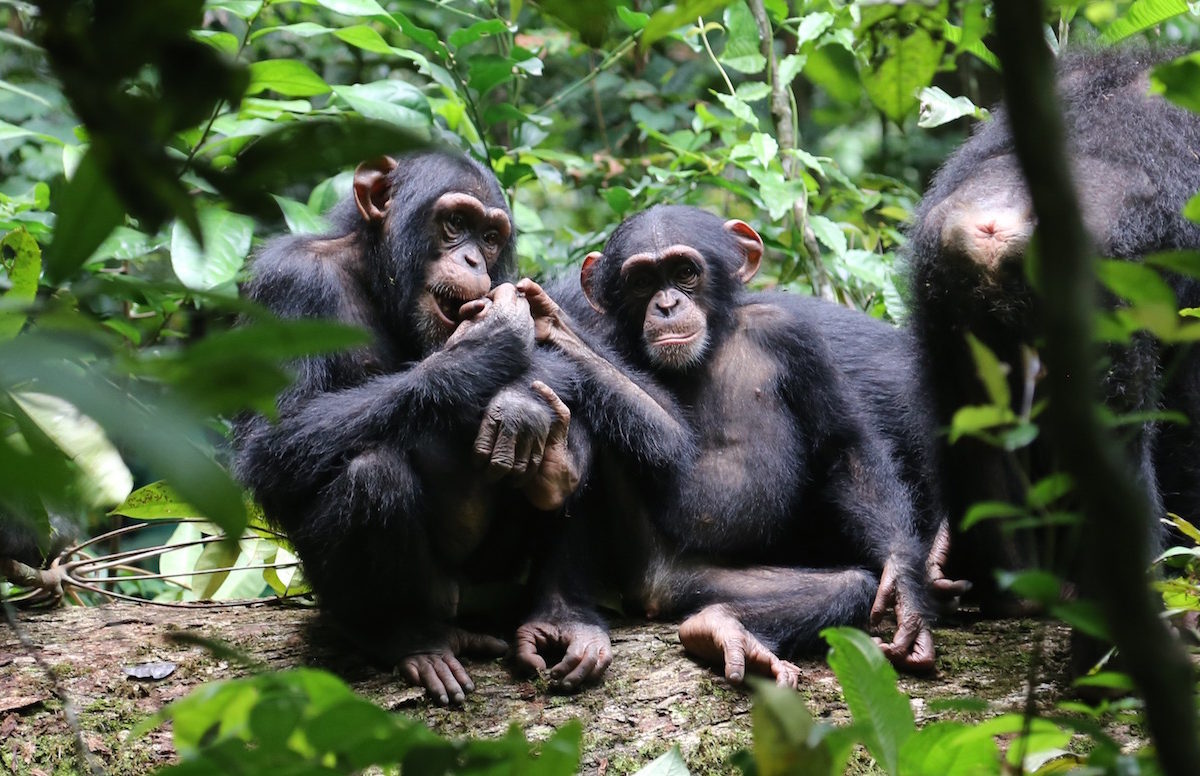
  • Fur: Black or dark brown, with a bare face and expressive eyes
  • Build: Strong arms, capable of brachiation (swinging from trees)
  • Gait: Walks on all fours (knuckle-walking), but can stand or walk upright briefly
  • Social Structure: Lives in fission-fusion groups, where members come together and separate flexibly
  • Communication: Uses a mix of vocalizations, facial expressions, gestures, and even tools

Chimpanzees have been observed using sticks to fish for termites, cracking nuts with stones, and displaying mourning rituals.


🌿 Diet

Chimpanzees are omnivores, with a mostly plant-based diet:

  • Fruits, seeds, nuts, flowers, leaves, and bark
  • Occasionally insects, bird eggs, and small mammals (including monkeys)

They play a vital role in seed dispersal and maintaining forest diversity.


🐣 Reproduction

  • Mating is not seasonal, though births may peak during fruit abundance
  • Gestation: ~230 days
  • Infants are nursed for 3–4 years and stay close to their mother for up to 10 years
  • Females give birth only every 5–6 years

Young chimps learn by observing and imitating older individuals — including how to use tools and navigate their environment.


🧭 Ecological and Cultural Significance

Chimpanzees are:

  • Keystone species — crucial for seed dispersal and maintaining forest dynamics
  • Genetically closest relatives to humans, sharing ~98.7% of our DNA
  • Revered in many African cultures as sacred beings, ancestral spirits, or forest guardians

In Akan belief systems, chimpanzees may be associated with cleverness, community, and ancestral respect.


⚠️ Conservation Concerns

Chimpanzees are Endangered, with populations declining due to:

  • 🌳 Habitat destruction (logging, farming, mining)
  • 🔫 Poaching, including for bushmeat or the illegal pet trade
  • 🧬 Disease transmission from humans
  • 🧱 Forest fragmentation, cutting off group movement and genetic flow

In the Tano River Basin, illegal gold mining and agricultural expansion threaten critical habitat corridors.


🌊 Why It Matters for the Tano River

The presence of chimpanzees means:

  • The Tano’s forests are still alive and functioning
  • Ecosystems can still support top-level species and complex societies
  • Conservation of the river includes not just water — but the deep forest minds that walk beside it

To protect chimpanzees is to protect a part of ourselves, and our ancestral mirror.


🔗 Do you know of chimpanzee sightings, stories from elders, or local efforts to protect forest apes? Help map their presence and inspire action at [TanoRiver.com/submit]


Sign Up For Daily Newsletter

Be keep up! Get the latest breaking news delivered straight to your inbox.
By signing up, you agree to our Terms of Use and acknowledge the data practices in our Privacy Policy. You may unsubscribe at any time.
Share This Article
Facebook Email Copy Link Print
ByAlexandre Tano Kan Koffi
Follow:

✍️ About the Author

Alexandre Tano Kan Koffi is the founder of TanoRiver.com and a passionate advocate for Africa’s environmental and cultural heritage. Named after the Tano River, he honors his legacy through storytelling and conservation.
📧 Contact: alex [@] alexandrekoffi.com

Leave a Comment Leave a Comment

Leave a Reply Cancel reply

Your email address will not be published. Required fields are marked *

Receive latest news from all areas of Wildlife Animals

Our selection of the week's biggest research news and features sent directly to your inbox. Enter your email address, confirm you're happy to receive our emails.

HOT NEWS

The Rivers, Lakes & Lagoons Collective

The rivers in Ghana

April 10, 2026

🪷 Cultural Significance of the Tano River

May 5, 2026

✨ Spiritual and Historical Importance of the Tano River

February 13, 2026

📖 Indigenous Stories and Oral Traditions of the Tano River

May 9, 2026

Follow US: 

About us

  • 🌍 The Project / Get Involved
  • ✉️ Contact us
  • 💛 Donate
  • 🤝 Partnerships / Collaborate

TanoRiver.com

  • Terms and Conditions
  • Privacy Policy
  • Cookie Policy

Cookies Notice

We use our own and third-party cookies to improve our services, personalise your advertising and remember your preferences.
Welcome Back!

Sign in to your account

Username or Email Address
Password

Lost your password?
