



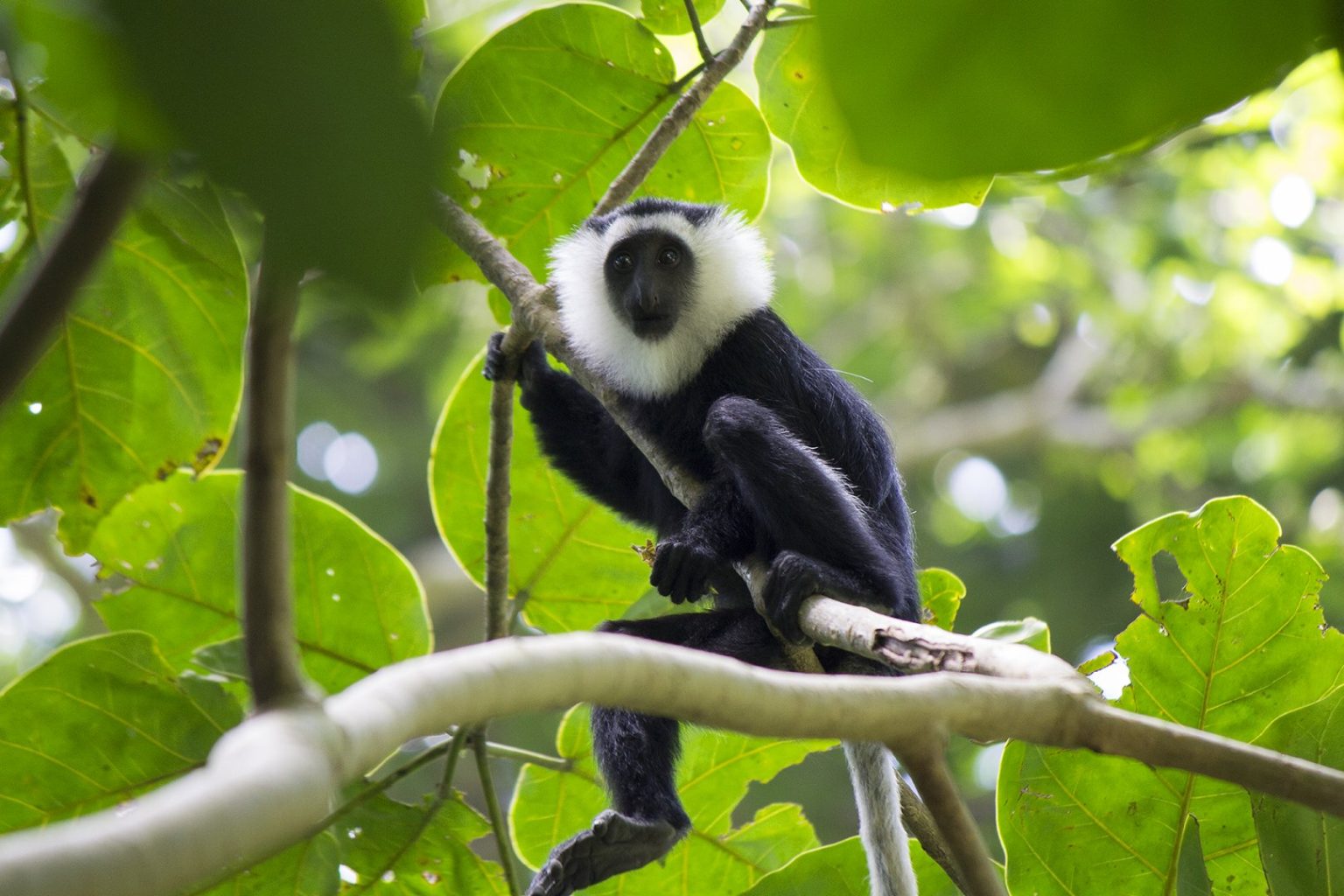
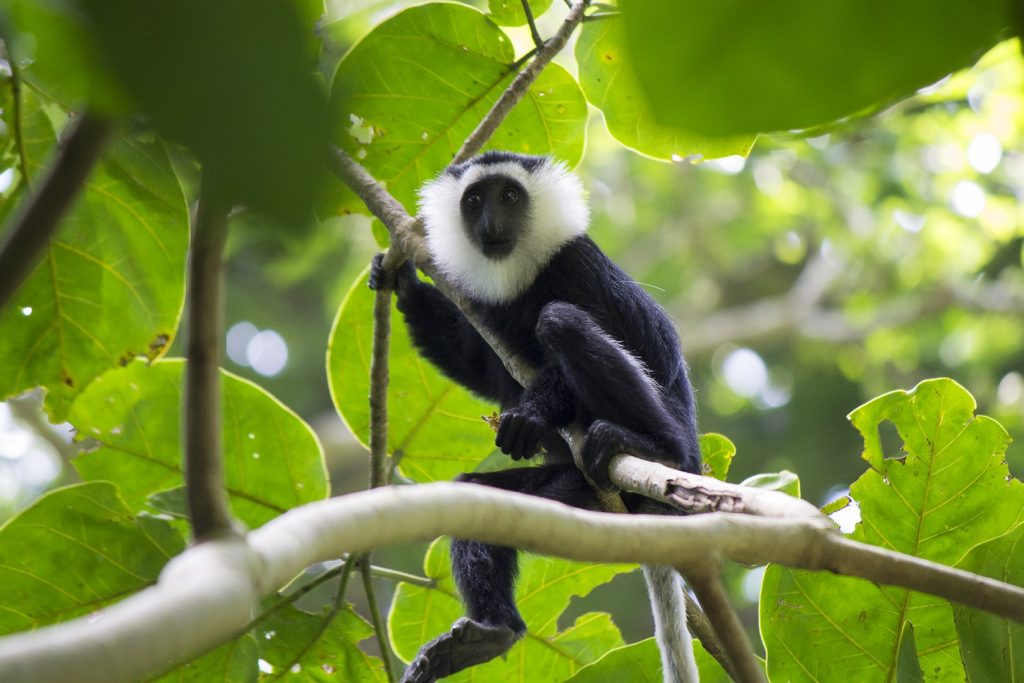
A silent guardian of the treetops, rare and endangered in the forests of the Tano
🔍 Quick Facts
- Common Name: Ursine Colobus, also known as the White-thighed Colobus
- Scientific Name: Colobus vellerosus
- Family: Cercopithecidae (Old World monkeys)
- IUCN Status: Vulnerable
- Activity: Diurnal, arboreal
- Habitat: Moist forests, gallery forests, swamp forests
🌍 Distribution and Habitat
The Ursine Colobus is native to the Upper Guinean forests of West Africa, including:
- Ghana, Côte d’Ivoire, Togo, and Benin
In the Tano River region, it is found:
- In the Tanoé-Ehy Forest Reserve (Côte d’Ivoire)
- Near the Ankasa Conservation Area (Ghana)
- Possibly in riparian corridors along the lower Tano River
It prefers tall-canopy forests and often lives in groups of 10–30 individuals.
🐒 Appearance
- Fur: Entirely black body with distinctive white thigh tufts
- Face: Hairless, black, with expressive eyes and a gentle profile
- Tail: Long and white-tufted at the end, used for balance in trees
- Size: Medium-sized monkey; males ~10–15 kg, females slightly smaller
They are leaf-eating specialists with a multi-chambered stomach for digesting fibrous plants.
🌿 Behavior and Diet
- Diurnal and arboreal, rarely descending to the ground
- Moves gracefully through the canopy using leaps and bounds
- Diet: Primarily young leaves, but also eats flowers, fruit, and bark
- Social structure: Lives in cohesive groups with dominant males and multiple females
They are quiet monkeys, communicating with low growls, body posture, and subtle facial expressions.
🐣 Reproduction
- Females give birth every 2–3 years
- Single infants are born after ~6-month gestation
- Babies are born with white fur, turning black over a few months
- Alloparenting is common — other females help care for infants
The group shares responsibility for raising young, helping ensure survival in a dangerous forest.
🧭 Cultural and Ecological Significance
In some West African traditions:
- Colobus monkeys are viewed as wise, calm beings
- Their quiet nature and tree-top life often link them with ancestral spirits or omens
- Rarely hunted, though sometimes threatened by habitat loss or mistaken identity
Ecologically, they are:
- Important seed dispersers and leaf trimmers
- Their selective feeding can shape forest regeneration and canopy dynamics
⚠️ Threats
The Ursine Colobus is Vulnerable, facing:
- 🚫 Deforestation for agriculture, logging, and mining
- ⚠️ Forest fragmentation, which isolates populations
- 🔫 Hunting pressure, often accidental via bushmeat trade
- ❌ Loss of connectivity between habitat patches
Population declines have been observed throughout their range.
🛡️ Conservation and Hope
Efforts to protect the Ursine Colobus include:
- 📍 Protected areas: like Tanoé-Ehy and Ankasa
- 🧠 Community education to reduce hunting
- 📸 Monitoring via camera traps and field surveys
- 🌳 Restoration of forest corridors
The Tano Basin remains one of their last refuges in southern West Africa.
🌊 Why It Matters for the Tano River
The Ursine Colobus is:
- A symbol of forest peace and balance
- A key player in canopy ecology and plant cycling
- A species that depends entirely on healthy, undisturbed forests
Its survival reflects the health of the Tano River’s sacred forests.
🔗 Have you seen or heard these monkeys calling from the treetops near your village? Help us document their presence at [TanoRiver.com/submit]


