



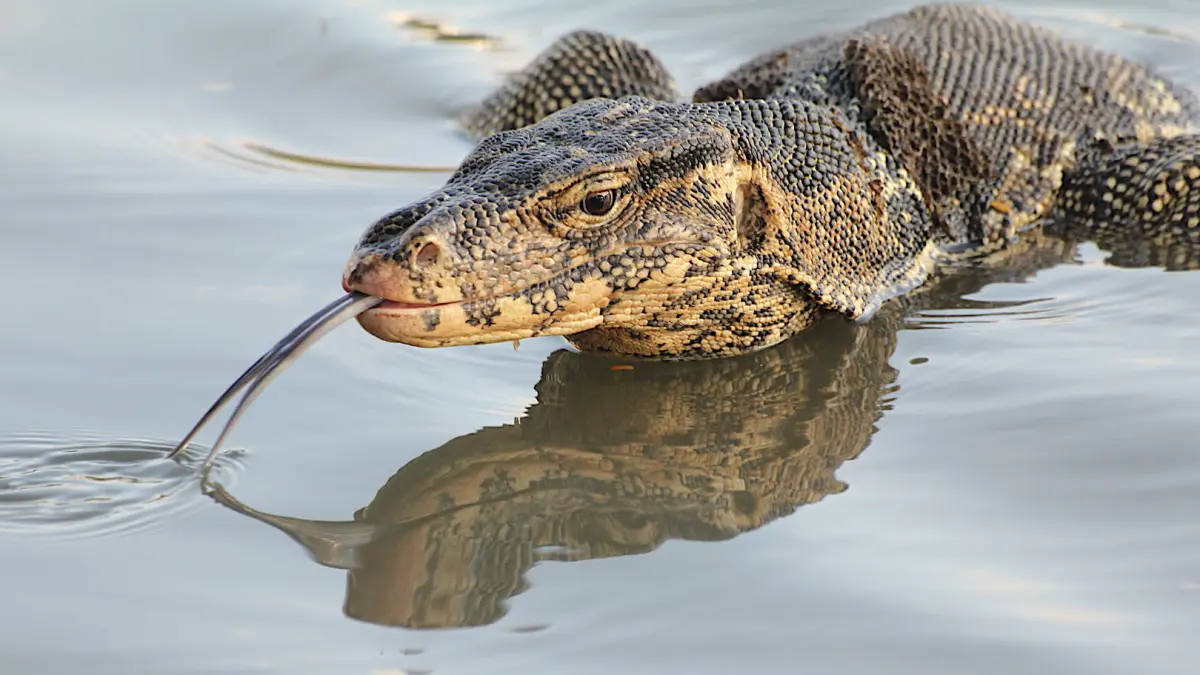
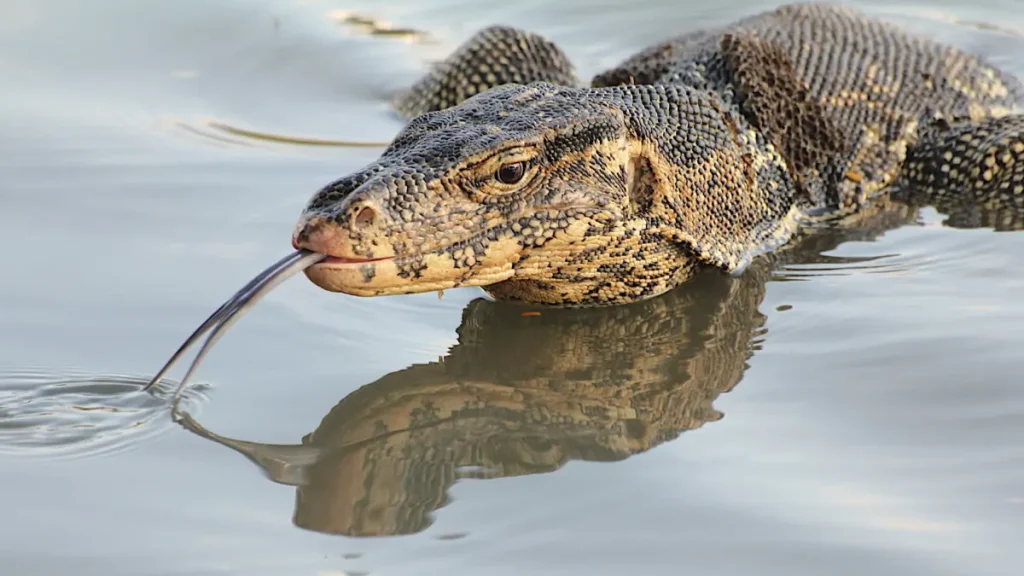
Ancient reptiles of the riverbanks, slow, strong, and sacred in local lore
🔎 Overview
Monitor lizards are large, intelligent reptiles of the genus Varanus, known for their powerful limbs, forked tongues, and impressive adaptability. In the Tano River ecosystem, these lizards are a key part of both natural biodiversity and traditional beliefs.
🐊 Species in the Tano River Area
The most commonly encountered species in the Tano Basin include:
1. Nile Monitor (Varanus niloticus)
- Africa’s largest lizard
- Can grow up to 2 meters in length
- Found in wetlands, riverbanks, mangroves, and even farmlands
- Excellent swimmer and climber
2. Savannah Monitor (Varanus exanthematicus)
- Stockier, ground-dwelling species
- Prefers drier savanna edges near water sources
- Found in areas where savanna meets forest, particularly near farms and roadsides
Both species are present in Ghana and Côte d’Ivoire, especially along the Tano’s middle and lower stretches.
🦎 Behavior and Ecology
- Diet: Carnivorous
- Eats insects, snails, fish, frogs, eggs, rodents, and even carrion
- Known to raid nests of birds and crocodiles for eggs
- Activity: Mostly diurnal (active during the day)
- Movement: Strong swimmers, often basking near water or slipping quietly into the river when approached
- Defense: Uses tail-whips, sharp claws, and a powerful bite when threatened
They play a key role as scavengers and predators, maintaining balance in wetland food chains.
🪹 Nesting and Reproduction
- Females lay 20–60 eggs, often in:
- Termite mounds (which regulate temperature)
- Burrows dug in soft sand or under roots
- Eggs incubate for 6–9 months, and hatchlings are fully independent at birth
Their reproductive strategy relies on undisturbed nesting grounds, especially near wetlands and forests.
🧭 Cultural and Spiritual Role
In many Akan, Nzema, and Baoulé traditions, monitor lizards are:
- Seen as messengers of the spirit world
- Associated with ancestors or river deities, especially in forest shrines
- Sometimes protected by taboos, particularly in areas sacred to Ta Kora, the river god of the Tano
- Believed to guard hidden knowledge or appear before significant events
They appear in oral tales as watchful, slow-moving creatures with hidden wisdom.
⚠️ Threats
Despite being adaptable, monitor lizards face several pressures:
- Habitat destruction due to deforestation, mining, and agriculture
- Hunting for:
- Skin (leather trade)
- Meat (considered a delicacy in some communities)
- Traditional medicine
- Road mortality and conflicts with farmers over poultry raids
They are not endangered, but local populations are declining in disturbed areas.
🌊 Why Monitor Lizards Matter for the Tano River
Monitor lizards are:
- Top reptilian predators in the food chain
- Scavengers that clean the ecosystem
- Creatures of symbolism and survival, blending myth and biology
Their slow tread across the Tano’s muddy edge reminds us that the river is home not only to what we see — but to what watches us in silence.
🔗 Have you spotted a monitor lizard along the Tano or heard stories about them in your family? Share your encounters at [TanoRiver.com/submit]


