



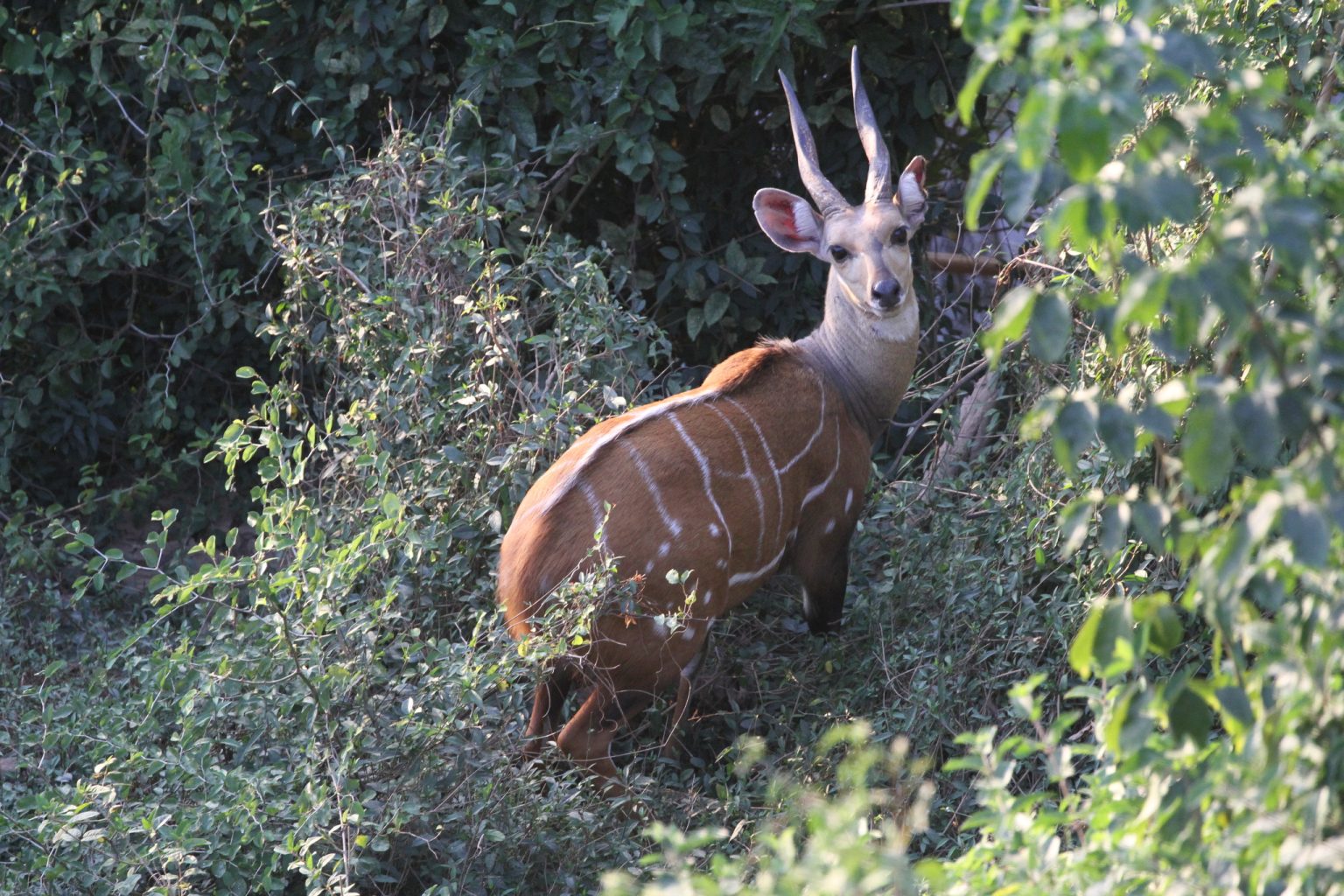
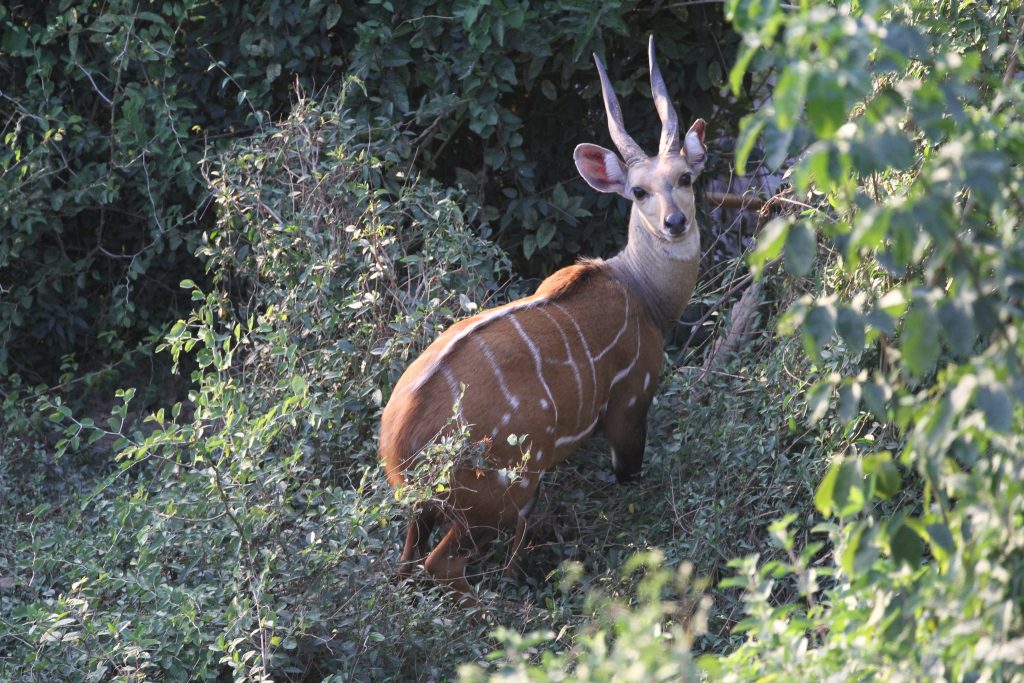
A solitary antelope of the forest margins, silent and secretive along the Tano River
🔎 Scientific Name: Tragelaphus scriptus
Common names: Bushbuck, Forest antelope, “Agban” (Akan), “Gbè” (Baoulé)
Family: Bovidae
IUCN Status: Least Concern (but declining in some regions)
🌍 Habitat and Distribution
The bushbuck is one of the most widespread antelopes in sub-Saharan Africa. It is native to:
- Ghana, Côte d’Ivoire, Nigeria, Cameroon, and most of tropical Africa
🌿 In the Tano River region, bushbucks inhabit:
- Forest edges, riverine thickets, and dense underbrush
- Particularly common in:
- The Tanoé-Ehy Swamp Forest
- Gallery forests and sacred groves along riverbanks
- Transition zones between wetlands and farmlands
They are one of the few antelopes that thrive in dense vegetation, adapting well to forested environments.
🦌 Physical Description
- Size: 60–90 cm (shoulder height)
- Weight: 30–45 kg (males), smaller for females
- Coloration:
- Coat varies from reddish-brown to dark brown
- Marked with white spots and vertical stripes on flanks and legs
- White throat patch and undersides
- Horns: Only males have them — short, spiraled, and sharp
Their coloration blends perfectly with dappled forest light, offering excellent camouflage.
🌿 Behavior and Ecology
- Solitary and secretive: often active at dawn and dusk
- Feeds on:
- Leaves, twigs, fruits, and herbs
- Occasionally crops, bringing them into conflict with farmers
- Water-dependent: often found near streams or rivers like the Tano
- Movement:
- Slow and cautious
- Uses dense vegetation for cover; rarely seen in open areas
Males are territorial, while females may overlap ranges with offspring.
🐾 Role in the Ecosystem
- Browsers that help shape vegetation structure
- Serve as prey for leopards, large pythons, crocodiles, and hunting birds
- Important seed dispersers, especially of forest fruit trees
Their survival depends on the integrity of understorey vegetation and forest cover.
🧙🏾♂️ Cultural Significance
In many Akan and Nzema traditions, the bushbuck is:
- Associated with shyness, vigilance, and stealth
- Featured in folktales as a clever trickster or elusive prey
- Sometimes considered a sacred animal in certain forest shrines
- Its horns and hides are occasionally used in rituals or as status symbols
Hunters often revere the bushbuck for its intelligence and awareness — it’s known to freeze silently when threatened rather than bolt.
⚠️ Threats and Conservation
Although listed as Least Concern, bushbuck populations are threatened by:
- Habitat destruction from agriculture, logging, and mining
- Hunting for bushmeat, especially in unprotected forests
- Dog hunting and snare traps, often unselective and cruel
- Encroachment into protected riparian zones, including around the Tano
Local populations are declining in many parts of Ghana and Côte d’Ivoire.
🛡️ Conservation Efforts
- Survives in community-managed forests and sacred groves
- Present in the Tanoé-Ehy Forest, though under pressure
- Conservation actions include:
- Ecotourism and forest monitoring
- Anti-poaching patrols
- Awareness campaigns about the species’ ecological importance
🌊 Why It Matters for the Tano River
The bushbuck is:
- A symbol of wilderness and natural secrecy
- A browser that sustains forest health and balance
- A reminder that even common species can vanish without protection
Where river meets forest, the bushbuck watches, listens, and vanishes — a quiet guardian of the Tano’s edge.
🔗 Have you encountered a bushbuck in the wild? Or heard stories from elders? Share your sightings at [TanoRiver.com/submit]


