



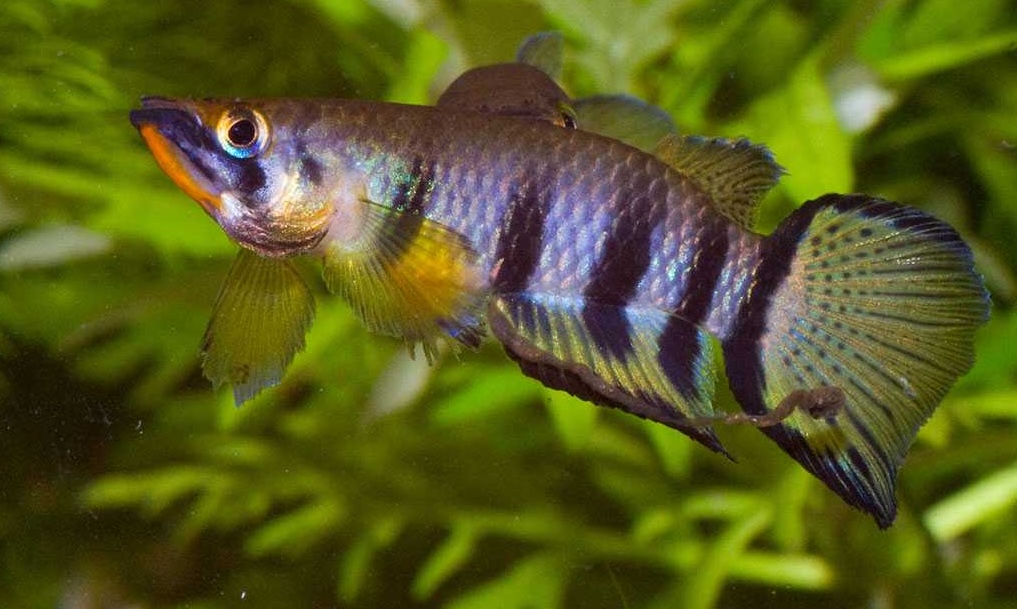
A flash of color in calm waters: the elegant surface hunter of the Tano River
🔎 Scientific Name: Epiplatys dageti
Common names: Redchin Panchax, Red-chinned killifish
Family: Nothobranchiidae (African killifishes)
🌍 Distribution and Habitat
Native to West Africa, Epiplatys dageti is found in:
- Ghana, Côte d’Ivoire, Liberia, Sierra Leone, and Nigeria
🌊 In the Tano River Basin, it prefers:
- Slow-moving forest streams, swamp edges, and shaded backwaters
- Shallow pools and floodplains with dense surface vegetation
- Zones with overhanging plants and detritus, ideal for shelter and egg-laying
It thrives in lowland habitats where the water is soft, warm, and oxygen-poor — thanks to its ability to gulp air.
🐟 Description and Identification
- Size: Small fish, 3–5 cm (1.5–2 inches)
- Coloration:
- Males: olive-brown body with bright red markings on the chin and gill area, plus red flecks on the fins
- Females: paler, less colorful, often with subtle striping
- Body: Slender and slightly flattened on the back — built for surface feeding
- Eyes: Large, upward-facing, adapted for scanning the water surface
The red chin, especially in males, glows vividly during courtship and is its defining feature.
🧬 Behavior and Ecology
- Diet: Insectivorous surface-feeder
- Hunts mosquito larvae, insects, crustaceans, and small aquatic life
- Known to snap at insects landing on the water surface
- Breeding:
- Lays adhesive eggs on submerged vegetation or fine roots
- No parental care; eggs hatch in 7–10 days, depending on temperature
- Breeds readily during the rainy season in flooded zones
- Behavior:
- Generally peaceful, but males display territorial posturing during courtship
- Active in the early morning and late afternoon
🌿 Ecological Role
- Controls populations of mosquito larvae and small insects, especially in stagnant pools
- Serves as prey for birds, amphibians, and larger fish
- Its breeding cycle is tied to flood pulses, making it an indicator of seasonal river health
Its presence signifies clean, oxygen-variable, but unpolluted conditions.
🎣 Local Use and Scientific Interest
- Not used for food, but occasionally collected for the aquarium trade
- Popular among killifish hobbyists for:
- Their coloration and surface behavior
- Easy breeding in captivity
- Peaceful disposition in planted tanks
It is also studied for its adaptation to shallow, seasonal pools and its genetic diversity across West Africa.
⚠️ Conservation and Threats
- Not currently endangered, but locally threatened by:
- Habitat loss from agriculture and deforestation
- Chemical runoff into swamps and streams
- Illegal mining (galamsey) which disturbs breeding zones
Protecting natural stream edges, vegetated pools, and clean backwaters is key to conserving this and other killifish species.
🌊 Why It Matters for the Tano River
Epiplatys dageti is:
- A natural mosquito controller and bioindicator of stream health
- A small but vivid part of the Tano River’s hidden biodiversity
- A symbol of seasonal rhythms and fragile habitats
In every puddle where light dances on water, the Redchin Panchax flickers like a living flame of resilience.
🔗 Have you seen this colorful fish in your region? Send us your photos or stories at [TanoRiver.com/submit]


