



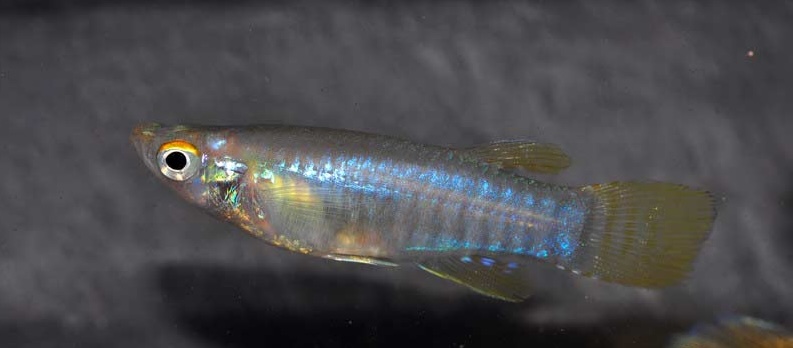
A glowing jewel of the Tano River’s brackish waters, small in size, brilliant in presence
🔎 Scientific Name: Aplocheilichthys spilauchen
Common names: Banded lampeye, African lampeye, “Lampeye killifish”
Family: Poeciliidae (formerly Aplocheilidae)
🌍 Habitat and Distribution
The Banded Lampeye is native to coastal West and Central Africa, commonly found in:
- Estuaries, lagoons, mangroves, and slow-moving rivers
- Distributed from Senegal to Angola, including:
- Ghana, Côte d’Ivoire, Nigeria, Cameroon, and the Congo Basin
🌊 In the Tano River System, it is likely to occur:
- In the Tendo, Ehy, and Aby lagoons, where the Tano River meets the sea
- In brackish backwaters, river mouths, and quiet mangrove swamps near the Ghana–Ivory Coast border
This species is tolerant of varying salinity, making it a perfect resident of the river-lagoon transition zone.
🐟 Physical Description
- Size: Small fish, about 4–5 cm (1.5–2 inches) in length
- Coloration: Pale silver or olive body with horizontal dark stripes
- Eyes: Large, with a distinctive shiny blue-white “lamp” above the iris — its namesake feature
- Fins: Transparent to yellowish, often edged with faint color
- Males often appear more vibrant than females, especially during mating displays
Their “glowing eyes” sparkle under the water surface in sunlight — like tiny stars flickering in the shallows.
🌿 Behavior and Ecology
- Schooling fish, often found in small groups
- Feeds on:
- Tiny aquatic invertebrates, insect larvae, and algae
- Mosquito larvae, making it useful in natural pest control
- Prefers:
- Shallow waters, low current, vegetation-rich areas
They reproduce through egg-laying, attaching their eggs to aquatic plants or substrate.
💡 Ecological Importance
- Important part of the food web:
- Prey for larger fish, birds, and amphibians
- Controls mosquito populations in stagnant zones
- Bioindicator for water quality and salinity levels
Their presence often reflects a healthy, oxygenated wetland ecosystem.
🌊 Conservation Status
- Currently not endangered, but threatened by:
- Pollution and mining runoff (e.g., from illegal gold mining near the Tano)
- Habitat loss from mangrove deforestation and urban expansion
- Salinity shifts due to climate change and damming
Conservation of brackish water zones and buffer vegetation is crucial to their long-term survival.
🧬 Relevance to Science and Aquaculture
- Popular in aquariums due to their calm nature and shimmering eyes
- Used in research on osmoregulation, due to their ability to live in both fresh and brackish water
In some areas, they are intentionally bred in rice paddies to control mosquito larvae.
🌱 Why It Matters for the Tano River
Aplocheilichthys spilauchen symbolizes:
- The hidden micro-life that keeps ecosystems balanced
- The beauty of even the smallest species in complex river-lagoon environments
- The need to preserve coastal wetlands, where river and sea embrace
It is a delicate witness to both natural harmony and ecological stress in the Tano River estuary.
🔗 Have you seen these shimmering fish in the Tano lagoons? Share your photo or location at [TanoRiver.com/submit]


