



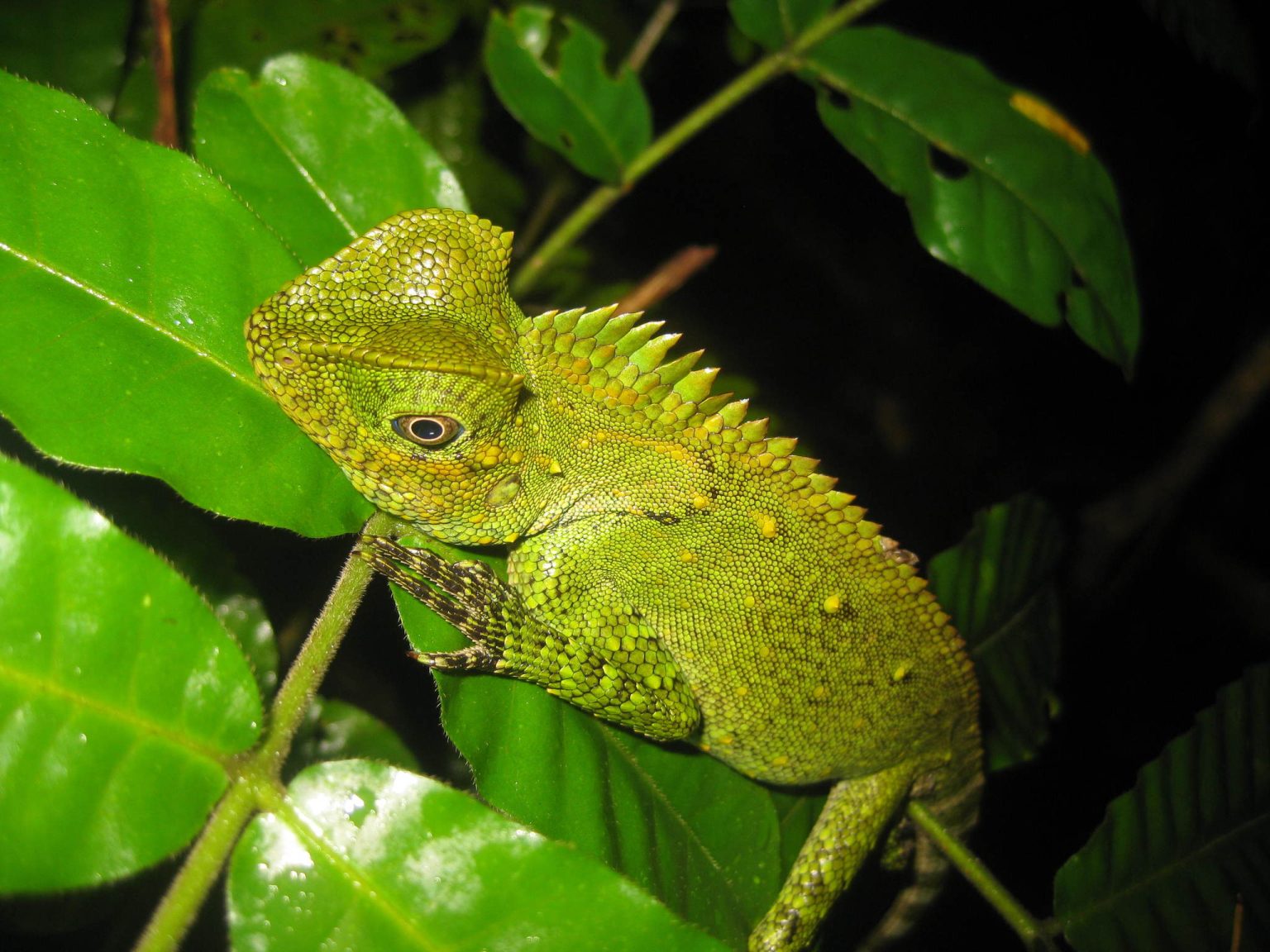
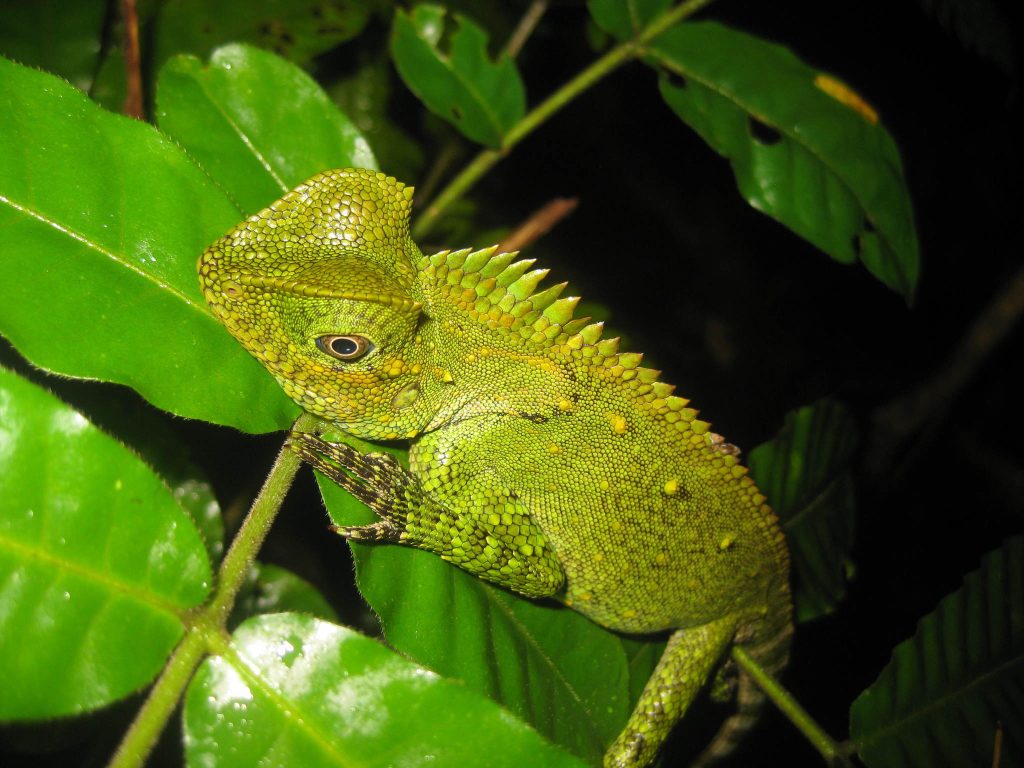
Also known as: Graceful Chameleon, West African Chameleon
📍 Habitat
This chameleon thrives in humid tropical forests, dense secondary growth, and forest-edge vegetation. Within the Tano River Basin, it is often spotted in the Boin Tano Forest Reserve, the Tanoé-Ehy swamp forest, and the shrubby vegetation bordering the river.
It prefers areas with abundant canopy cover, vines, and shrubs, which offer camouflage and feeding grounds.
⚠️ Conservation Status
- IUCN Red List: Least Concern, but declining locally
- Main threats:
- Deforestation and habitat fragmentation
- Capture for the pet trade
- Wildfire and climate instability affecting forest microclimates
🧬 Description
- Medium-sized chameleon, reaching 20–30 cm (8–12 inches) in length
- Varies in color: bright green, brown, or olive, with the ability to change shades
- Features a prehensile tail, independent eye movement, and zygodactylous feet (two toes forward, two back)
- Long, sticky tongue used to capture insects in a split second
🧠 Behavior
- Solitary and territorial
- Active during the day (diurnal), usually slow-moving but alert
- Relies on camouflage and stillness to avoid predators
- Eats flies, crickets, beetles, caterpillars, and occasionally small vertebrates
🌿 Ecological Role
- Helps control insect populations, especially leaf-eating pests
- Serves as prey for raptors, snakes, and small mammals
- Acts as a forest health indicator due to sensitivity to habitat changes
✨ Cultural Significance
In Akan and other West African traditions, chameleons are viewed as symbols of patience, adaptability, and spiritual foresight.
They often appear in proverbs, such as:
“The chameleon says it does not rush, yet it gets where it’s going.”
This reflects the value of quiet strategy and caution — especially in negotiations, leadership, and spiritual journeys.
🔥 Conservation Needs
- Preserve continuous forest cover in riverine zones
- Educate communities on the ecological value of reptiles
- Regulate and monitor wildlife trade
- Promote the chameleon as a flagship species for forest biodiversity


