



📍 Habitat
This species inhabits dense tropical forests in West and Central Africa, including the riparian woodlands and moist forests along the Tano River, especially within and around the Boin Tano Forest Reserve and the Tanoé-Ehy complex.
Contents
It prefers undisturbed canopy-rich environments, often staying high in the trees, far from ground-level predators and human activity.
⚠️ Conservation Status
- IUCN Red List: Least Concern, but declining in some areas due to deforestation
- Main Threats:
- Logging and habitat fragmentation
- Forest clearing for agriculture and mining
- Hunting (for bushmeat in some communities)
🧬 Description
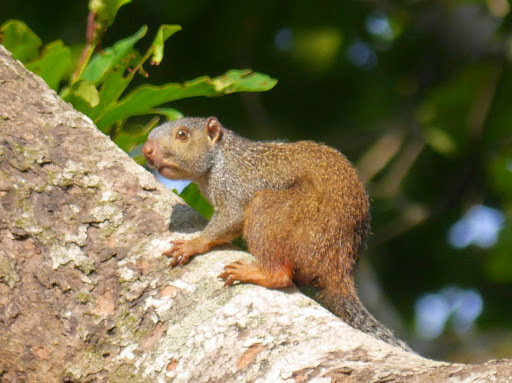
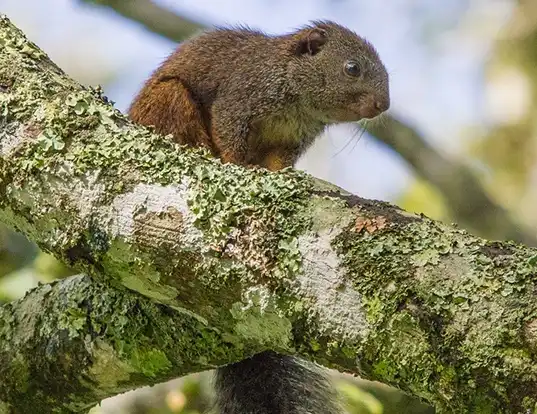
- One of the largest squirrels in Africa, with a body length up to 30 cm and a bushy tail as long as its body
- Dark brown to blackish fur with white or grey underparts
- Large, expressive eyes adapted to life in the forest canopy
- Agile climber and fast runner on branches
🧠 Behavior
- Diurnal and arboreal (active during the day, lives in trees)
- Feeds on fruits, nuts, seeds, and sometimes insects
- Builds leaf nests high in the canopy or uses tree hollows
- Emits sharp, high-pitched warning calls when alarmed
🌱 Ecological Role
- Acts as a seed disperser — contributes to forest regeneration
- Helps maintain diversity in tree species
- Prey for raptors and some carnivorous mammals (e.g. golden cat)
✨ Cultural Note
While not a sacred animal, squirrels are often associated with alertness and vigilance in local proverbs. Their presence is a sign of a healthy forest and their absence may reflect disrupted ecosystems.
In some Akan folktales, squirrels appear as tricksters or messengers, always alert and difficult to catch.
🔥 Conservation Needs
- Preserve large tracts of continuous canopy forest
- Limit logging and tree-felling along riverbanks
- Educate local communities about the ecological role of squirrels
- Integrate species like Protoxerus stangeri into forest biodiversity assessments


