



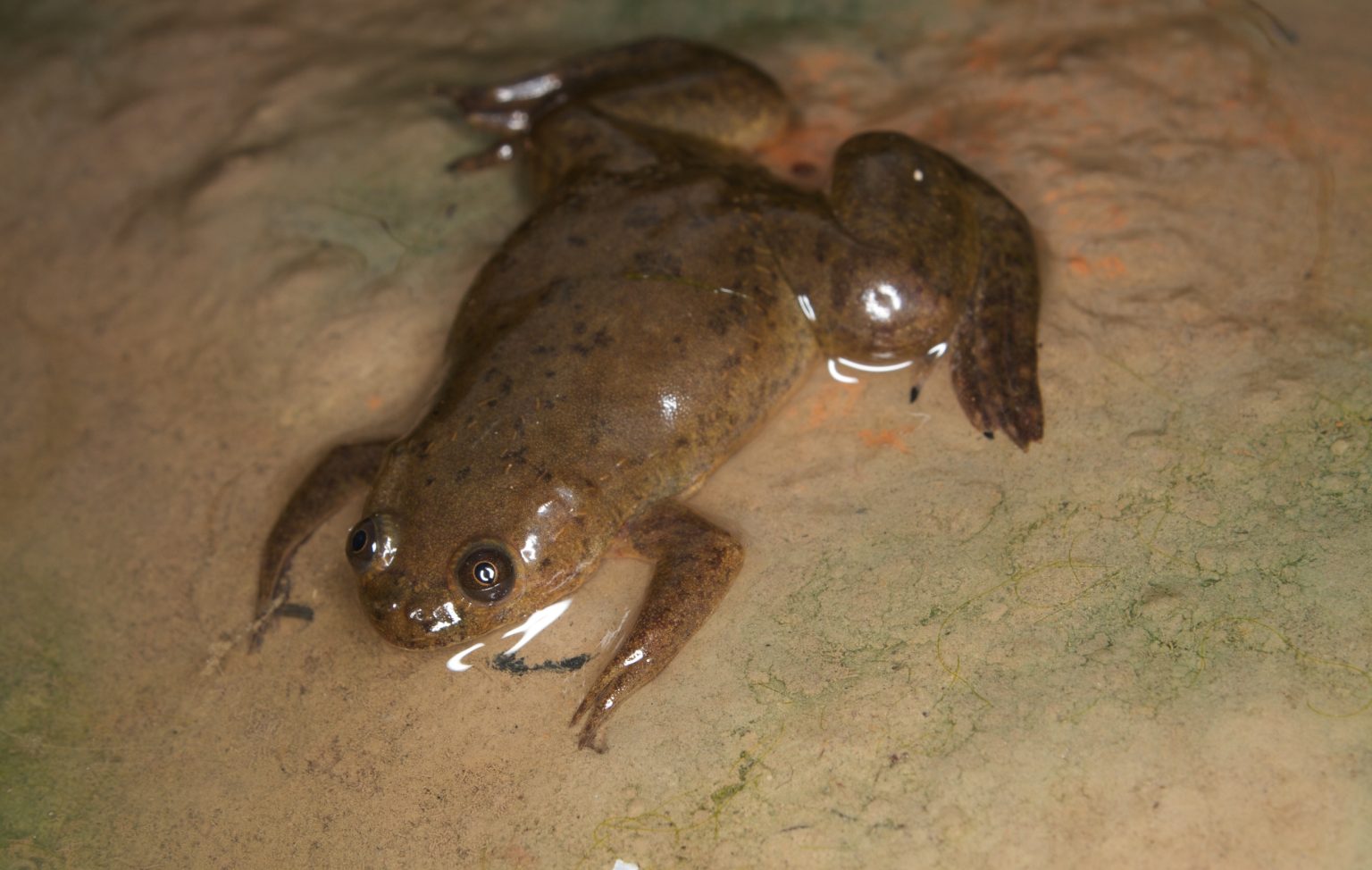
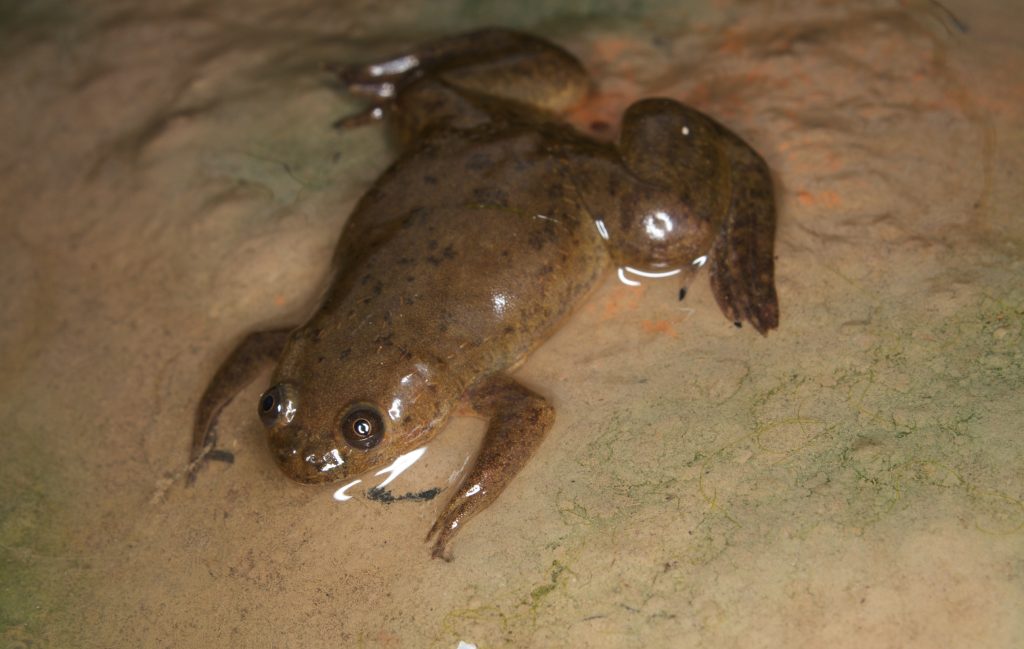
The Western clawed frog, Xenopus tropicalis, is a fully aquatic species of frog found in West Africa, including regions near the Tano River Basin. This small amphibian is of great scientific interest and ecological significance due to its genetic traits and its role in freshwater ecosystems.
🔍 Description
The Western clawed frog is distinguishable by its small size, smooth skin, and webbed hind feet equipped with small claws—hence the name. Unlike its larger cousin Xenopus laevis, this species remains smaller (around 4–5 cm) and matures more quickly, making it a preferred model organism in genetic and developmental biology.
🌍 Habitat
This frog thrives in shallow, slow-moving or stagnant bodies of freshwater such as ponds, streams, and swamps. In the Tano River ecosystem, it may be found in calm side channels, seasonal pools, or connected wetlands.
🧬 Scientific Importance
Xenopus tropicalis is the first amphibian whose genome was fully sequenced. It serves as a powerful model for understanding vertebrate development, regeneration, and disease processes, helping scientists unlock important biological mechanisms relevant to humans and other animals.
🍃 Role in the Ecosystem
- Predator: It feeds on small invertebrates, helping control mosquito populations and other insects.
- Prey: It provides food for birds, snakes, and mammals in wetland ecosystems.
- Bioindicator: Its presence or absence is often used as a signal of water quality and ecosystem health.
⚠️ Conservation Status
While not currently endangered, the Western clawed frog faces potential threats from:
- Habitat degradation (due to illegal mining, pollution, and agriculture)
- Water contamination
- Introduced predators or diseases
Conservation of wetlands and clean freshwater sources like those of the Tano River is essential for its continued survival.
Join the effort to preserve amphibians and biodiversity in the Tano River ecosystem. Every species matters.
🌍 Learn more at www.tanoriver.com


