



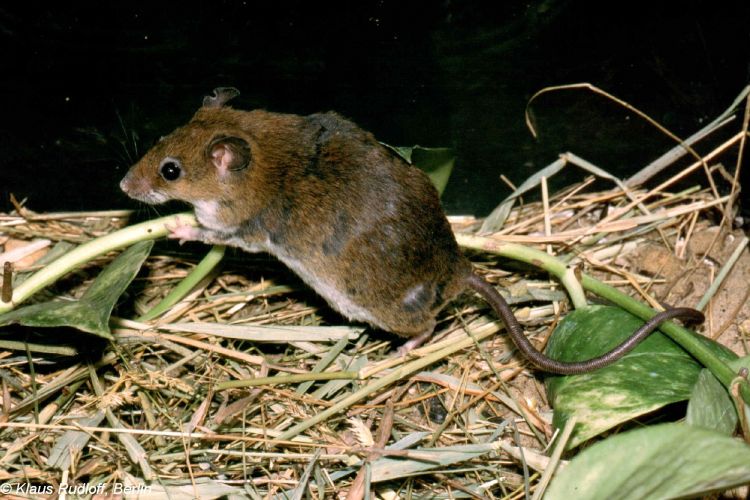
A gentle forager beneath the forest canopy, vital to the seed and soil cycles of the Tano Basin
🔍 Quick Facts
- Common Name: Tullberg’s Soft-furred Mouse
- Scientific Name: Praomys tullbergi
- Family: Muridae (True mice and rats)
- IUCN Status: Least Concern, but habitat-sensitive
- Size: Body length ~9–12 cm; tail slightly longer than body
- Weight: ~20–40 grams
- Activity: Nocturnal
- Habitat: Moist lowland forests, particularly shaded understory and leaf litter zones
🌍 Distribution and Habitat
This species is native to the Upper Guinean and Congolian forests, found in:
- Côte d’Ivoire, Ghana, Liberia, Nigeria, Cameroon, and nearby countries
In the Tano River Basin, it inhabits:
- The Tanoé-Ehy Forest Reserve and other undisturbed forest areas
- Leaf-litter rich zones, often near roots, logs, and decaying plant matter
- Areas with dense canopy and high humidity
It is rarely seen, but its presence is crucial to soil health and food chains.
🐭 Appearance
- Fur: Exceptionally soft and fine; brown to reddish-brown on top, grayish underneath
- Tail: Long, slender, and sparsely haired, used for balance
- Head: Pointed snout, large ears, dark eyes
- Body: Light and agile, suited for delicate forest movement
Its delicate appearance masks its key ecological function.
🌿 Behavior and Diet
- Strictly nocturnal, moving quietly under cover
- Diet:
- Seeds, fruit, fungi
- Invertebrates such as beetles, ants, and larvae
- Nests in burrows, under roots, or in natural cavities
- Helps aerate soil through tunneling and foraging
It’s often detected only by subtle rustles in the forest floor.
🐣 Reproduction
- Reproduces multiple times a year in stable forest conditions
- Gestation: ~21–23 days
- Litter size: 3–7 young
- Builds well-hidden nests, lined with plant fibers and moss
Populations can fluctuate quickly with climate and food availability.
🧭 Ecological Importance
Tullberg’s Soft-furred Mouse plays a vital role in:
- Seed dispersal and spore spreading, aiding forest regeneration
- Regulating insect populations in the forest floor
- Providing prey for small carnivores, owls, and snakes
- Improving soil structure and decomposition processes
It supports a resilient and self-sustaining forest ecosystem.
⚠️ Conservation Concerns
Though globally Least Concern, threats in West Africa include:
- 🌳 Deforestation, especially in lowland primary forests
- 🛤 Habitat fragmentation, isolating populations
- 🔥 Agricultural burning, destroying undergrowth
- 🧱 Lack of research and monitoring
Protecting dense forest cover and leaf litter is critical for its survival.
🌊 Why It Matters for the Tano River
Tullberg’s Soft-furred Mouse is:
- A silent architect of forest renewal
- A symbol of the Tano River’s underground biodiversity
- An unsung hero of the nutrient and seed cycles that sustain larger wildlife
Its conservation reminds us that small creatures are the backbone of great ecosystems.
🔗 Have you seen small trails in the leaf litter or found chew marks on forest seeds? Contribute your observations at [TanoRiver.com/submit]


