



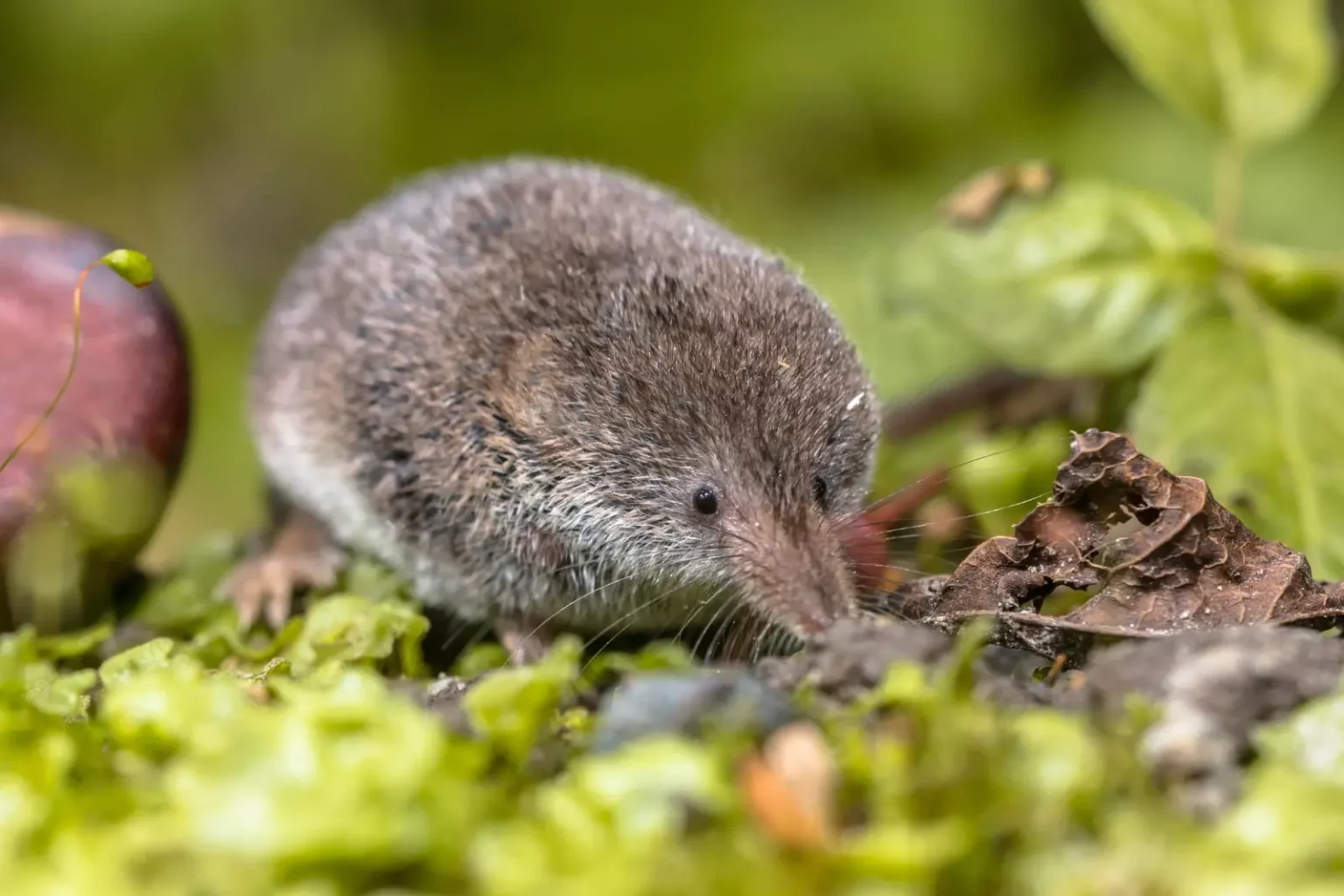
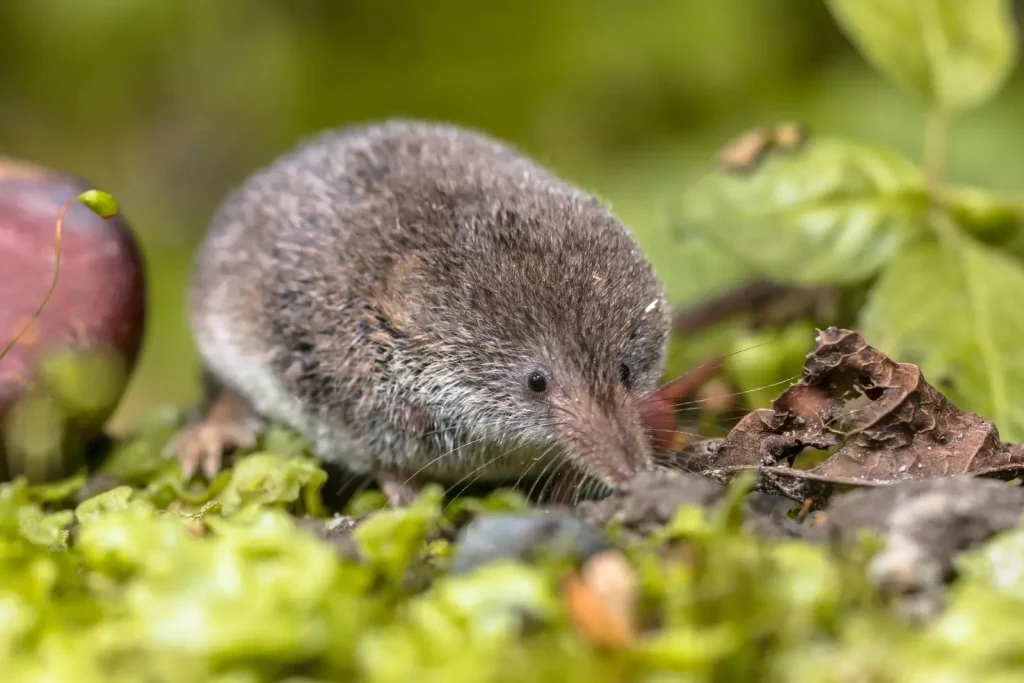
A tiny, secretive insectivore, rustling through the shadows of the Tano River’s leaf litter
🔍 Quick Facts
- Common Name: West African Pygmy Shrew
- Scientific Name: Crocidura obscurior
- Family: Soricidae (Shrews)
- IUCN Status: Least Concern, but habitat-dependent
- Size: ~6–7 cm (excluding tail); ~3–5 grams
- Activity: Nocturnal and crepuscular
- Habitat: Moist lowland forest floor, swamps, dense underbrush
🌍 Distribution and Habitat
Native to West Africa, including:
- Côte d’Ivoire, Ghana, Liberia, Sierra Leone, and Guinea
In the Tano River Basin, it is likely found:
- In undisturbed forest understory
- Beneath leaf litter, rotting logs, and mossy roots
- Close to swampy clearings and shaded forest pools
It is rarely seen, but occasionally captured in pitfall traps by researchers.
🐾 Appearance
- Color: Soft dark grey to brownish-grey fur
- Tail: Slender, sparsely furred, nearly as long as the body
- Snout: Long and pointed, ideal for probing the soil
- Eyes and ears: Very small; this shrew relies mostly on touch and smell
Its miniature size and fast movement make it nearly invisible in the wild.
🌿 Behavior and Diet
- Extremely active, with a very high metabolism
- Diet:
- Small insects, ants, termites
- Worms, larvae, spiders, and tiny snails
- Constantly foraging — it may eat every few hours to survive
- Uses sensitive whiskers to navigate and locate prey in darkness
If deprived of food for even a few hours, it can quickly perish — a true survivor on a tight energy budget.
🪺 Reproduction
- Breeds throughout the year, with multiple litters annually
- Litter size: 2–5 tiny, helpless young
- Nests are made in hidden burrows, roots, or leaf nests
Young are fully dependent on the mother for warmth and feeding in their early days.
🧭 Ecological Importance
Though small, the West African Pygmy Shrew is vital for:
- Controlling insect populations
- Serving as prey for snakes, owls, and carnivorous mammals
- Indicating forest floor health and microhabitat stability
Their foraging helps aerate the soil and reduce pest pressure.
⚠️ Conservation Concerns
While currently listed as Least Concern, this species may face pressure from:
- 🪓 Deforestation and land clearing
- 🛢 Pollution affecting invertebrate prey availability
- 🔇 Data deficiency, as it’s rarely studied due to its elusive nature
In the Tano region, preservation of moist forest leaf litter is key to its survival.
🌊 Why It Matters for the Tano River
The West African Pygmy Shrew is:
- A hidden engine of the forest floor ecosystem
- A quiet reminder that the smallest species can reflect the biggest changes
- A survivor of ancient forests — its heartbeat pulsing beneath the roots of giant trees
To protect this shrew is to protect a layer of life we rarely see, but always need.
🔗 Have you ever seen a tiny blur move through leaf litter or heard high-pitched squeaks after rainfall? Share your observations at [TanoRiver.com/submit]


